
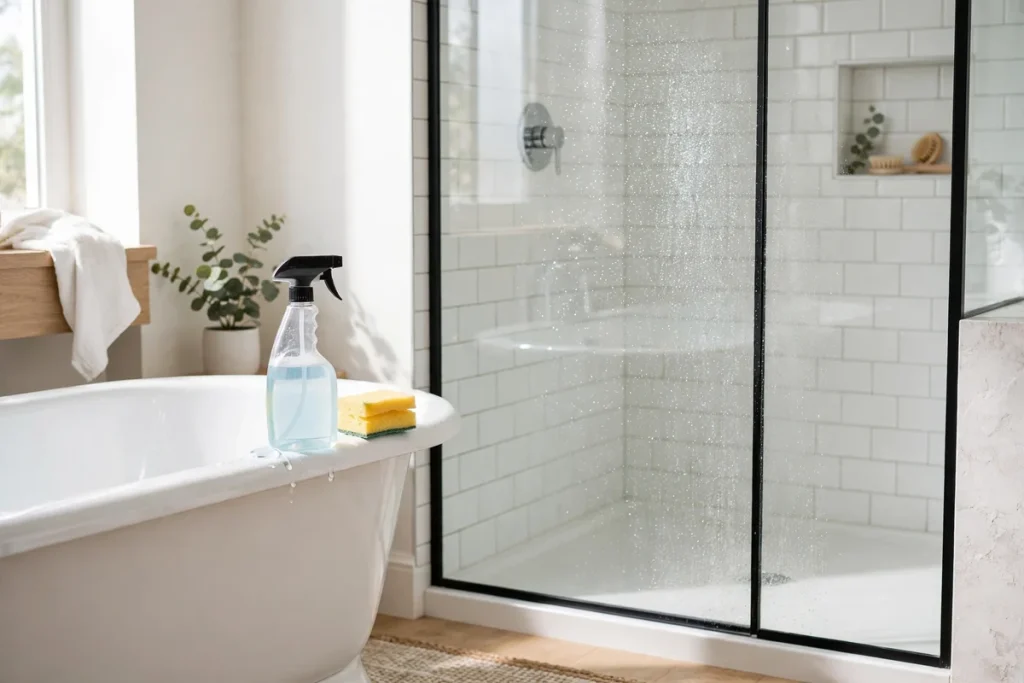

Soap scum is the dull, chalky film left behind when soap mixes with hard-water minerals. It clings to shower doors, tiles, tubs, and faucets, and it can make a clean bathroom look tired in days. The good news is that soap scum is easy to remove once you understand what it is and choose the right cleaner for each surface.
This guide explains what causes soap scum, the fastest methods for glass, tile, and tubs, and how to prevent it from coming back. You do not need harsh chemicals or expensive tools for most jobs.
What Is Soap Scum and Why Does It Stick?
Most bar soaps contain fats that react with calcium and magnesium in hard water. The reaction leaves a waxy, mineral-rich residue. Hot showers make the problem worse because steam and soap spray reach every surface, then dry into a film. Over time, layers build up and trap body oils, shampoo, and dirt.
Soap scum is different from limescale, although the two often appear together. Limescale is mainly mineral deposits from water, while soap scum also contains soap residue and oils. That is why plain water rarely removes it, and why a cleaner that dissolves both grease and minerals works best.
The Best Cleaners for Soap Scum
1. White Vinegar and Dish Soap
Heat one cup of white vinegar until warm, not boiling, then mix it with one tablespoon of dish soap in a spray bottle. Spray generously, wait 20 to 30 minutes, scrub lightly, and rinse. Vinegar dissolves minerals while dish soap cuts grease. Do not use vinegar on marble, granite, or other natural stone.
2. Baking Soda Paste
Mix baking soda with a little water to form a thick paste. Spread it over the stain, leave it for 15 minutes, then scrub with a soft sponge or old toothbrush. Baking soda is mildly abrasive, so it lifts film without scratching most glazed tile, porcelain, and fiberglass. Rinse well to avoid a cloudy residue.
3. A Commercial Bathroom Cleaner
For heavy buildup, a bathroom cleaner made for soap scum can save time. Choose one labeled for your surface, follow the dwell time on the label, and ventilate the room. Never mix bleach with vinegar, ammonia, or other cleaners.
How to Remove Soap Scum from Shower Glass
Glass shows soap scum more than any other surface, but it also responds well to a simple routine. Spray the vinegar and dish soap mixture over the door, inside and out. Let it sit for at least 20 minutes. Scrub in small circles with a non-scratch sponge, paying attention to corners, hinges, and the bottom track. Rinse with warm water and dry with a microfiber cloth or squeegee. Drying is the step most people skip, and it is what keeps glass clear.
For stubborn spots, apply baking soda paste after the vinegar spray, scrub gently, and rinse again. Avoid steel wool or abrasive pads, which can permanently scratch glass and make future buildup harder to remove.
How to Remove Soap Scum from Tiles and Grout
Start by rinsing loose dirt away. Spray tiles and grout lines with the vinegar solution or spread baking soda paste over stained grout. Wait 15 to 30 minutes. Scrub grout with a stiff brush and tiles with a sponge. Rinse thoroughly and dry the area if you can.
If grout stays discolored after cleaning, it may be stained rather than dirty. A grout pen or resealing can improve its appearance, but test any product in a hidden spot first. For general bathroom cleaning ideas, see our guide to how to make natural cleaning products, which includes gentle recipes that work well for routine tile care.
How to Remove Soap Scum from Bathtubs
For a porcelain or fiberglass tub, sprinkle baking soda over the surface, spray lightly with vinegar solution, and let it fizz for 10 minutes. Scrub with a soft sponge, rinse, and wipe dry. For an acrylic tub, skip abrasive powders and use dish soap with warm water and a soft cloth instead.
Do not forget the overflow cover, drain ring, and faucet base, where soap and minerals collect. A soft toothbrush reaches these spots without scratching the finish. If your tub also has dishwasher-style buildup problems in other rooms, our how to clean a dishwasher guide shows the same principle: regular, gentle cleaning beats one aggressive scrub.
What Not to Do
- Do not use vinegar, lemon, or acidic cleaners on marble, granite, or limestone.
- Do not mix bleach with vinegar or ammonia.
- Do not use steel wool, scouring pads, or harsh abrasives on glass, acrylic, or coated surfaces.
- Do not leave strong cleaners on a surface far longer than the label recommends.
- Do not scrub a dry surface; wet it first to reduce scratching.
How to Prevent Soap Scum
Prevention takes less than a minute a day. Keep a squeegee in the shower and wipe glass and tiles after your last shower. Switch from bar soap to a liquid body wash or soap-free cleanser, which leaves far less residue. Improve ventilation with a fan or open window so surfaces dry faster. Once a week, spray and rinse the shower before buildup hardens. A water softener also helps in very hard-water homes, although it is a bigger investment.
For a bathroom that stays cleaner longer, choose finishes that resist moisture and are easy to wipe. Paint and surface choices matter too, especially in a humid bathroom.
Frequently Asked Questions
What removes soap scum fastest?
Warm white vinegar mixed with dish soap usually works fastest on glass and glazed tile. Spray it on, wait 20 to 30 minutes, scrub lightly, and rinse. Baking soda paste is a good second step for thick buildup.
Can I use vinegar on all bathroom surfaces?
No. Vinegar is safe for most glass, porcelain, ceramic tile, and fiberglass, but it can etch marble, granite, limestone, and other natural stone. On stone, use a pH-neutral cleaner made for that material.
Why does soap scum keep coming back?
It returns when soap residue and hard-water minerals dry on surfaces. Daily squeegeeing, better ventilation, and switching to liquid soap greatly slow it down. Hard water makes recurrence faster, so regular weekly cleaning matters more in those homes.
Is soap scum harmful?
Soap scum itself is mainly unsightly, but it can harbor bacteria and make surfaces slippery. It can also trap moisture against grout and seals, which may encourage mold over time. Regular cleaning keeps the bathroom safer and easier to maintain.
Can baking soda remove old, thick soap scum?
Yes, often with patience. Apply a thick baking soda paste, leave it for 30 minutes, scrub, rinse, and repeat if needed. For very old buildup, alternate baking soda paste with a vinegar spray, allowing each step time to work before scrubbing.


Pingback: Bathroom Backsplash Ideas for Every Style and Budget
Pingback: Standard Bathroom Size: Dimensions for Every Bathroom Type
Pingback: How Can You Get Stains Out of Carpet? Easy Fixes That Work