
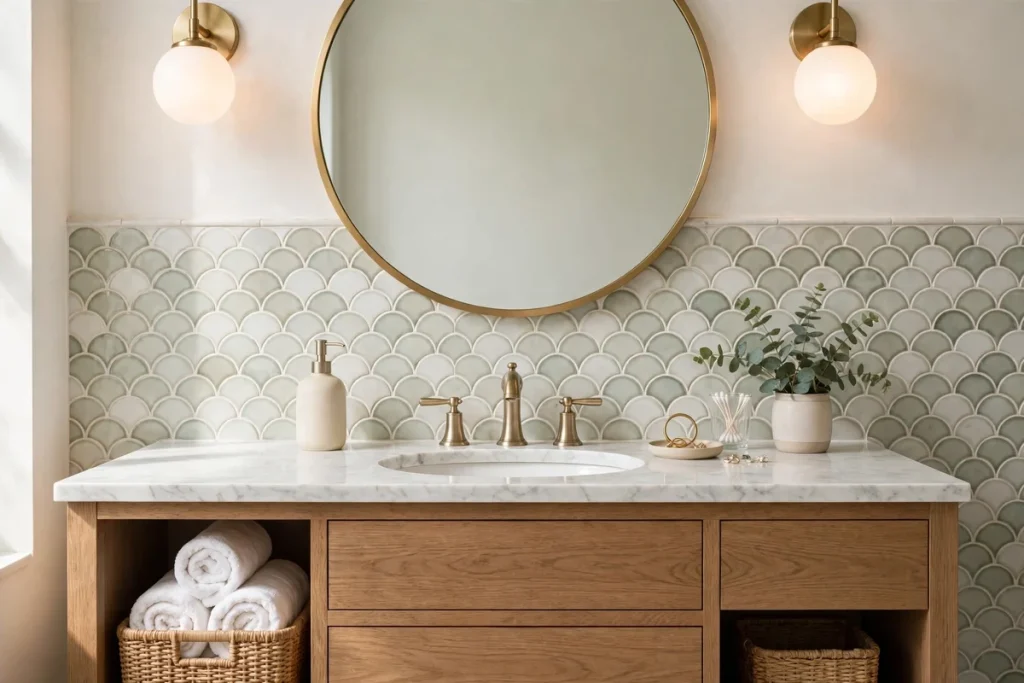

Bathroom backsplash ideas do more than decorate a wall. A good backsplash protects plaster and paint from splashes, makes cleaning easier, and gives a small room a finished look. Whether you love classic tile, bold color, or natural stone, there is an option that fits your budget and bathroom style.
This guide covers the most practical materials, 15 ideas to try, and the details that make installation last.
What Is a Bathroom Backsplash?
A bathroom backsplash is the waterproof or water-resistant surface behind a sink, vanity, or bathtub. It usually runs from the counter or tub edge up the wall, often 10 to 20 centimeters high, although full-height designs are increasingly popular. Its job is to stop water, soap, and toothpaste from damaging the wall behind it.
Choosing the Right Material
Ceramic and Porcelain Tile
The most popular choice. Tile is durable, water-resistant, and available in endless colors and shapes. Glazed tiles are easiest to clean.
Glass Tile
Glass reflects light and makes small bathrooms feel brighter. It works well as an accent strip or a full backsplash in modern bathrooms.
Natural Stone
Marble, travertine, and slate add luxury and texture. Stone needs sealing to resist stains and moisture, so it suits owners who do not mind occasional maintenance.
Peel-and-Stick Tile
A budget-friendly, renter-friendly option. Modern peel-and-stick tiles look surprisingly realistic and are easy to replace, although they are less durable in very wet areas.
15 Bathroom Backsplash Ideas
1. Classic White Subway Tile
Timeless, bright, and easy to pair with any vanity. Try a stacked pattern for a modern twist.
2. Full-Height Marble Slab
Run one stone slab from counter to ceiling for a seamless, high-end look.
3. Bold Patterned Cement Tile
Use pattern sparingly behind a simple vanity to create a focal point without overwhelming the room.
4. Soft Sage or Green Tile
Green brings calm and pairs beautifully with wood, brass, and white fixtures.
5. Herringbone Tile
The zigzag layout adds movement and interest, even in a neutral color.
6. Terracotta Warmth
Warm clay tones suit Mediterranean and rustic bathrooms and hide water spots well.
7. Matte Black Tile
Dramatic and modern, especially with gold or matte black faucets.
8. Vertical Stacked Tile
Vertical lines draw the eye upward and make low ceilings feel taller.
9. Mosaic Accent Strip
Add a narrow mosaic band through plain tile for color and texture at low cost.
10. Large-Format Porcelain Panels
Fewer grout lines mean easier cleaning and a clean, contemporary finish.
11. Beadboard or Shiplap
Painted panels suit cottage and farmhouse bathrooms. Seal them well and keep them away from direct shower spray.
12. Mirrored or Metallic Tile
Reflective finishes bounce light around a small bathroom and add glamour.
13. Two-Tone Tile
Pair a neutral field tile with a contrasting border or niche tile for a custom look.
14. Textured 3D Tile
Raised patterns create shadows and depth, ideal for a feature wall behind a freestanding tub.
15. Matching Countertop Material
Extend your vanity countertop up the wall for a cohesive, easy-to-clean surface.
Practical Tips Before You Install
- Measure carefully around mirrors, outlets, and faucets before ordering tile.
- Choose a grout color close to the tile color for a calm look, or contrasting grout to highlight the pattern.
- Seal natural stone and cement tile, and reseal grout once a year in wet areas.
- Keep spare tiles for future repairs.
If you are planning a wider bathroom update, our how to remove soap scum guide helps you keep new tile and glass looking clean, and our how to make natural cleaning products guide offers gentle cleaners for daily tile care.
Frequently Asked Questions
What is the best backsplash material for a bathroom?
Glazed ceramic or porcelain tile is usually best. It resists water, is easy to clean, and comes in many styles and prices. Glass tile is a good alternative for small, modern bathrooms.
How high should a bathroom backsplash be?
A standard backsplash is 10 to 20 centimeters above the counter. Full-height backsplashes that reach the mirror or ceiling look more dramatic and protect more wall, but they cost more.
Can I use peel-and-stick tile in a bathroom?
Yes, for sink areas with light splashing. Choose tiles rated for bathrooms, apply them to a clean, smooth wall, and avoid direct shower spray. They are ideal for rentals and quick updates.
Do bathroom backsplashes need sealing?
Tile itself usually does not, but grout and natural stone do. Seal stone before grouting and reseal grout periodically to prevent stains and moisture damage.
What backsplash suits a small bathroom?
Light colors, glossy finishes, and large-format tiles help a small bathroom feel larger. Vertical patterns and mirrors also add a sense of height and light.



Pingback: Standard Bathroom Size: Dimensions for Every Bathroom Type