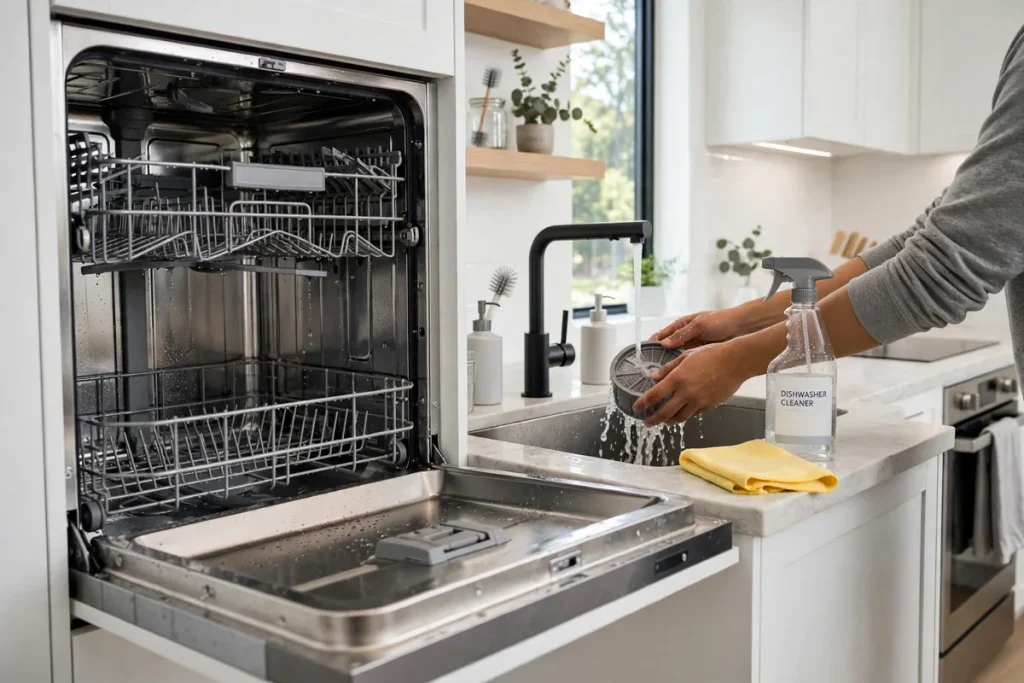

Learning how to clean a dishwasher properly is one of the simplest ways to get cleaner dishes, reduce odors, and help the machine last longer. A dishwasher may look clean because it fills with hot water and detergent every day, but food residue, grease, soap scum, and mineral deposits build up in places you cannot easily see. Over time, that buildup can leave spots on glasses, make plates feel gritty, and create a musty smell that transfers to everything inside.
The good news is that a deep clean needs no special tools or harsh chemicals. With a soft cloth, an old toothbrush, white vinegar, and baking soda, most people can finish in under an hour, plus the time for two cleaning cycles. This guide walks you through each step in order, explains how often to repeat it, and flags the mistakes that can damage seals, racks, or stainless steel.
Signs Your Dishwasher Needs Cleaning
You do not need to wait for a breakdown before cleaning your dishwasher. A monthly routine is ideal, but these signs mean it is time to clean it sooner. First, a sour or musty smell when you open the door is a common early warning. Odor usually comes from trapped food, standing water, or mold growing around the door seal. Second, white spots, a cloudy film, or a chalky residue on glasses can point to mineral buildup or a clogged spray arm that is not rinsing evenly.
Third, dishes that come out still dirty, greasy, or flecked with food suggest the filter or spray arms are partly blocked. Fourth, water pooling at the bottom after a cycle, or a cycle that seems longer than usual, can also signal a drainage or filter problem. Finally, visible grime on the door edges, hinges, or the bottom of the door is easy to miss during normal use, but it is a clear sign that a wipe-down is overdue. If you notice any of these issues, start with the steps below rather than simply adding more detergent.
What You Need Before You Start
Gather everything first so you do not have to stop halfway through with wet hands: a soft sponge or cloth, an old toothbrush, a small bowl, white vinegar, baking soda, and dish soap. Avoid steel wool, abrasive pads, and bleach for routine cleaning, because they can scratch surfaces or damage parts, especially on stainless steel models.
Before you begin, check your dishwasher manual for model-specific instructions, particularly for removing the filter and spray arms. Models differ: a part that twists off on one machine may lift out on another. If a part feels stuck, do not force it. Look for a release tab, a quarter-turn lock, or a clip, and work gently. Turn the dishwasher off before reaching inside, and let it cool completely if it has just finished a cycle.
Step-by-Step: How to Clean a Dishwasher
Step 1: Empty the Dishwasher Completely
Remove every dish, utensil, and rack accessory, then pull out the bottom rack so you can reach the drain area. Check the bottom for fallen cutlery, bottle caps, broken glass, or large pieces of food. Remove anything you find carefully, especially sharp fragments. This step matters because a deep clean cannot work well if debris is still blocking water flow, and it gives you a clear view of the filter and drain cover underneath.
Step 2: Check and Clean the Filter
The filter is usually at the bottom of the tub, under the lower spray arm. Twist or lift it out following your manual, then separate any parts that come apart. Rinse the filter under warm running water and use a soft brush or old toothbrush to remove trapped food, grease, and slimy residue. For stubborn buildup, soak it in warm soapy water for ten to fifteen minutes, then brush it again and rinse thoroughly. Do not use a sharp object to poke through the mesh, because a torn filter will let debris back into the pump.
While the filter is out, wipe the area around the drain with a damp cloth and remove any visible debris. Then put the filter back exactly as it was, making sure it locks into place. A loose or misaligned filter can reduce cleaning performance and allow food particles to recirculate onto your dishes. If your filter is cracked, warped, or no longer fits snugly, replace it with the correct part for your model.
Step 3: Clean the Spray Arms
Spray arms distribute water during the wash, so even a few blocked holes can leave some dishes dirty while others come out clean. If your spray arms can be removed, take them out and hold them up to the light to check the small holes. Use a toothpick or a soft brush to clear food and mineral deposits, then rinse them under running water. Spin each arm by hand to make sure it moves freely and is not hitting a rack or a tall item.
Step 4: Wipe the Door Seals and Edges
Door seals collect crumbs, grease, and moisture, and they are a common source of odor and mold. Dampen a soft cloth with warm soapy water and wipe the full rubber gasket, folding it gently open to clean the groove. Pay special attention to the bottom edge of the door and the hinges, where grime often hides. Rinse the cloth and wipe again with clean water, then dry the seal with a towel. Keeping the seal clean also helps it stay flexible and maintain a good watertight fit.
Step 5: Run a Vinegar Cycle
Place a dishwasher-safe cup or bowl filled with white vinegar on the top rack, then run a hot-water cycle with no dishes and no detergent. The hot water and vinegar help dissolve grease, soap scum, and light mineral deposits inside the tub and pipes. Do not pour vinegar directly into the detergent dispenser for this step, and do not combine it with bleach. Use vinegar for an occasional deep clean, not every wash, because frequent or excessive use can wear down rubber seals over time.
Step 6: Follow With a Baking Soda Rinse
After the vinegar cycle finishes, sprinkle about one cup of baking soda evenly across the bottom of the dishwasher and run a short hot-water cycle. Baking soda helps freshen the interior and remove lingering odors without harsh chemicals. It also gives the tub a final rinse that can leave it looking brighter. When the cycle ends, leave the door slightly open for a while so the interior can air-dry completely, which helps prevent musty smells from returning.
Step 7: Clean the Exterior and Racks
Finish by wiping the outside of the door, the handle, and the control panel with a soft, damp cloth, then drying it to avoid streaks. For stainless steel, wipe in the direction of the grain and use a cleaner made for stainless steel if needed. Check the racks for chipped coating or rust spots, and wipe the rack tines clean. Small chips can be touched up with a rack repair coating, but badly rusted racks are best replaced so rust does not stain dishes.
How Often Should You Clean a Dishwasher?
A full deep clean once a month works well for most households, but your routine should match how often you use the machine. Daily use, hard water, and frequent greasy loads all create buildup faster. Use the table below as a starting point, then adjust if odors or spots return sooner. Other kitchen appliances follow the same monthly rhythm: see our GE over-the-range microwave review.
| Task | How often | Why it matters |
|---|---|---|
| Empty and rinse the filter | Every 2 to 4 weeks | Prevents food buildup and poor washing |
| Wipe door seals and edges | Every 2 weeks | Reduces odor and mold around the gasket |
| Deep clean with vinegar and baking soda | Monthly | Removes grease, soap scum, and odors |
| Check spray arms | Monthly | Keeps water flowing evenly to all dishes |
| Clean the exterior | Weekly | Keeps handles and panels free of fingerprints and grime |
Mistakes to Avoid When Cleaning a Dishwasher
Two common mistakes can do more harm than good. First, do not use bleach in a dishwasher with a stainless steel interior, and never mix bleach with vinegar, because the combination can create harmful fumes and damage parts. Second, do not overuse vinegar. An occasional vinegar cycle is helpful, but using vinegar in every load can dry out rubber seals and hoses over time. Also avoid abrasive pads on the interior, and do not run a cleaning cycle with dishes inside, because the cleaning agents and loose debris can settle back onto them.
Keeping Your Dishwasher Fresh Between Cleans
Small habits make the monthly deep clean much easier. Scrape plates before loading, but do not pre-rinse everything, because modern detergents need some food soil to work properly. Use the right amount of detergent for your water hardness, and run the hot water at the kitchen tap for a few seconds before starting the dishwasher so the first fill is already hot. After each cycle, leave the door ajar for a short time to let moisture escape. Finally, run the dishwasher regularly, even if it is not completely full, because standing water and stale food residue cause more odor in a machine that sits unused for weeks. The same little-and-often approach works for other kitchen appliances, too: see our guide to choosing the right air fryer.
With a simple monthly routine, learning how to clean a dishwasher becomes a quick habit rather than a chore. Clean the filter, clear the spray arms, wipe the seals, run the vinegar and baking soda cycles, and finish with the exterior. Your dishes will come out cleaner, your kitchen will smell fresher, and your dishwasher will last longer. If a clean dishwasher is part of a bigger kitchen refresh, see how custom luxury kitchens are designed around how you cook and use the space.
Frequently Asked Questions
How often should I clean my dishwasher?
A full deep clean once a month works well for most households. Clean the filter every two to four weeks, and wipe the door seals more often if you notice odor or grime.
Can I use vinegar to clean my dishwasher?
Yes, for an occasional deep clean. Place a cup of white vinegar on the top rack and run a hot-water cycle with no dishes. Do not use vinegar in every wash, and never mix it with bleach.
Where is the dishwasher filter and how do I clean it?
The filter is usually at the bottom of the tub, under the lower spray arm. Twist or lift it out, rinse it under warm water, brush away trapped food, soak it in warm soapy water if needed, then lock it back into place.
Why does my dishwasher smell bad?
Odor is often caused by trapped food in the filter, grime on the door seals, or moisture left after a cycle. Cleaning the filter and seals, running a vinegar and baking soda clean, and leaving the door slightly open to dry can help.
Is bleach safe for cleaning a dishwasher?
Do not use bleach in a dishwasher with a stainless steel interior, and never mix bleach with vinegar. For routine cleaning, vinegar and baking soda cycles, plus manual cleaning of the filter and seals, are safer choices.