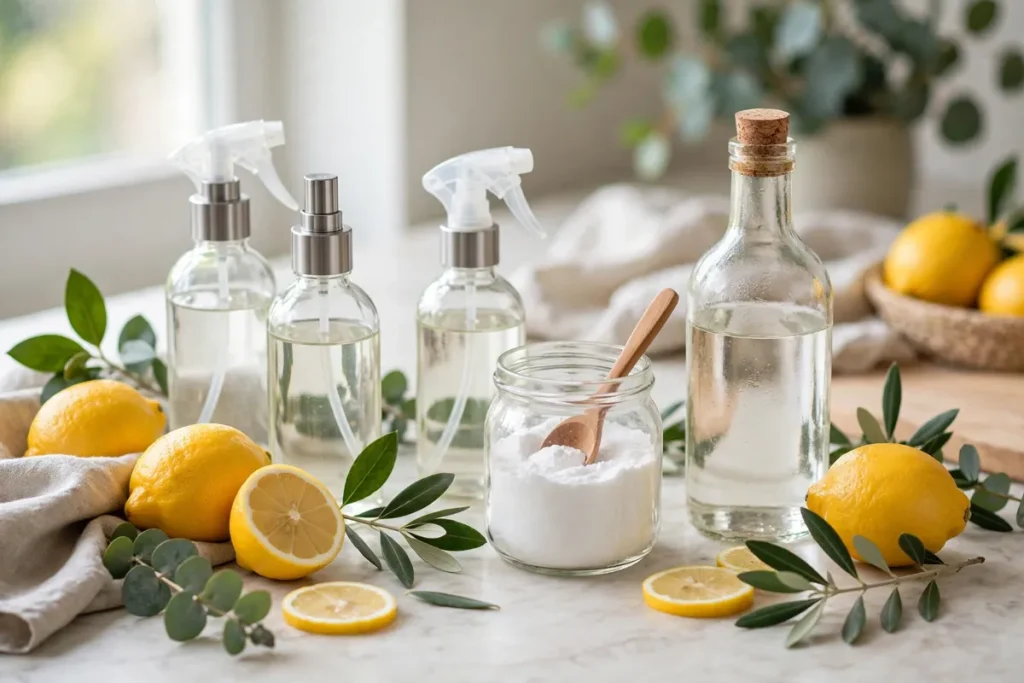

Learning how to make natural cleaning products is easier than most people expect. With a few inexpensive ingredients, you can clean counters, glass, bathrooms, and floors without strong chemical smells or a cupboard full of single-use sprays. Homemade cleaners are not magic, and they will not replace every commercial product, but for everyday dirt, grease, and grime, simple recipes work well, cost less, and let you know exactly what you are spraying in your home.
The key is to match the cleaner to the job. Acids such as vinegar cut mineral deposits and soap scum, mild abrasives such as baking soda lift stuck-on dirt, and soap lifts grease so it can be wiped away. Used correctly and stored safely, these basics cover most routine cleaning. This guide explains what each ingredient does, gives eight tested recipes with quantities, and covers labelling, storage, and safety, so you can start with confidence.
The Base Ingredients and What Each One Does
White vinegar is an acid that helps dissolve limescale, water marks, and soap scum, and it is useful on glass and many hard surfaces. It is not a disinfectant for every germ, and it should not be used on marble or other natural stone, because acid can etch the surface. Use plain white vinegar for cleaning, not malt or balsamic vinegar, which can stain and leave residue.
Baking soda, also called bicarbonate of soda, is a gentle abrasive and a deodorizer. It lifts light stains, neutralizes odors, and helps scrub sinks, tubs, and stovetops without scratching most surfaces when used with a soft cloth. It is also useful on its own as a fridge or carpet deodorizer, left for a short time and then vacuumed or wiped away.
Castile soap is a plant-based liquid soap that cuts grease and lifts dirt. A small amount goes a long way, and it works well in all-purpose sprays, floor cleaners, and dish soap. Use true liquid castile soap, not a detergent that is marketed as natural, and avoid mixing it with vinegar in the same bottle, because the acid reduces the soap’s cleaning power and can leave a filmy residue.
Lemon juice and lemon peel add fresh scent and mild acidity that helps with water spots, cutting boards, and light stains. Lemon is best for small jobs and for freshening a cleaner, rather than as the main cleaning agent. Like vinegar, lemon should not be used on marble or natural stone, and it can lighten some surfaces if left for a long time.
Hydrogen peroxide, usually sold as a 3 percent solution, is an oxidizer that can help with stains and light disinfection on suitable surfaces. It needs care: keep it in its original dark bottle until use, do not mix it with vinegar in the same bottle, and never mix it with bleach or other cleaners. Always test it on a small, hidden area first, and avoid using it on colored fabrics or delicate stone unless you know it is safe.
8 Simple DIY Recipes That Work
1. All-Purpose Spray
Mix 1 cup of water, 1 cup of white vinegar, and 1 teaspoon of liquid castile soap in a spray bottle, then add 10 drops of essential oil if you like, such as lemon or lavender. Shake gently before use. Spray onto counters, sinks, and other hard surfaces, leave for one minute, then wipe with a clean cloth. Do not use this spray on marble, granite, or other natural stone.
2. Glass Cleaner
Mix 1 cup of water, 1 cup of white vinegar, and 1 tablespoon of cornstarch in a spray bottle and shake well. Spray lightly onto glass or mirrors, then wipe with a lint-free cloth or newspaper until clear. The cornstarch helps prevent streaks, but a little goes a long way, so shake the bottle often while you work and avoid spraying near wooden frames.
3. Bathroom Scrub
Make a paste with 1/2 cup of baking soda and just enough water to form a thick paste, about 2 to 3 tablespoons. Spread it on sinks, tubs, and tiles, leave for 10 minutes, then scrub gently with a soft sponge and rinse well. For soap scum, spray vinegar over the paste, let it fizz for a few minutes, then scrub and rinse. Do not use this on natural stone.
4. Kitchen Degreaser
Mix 2 cups of warm water, 1 tablespoon of liquid castile soap, and 1 tablespoon of washing soda in a spray bottle, and shake until dissolved. Spray onto greasy stovetops, range hoods, and backsplashes, leave for five minutes, then wipe with a hot, damp cloth and rinse. Washing soda is stronger than baking soda, so wear gloves and test on a small area first, especially on painted or delicate finishes.
5. Floor Cleaner
For tile, vinyl, and laminate floors, mix 1 gallon of warm water with 1/4 cup of white vinegar and 1 tablespoon of liquid castile soap. Mop with a well-wrung mop, then rinse with clean water if the floor feels slippery. For sealed wood floors, skip the vinegar and use only warm water with a few drops of castile soap, wringing the mop well so the floor is barely damp.
6. Dishwasher Freshener and Cleaner
For a routine freshening clean, place 1 cup of white vinegar in a dishwasher-safe cup on the top rack and run a hot cycle with the dishwasher otherwise empty. Follow with a separate cycle or rinse using 1/2 cup of baking soda sprinkled on the bottom if odors remain. For a full step-by-step deep clean, see this how to clean a dishwasher guide, which covers filters, spray arms, and door seals in detail.
7. Toilet Bowl Cleaner
Sprinkle 1/2 cup of baking soda around the toilet bowl, then pour in 1 cup of white vinegar. Let it fizz for 10 minutes, scrub with a toilet brush, especially under the rim, and flush. This routine clean helps with stains and odors, but it is not a substitute for a disinfectant if someone in the home is ill. Clean the outside of the toilet with the all-purpose spray and a cloth.
8. Wood Polish and Dusting Spray
Mix 1/2 cup of olive oil, 1/4 cup of white vinegar or lemon juice, and 10 drops of lemon essential oil in a small bottle. Shake well, apply a tiny amount to a soft cloth, not directly to the furniture, and rub along the grain. Buff with a clean, dry cloth. Use only a thin layer, test on a hidden spot first, and skip this recipe on unfinished wood or on surfaces that already feel sticky or coated.
Labelling and Storage
Label every bottle with the recipe name, the ingredients, and the date you made it, because homemade cleaners often look alike. Add a simple warning such as Keep out of reach of children and pets, and note any surfaces to avoid, for example Do not use on marble. Use clean, reused spray bottles with working triggers, and keep them upright in a cool place away from heat and sunlight.
Most vinegar and soap cleaners keep for one to two weeks, while baking soda pastes should be made fresh each time. If a spray smells off, looks cloudy in an unusual way, or has been stored for more than a month, throw it away and make a fresh batch. After a big clean-up, such as following a home renovation guide project, homemade cleaners are useful for dust and light grime, but check new surfaces first and follow the manufacturer’s care advice for new counters, floors, and appliances.
Safety: Read This Before You Start
Safety matters more than saving money, so follow these rules every time. Never mix vinegar with hydrogen peroxide in the same bottle, because the mixture can form peracetic acid, which can irritate skin, eyes, and lungs. Never mix bleach with anything, including vinegar, ammonia, or other cleaners, because the combination can create toxic gases. If you use bleach at all, use it alone, with ventilation, and keep it completely separate from your homemade products.
Keep all cleaners, including natural ones, away from children and pets, and store them out of reach, not under a sink a child can open easily. Test every new cleaner on a small, hidden area first, wait a few minutes, and check for discoloration or damage before cleaning the whole surface. Do not use vinegar on marble or natural stone, do not spray cleaners near eyes or open flames, and wear gloves if you have sensitive skin. If a cleaner is swallowed or gets in the eyes, rinse with water and seek medical advice promptly, and bring the bottle label with you if you can.
Frequently Asked Questions
Do natural cleaning products really work?
Yes, for everyday cleaning. Vinegar helps with limescale and soap scum, baking soda lifts dirt and odors, and castile soap cuts grease. They work best on routine dirt and light stains. For heavy grease, mold, or disinfection after illness, you may need a stronger or commercial product, and you should follow its label carefully.
Can I mix vinegar and baking soda for a stronger cleaner?
You can use them one after the other, but mixing them in a bottle does not make a stronger cleaner. The acid and the base mostly cancel each other out, leaving salty water and fizz. For scrubbing, apply baking soda paste first, then spray vinegar over it and scrub, rather than premixing them and storing the mixture.
Are homemade cleaners safe for pets and children?
They are generally safer than harsh chemical sprays, but they are not harmless. Vinegar, soap, and essential oils can still irritate skin, eyes, and stomachs, and some essential oils are unsafe for cats and dogs. Keep all cleaners out of reach, rinse surfaces that pets or children touch, and check essential oil safety for your pet before use.
How long do DIY cleaning products last?
Most vinegar and soap sprays last one to two weeks if stored in a clean, labelled bottle away from heat and sunlight. Baking soda pastes should be made fresh for each use. If a cleaner smells unusual, changes color, or has been stored for more than a month, discard it and make a fresh batch.
Can I use vinegar cleaners on all surfaces?
No. Do not use vinegar on marble, granite, or other natural stone, and avoid it on waxed wood, cast iron, and some aluminum. It is generally safe on glass, ceramic tile, and many sealed hard surfaces, but always test on a small, hidden area first and check the manufacturer’s advice for new counters, floors, and appliances.