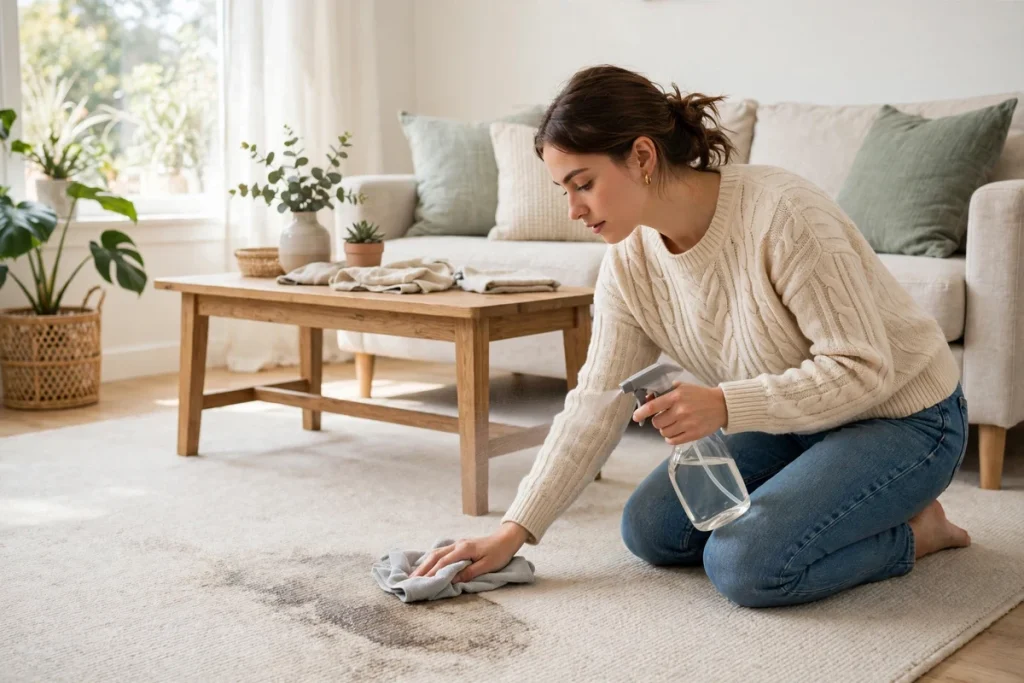

If you are wondering how you can get stains out of carpet, the good news is that most fresh stains come out with quick action and simple supplies. The key is to blot, not rub, and to match the cleaner to the type of stain. This guide covers the general method first, then specific fixes for the most common carpet stains.
The General Carpet Stain Method
- Blot up as much of the spill as possible with a clean white cloth. Work from the outside edge toward the center so the stain does not spread.
- Apply a small amount of cleaner to a cloth, not directly to the carpet, and blot gently.
- Repeat with a clean section of the cloth until no more color transfers.
- Rinse by blotting with a cloth dampened with plain water, then blot dry.
- Let the area air-dry completely, then vacuum to restore the carpet texture.
Always test a cleaner in a hidden spot first, especially on light or wool carpets.
Coffee and Tea Stains
Blot the spill, then apply a mix of one tablespoon of white vinegar, one tablespoon of dish soap, and two cups of warm water. Blot, rinse, and repeat until the stain lifts.
Red Wine Stains
Blot immediately and sprinkle the area with baking soda or salt to absorb the wine. After it dries, vacuum, then blot with a vinegar and dish soap solution. Avoid hot water, which can set the stain.
Pet Urine Stains
Blot up the moisture, then apply an enzyme cleaner made for pet stains. Enzyme cleaners break down the proteins that cause odor. Do not use ammonia-based cleaners, which can smell like urine to pets.
Grease and Oil Stains
Scrape off any solid grease, then blot with a cloth dampened with dish soap and warm water. Dish soap cuts grease well. Rinse by blotting with plain water and repeat if needed.
Blood Stains
Use cold water only, because heat sets blood stains. Blot with cold water and a small amount of dish soap, then rinse with cold water and blot dry.
Ink and Mud Stains
For ink, blot with rubbing alcohol on a cloth, changing cloths often. For mud, let it dry completely first, then vacuum and blot with a dish soap solution. Trying to clean wet mud usually pushes it deeper into the fibers.
Old and Set-In Stains
Old stains are harder, but still worth trying. Dampen the stain, apply a carpet stain remover or a baking soda paste, and let it sit for 15 to 30 minutes before blotting and rinsing. Repeat the process rather than scrubbing harder. If the stain remains, a professional carpet cleaner may be needed.
What Not to Do
- Do not rub the stain, which spreads it and damages carpet fibers.
- Do not use bleach on colored carpet.
- Do not soak the carpet, which can damage the backing and cause mildew.
- Do not use hot water on protein stains such as blood, milk, or egg.
For gentle homemade cleaners, see our how to make natural cleaning products guide, and for bathroom surfaces that need similar care, our how to remove soap scum guide explains safe cleaning methods.
Frequently Asked Questions
What is the best homemade carpet stain remover?
A mix of white vinegar, dish soap, and warm water works for many common stains. For odor and light stains, a baking soda paste left for 15 to 30 minutes before vacuuming also helps.
Can you get old stains out of carpet?
Sometimes. Old stains may lighten with repeated blotting and a good stain remover, but stains that have been heat-set or left for years may not disappear completely. Professional cleaning is the next step if home methods fail.
Should I use hot or cold water on carpet stains?
Use cold water for blood, milk, and egg stains. Warm water is fine for most other stains, including coffee, grease, and dirt. Avoid very hot water, which can set some stains.
Is baking soda good for carpet stains?
Yes, for absorbing moisture and odor and for light stains. Sprinkle it on, let it sit, vacuum, and follow with a gentle cleaner if needed. It is not a cure for deep, set-in stains on its own.
When should I call a professional carpet cleaner?
Call a professional if the stain covers a large area, the carpet smells after cleaning, the backing feels damp for more than a day, or the stain remains after two or three careful attempts.