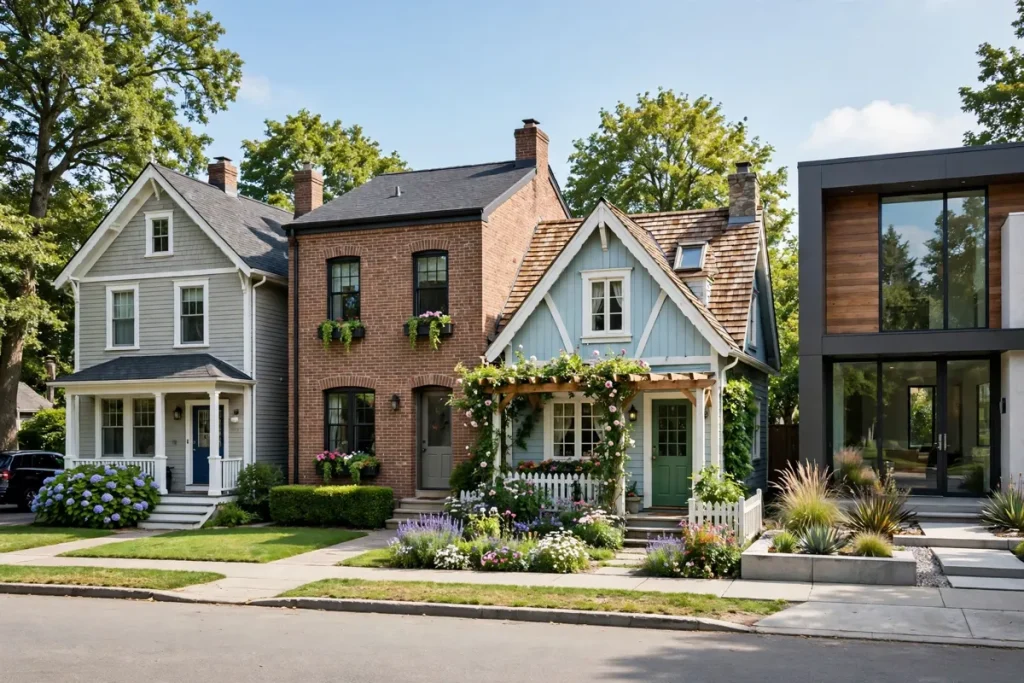

Choosing among the many types of homes is one of the biggest decisions you will make, because the kind of home you buy shapes your daily routine, your budget, and how much time you spend on upkeep. Some buyers want space and privacy, others want a low-maintenance base close to work, and many want something in between. This guide explains the most common types of homes in plain language, compares them side by side, and helps you work out which one suits your life, your family, and your finances.
There is no single best type of home. A detached house can be perfect for a growing family but too much work for a frequent traveler. A condo can be ideal for a first-time buyer but too small for someone who works from home and needs a separate office. The right choice depends on how you live now, how that may change in the next five to ten years, and what you can comfortably afford, including taxes, insurance, and maintenance, not just the purchase price.
1. Single-Family Detached Home
A single-family detached home stands alone on its own lot, with no walls shared with neighbors. It usually offers the most space, the most privacy, and the most control over the land, including a yard, driveway, and room to extend. That freedom comes with full responsibility for the roof, garden, exterior, and repairs. Detached homes suit families who need several bedrooms, people who want outdoor space for children or pets, and buyers who plan to stay for many years and want room to grow.
2. Semi-Detached Home
A semi-detached home shares one wall with a neighboring home, usually as part of a pair. You still get your own entrance, garden, and often a driveway, but at a lower price than a fully detached home in the same area. Noise through the shared wall can be a drawback, and exterior changes may need to match your neighbor. Semi-detached homes suit buyers who want a house and garden without the full cost of a detached property, including couples, small families, and first-time buyers moving up from an apartment.
3. Townhouse
A townhouse, also called a row house, is a multi-story home that shares walls on both sides with neighbors, except for end units. Townhouses often have a small yard or patio, a garage, and two or three floors, which separates living space from bedrooms. They are usually cheaper than detached homes and easier to maintain, although stairs can be a challenge and homeowners association rules may apply. Townhouses suit buyers who want a house-like feel, young families, and people who want to live closer to town without apartment living.
4. Condo
A condo is an individually owned unit inside a larger building or complex, where owners share common areas such as hallways, lifts, and amenities. Condos are often smaller and more affordable than houses, and exterior maintenance is usually handled by the association. Monthly fees, rules about pets or rentals, and less private outdoor space are trade-offs. Condos suit first-time buyers, downsizers, professionals who travel often, and anyone who values a lock-and-leave lifestyle over a large yard.
5. Apartment
An apartment is a unit in a residential building, most often rented rather than owned, although some apartments are sold as condos. Apartments offer flexibility, lower upfront costs, and easy access to city jobs, transport, and entertainment. Space is usually limited, storage can be tight, and you have less control over the building and neighbors. Apartments suit students, young professionals, couples without children, and anyone who wants flexibility or is still deciding where to settle long term.
6. Duplex and Triplex
A duplex has two separate living units in one building, while a triplex has three. Owners can live in one unit and rent out the other, which can help cover the mortgage, or buy the whole building as an investment. Shared walls, landlord responsibilities, and local rental rules need careful thought. Duplexes and triplexes suit buyers who want rental income, multi-generational families who want separate but close living spaces, and investors who want to live on site while building equity.
7. Cottage and Bungalow
Cottages and bungalows are usually small, single-story or one-and-a-half-story homes with a cozy, informal feel. Bungalows are known for wide porches, low-pitched roofs, and easy step-free living on one level, while cottages often have a charming, rustic character. They are easier to clean and heat than large houses, but they may offer less storage and fewer bedrooms. These homes suit retirees, couples, people who want simpler living, and buyers who love character and a manageable home.
8. Ranch Home
A ranch home is a long, low, single-story house with an open layout and a strong connection to the outdoors. Living areas, bedrooms, and the kitchen are all on one level, which makes ranch homes practical for accessibility and for families with young children. The trade-off is a larger footprint, so ranch homes need a bigger lot for the same amount of living space. Ranch homes suit buyers who want everything on one floor, people planning to age in place, and families who enjoy open-plan living and outdoor space.
9. Manufactured and Mobile Home
Manufactured homes are built in a factory and transported to a site, while mobile homes are a similar factory-built option, often placed in a park or on leased land. They are usually much more affordable than site-built homes and can be a practical route into homeownership. Financing, resale value, and land ownership vary, so it is important to check whether you own the land, what site fees apply, and how the home is classified. These homes suit budget-conscious buyers, retirees, and people in rural areas where site-built homes are scarce or expensive.
10. Tiny Home
A tiny home is a very small dwelling, often under 400 square feet, designed for simple living with clever storage and multi-use furniture. Tiny homes cost far less to buy, heat, and maintain, and they appeal to people who want to reduce debt and possessions. The challenges are real: limited space for guests, storage, and work, plus zoning and parking rules that vary by location. Tiny homes suit minimalists, single buyers, people who want a low-cost second home, and those willing to live simply in exchange for financial freedom.
11. Multi-Family Home
A multi-family home contains several separate units under one roof, beyond a duplex or triplex, and is often bought as an investment. The owner may live in one unit and rent the rest, or rent all units. Rental income can offset costs, but managing tenants, repairs, and vacancies takes time and skill. Multi-family homes suit experienced buyers, investors, and families who want to keep relatives close while keeping separate households and some rental income.
12. Farmhouse
A farmhouse is a larger rural home, often with a big porch, generous land, and a practical layout built around farming or country living. Modern farmhouses borrow the look, with open kitchens, natural materials, and plenty of outdoor space, even when they are not working farms. They offer space, privacy, and a slower pace, but they can mean longer commutes, higher heating costs, and more land to maintain. Farmhouses suit families who want land and space, people who work from home in a rural area, and buyers who love country living.
Types of Homes Compared
| Home type | Typical cost level | Space | Maintenance | Best for |
|---|---|---|---|---|
| Single-family detached | High | Large | High | Families wanting space and privacy |
| Semi-detached | Medium to high | Medium to large | Medium to high | Families wanting a house at a lower cost |
| Townhouse | Medium | Medium | Medium | Buyers wanting a house feel near town |
| Condo | Low to medium | Small to medium | Low | First-time buyers and downsizers |
| Apartment | Low | Small | Low | Renters and flexible city living |
| Duplex or triplex | Medium | Medium | Medium | Owners wanting rental income |
| Cottage or bungalow | Low to medium | Small to medium | Low to medium | Retirees and simple living |
| Ranch | Medium to high | Medium to large | Medium | Single-level and accessible living |
| Manufactured or mobile | Low | Small to medium | Low to medium | Budget-conscious buyers |
| Tiny home | Very low | Very small | Very low | Minimalists and low-cost living |
| Multi-family | High | Large overall | High | Investors and multi-generational living |
| Farmhouse | Medium to high | Large | High | Rural living with land |
How to Choose the Right Type of Home
Start with your daily life, not with a picture of a dream house. Count the bedrooms and bathrooms you truly need, think about working from home, guests, pets, and storage, and be honest about stairs, yard work, and commuting. Then set a total monthly budget that includes mortgage or rent, taxes, insurance, association fees, utilities, and a repair fund. A home that stretches your budget every month will feel less comfortable, however attractive it looks.
Next, visit different types of homes in person, at different times of day if you can. Listen for noise through shared walls, check light, storage, parking, and outdoor space, and ask about association rules, fees, and planned repairs. Think ahead, too: a home that works today should still work if your family grows, your job changes, or your mobility changes. If you plan to renovate, a home renovation guide can help you plan scope, budget, and timing before you commit, and if the kitchen is a priority, a kitchen remodeling guide explains costs, steps, and practical ideas that are easy to overlook when you are focused only on the purchase.
Finally, compare the total cost of ownership, not just the listing price. A cheaper home with high fees, long commutes, or major repairs can cost more over five years than a slightly pricier home in a better location. Get an inspection, read the fine print on fees and land ownership, and talk to a local agent about resale demand for that home type in your area. The best type of home is the one that fits your budget, your routine, and your plans, without forcing you to change how you live to fit the house.
Frequently Asked Questions
What is the most common type of home?
The single-family detached home is the most common type of home in many countries, especially in suburban areas. It is popular because it offers privacy, a private yard, and control over the property, although townhouses, condos, and apartments are more common in dense cities where land is scarce and prices are higher.
What is the cheapest type of home to buy?
Tiny homes and manufactured or mobile homes are usually the cheapest types of homes to buy, followed by small condos and apartments. The total cost still depends on land, site fees, association charges, financing, and condition, so always compare monthly costs, not just the purchase price.
Is a townhouse or a condo better for a first-time buyer?
Both can work well for a first-time buyer. A townhouse usually offers more space, multiple floors, and a small yard, while a condo is usually cheaper and easier to maintain. Choose a townhouse if you want a house-like feel and can manage stairs, and choose a condo if low maintenance and a lower price matter more.
What is the difference between a duplex and a multi-family home?
A duplex has two separate units, while a multi-family home is a broader term for a building with several units, which can include duplexes, triplexes, and larger buildings. In both cases, owners may live in one unit and rent the others, but larger multi-family buildings usually involve more tenants, management, and regulation.
Which type of home is best for retirement?
Single-level homes such as bungalows, ranch homes, and ground-floor condos are often best for retirement because they reduce stairs and maintenance. The right choice also depends on budget, location, access to health care and family, and whether you want a yard, a community, or a lock-and-leave home for travel.