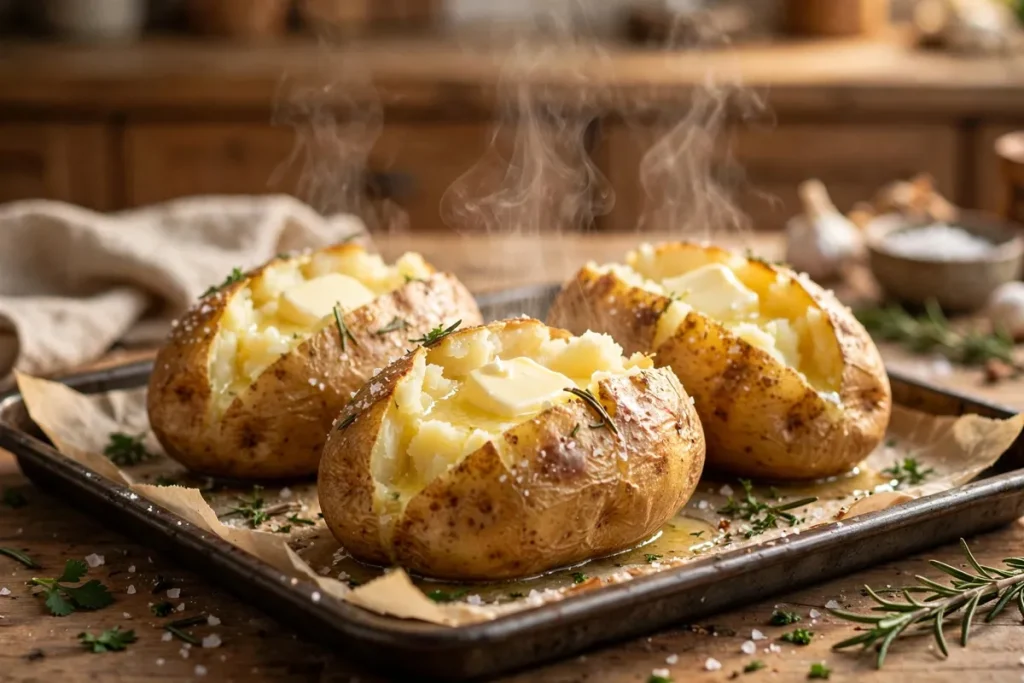

Learning how to bake a potato in the oven is one of the most useful kitchen skills you can master. A well-baked potato needs no special equipment and only a few ingredients, yet the difference between a good one and a great one comes down to a handful of small choices: the right potato, a hot oven, a dry and well-seasoned skin, and enough time for the inside to turn soft and fluffy. Get those right, and you have a simple side dish that can also carry a full meal.
This guide walks you through the whole process, from choosing potatoes at the store to checking for doneness, reheating leftovers, and fixing common problems. It also compares the oven method honestly with the microwave shortcut, so you can choose the method that fits the time you have.
Why Russet Potatoes Work Best
For a classic baked potato, russet potatoes are the best choice. They have thick, sturdy skin that crisps well in a hot oven, and their flesh is high in starch and low in moisture. That combination is what creates the contrast everyone wants: a crisp, salty outside and a light, fluffy inside that breaks apart easily with a fork.
Choose potatoes that are firm all over, with no soft spots, green patches, or sprouts. Medium to large potatoes of a similar size will cook more evenly than a mix of very small and very large ones. If your potatoes vary a lot in size, check the smaller ones earlier and take them out when they are done, rather than overcooking them while you wait for the largest one.
Other potatoes can still be baked, but the result will be different. Yukon Gold potatoes bake up creamier and denser, which some people enjoy, while red potatoes tend to stay firmer and waxier. They are fine choices for a different style of baked potato, but if you want the classic fluffy result, start with russets.
What You Need
- 4 medium russet potatoes, scrubbed clean
- 1 to 2 tablespoons olive oil or another neutral oil
- 1 to 2 teaspoons coarse salt, plus more for serving
- Butter and toppings of your choice
- A fork, a baking sheet, and, if you like, a wire rack
You do not need foil for the best result, and you do not need to wrap each potato individually. In fact, wrapping is one of the main reasons baked potatoes turn out soft and steamy instead of crisp.
How to Bake a Potato in the Oven, Step by Step
Preheat your oven to 425°F (220°C). A hot oven is important: it helps the skin dry out and crisp while the inside steams gently and becomes fluffy. A lower oven temperature can still cook a potato, but it usually takes longer and gives a softer, less crisp skin.
- Scrub and dry the potatoes. Rinse each potato under cold water and scrub away any dirt. Dry them thoroughly with a clean towel. A dry skin is essential for crispness, so do not skip this step.
- Prick each potato. Use a fork to prick each potato several times on all sides. This lets steam escape while the potato bakes and helps prevent it from bursting in the oven.
- Oil and salt the skin. Rub each potato all over with a little oil, then sprinkle it generously with coarse salt. The oil helps the skin crisp and brown, while the salt adds flavor and texture.
- Place them on a baking sheet. Set the potatoes directly on a baking sheet, or on a wire rack set over a baking sheet for even more air circulation. Leave space between them so hot air can move around each one.
- Bake for 45 to 60 minutes. Bake at 425°F (220°C) until the skin is crisp and the inside feels soft when squeezed gently with an oven mitt. Larger potatoes may need up to 75 minutes.
- Rest briefly, then split and fluff. Let the potatoes rest for about 5 minutes. Cut a slit along the top, squeeze the ends gently toward the center to open the potato, and fluff the inside with a fork before adding butter and toppings.
That resting time matters. It lets the steam settle slightly, so the flesh stays fluffy instead of turning wet or gummy when you cut into it.
Foil vs. No Foil: Which Is Better?
For crispy skin, bake without foil. Foil traps steam around the potato, which softens the skin and produces a texture closer to a steamed potato. That can be pleasant if you prefer a soft skin, but it will not give you the crisp, salty crunch that makes an oven-baked potato special.
Foil does have one practical use: it can help keep a finished potato warm for a short time after baking. If you need to hold potatoes while the rest of dinner finishes, wrap them loosely in foil after they come out of the oven. Just know that the skin will soften as it sits. For the best texture, serve baked potatoes soon after they come out of the oven.
How to Tell When a Baked Potato Is Done
There are two reliable checks, and using both gives you the most confidence. First, squeeze the potato gently with an oven mitt: a done potato gives easily and feels soft all the way through, with no hard center. Second, if you have an instant-read thermometer, check the thickest part. A fully baked potato usually reads around 205°F to 212°F (96°C to 100°C).
If the skin is crisp but the center still feels firm, give it another 10 minutes and check again. Potatoes vary in size and density, so time alone is only a guide. Trust the squeeze test and the temperature more than the clock.
The Microwave Shortcut, Compared Honestly
The microwave is faster, but it is not the same as the oven. A microwaved potato can be soft and fully cooked in about 8 to 12 minutes, depending on its size, which makes it a useful option on a busy night. What it cannot do well is crisp the skin. Microwaved potatoes tend to have soft, slightly damp skin and a denser texture.
A good compromise is to start the potato in the microwave for about 5 minutes, then finish it in a hot oven for 20 to 25 minutes. You save time without giving up all of the crispness. If you have the full hour, though, the oven-only method still gives the best result, especially for the skin.
Toppings Ideas
A baked potato is a blank canvas. Classic toppings include butter, sour cream, shredded cheese, chopped chives, and crumbled bacon. For a lighter meal, try steamed broccoli and cheese, chili, or a spoonful of salsa with black beans. For something richer, leftover pulled pork or shredded chicken works beautifully, and a baked potato makes a satisfying partner to slow-cooked dinners such as these slow cooker chicken recipes.
Whatever you choose, season the flesh lightly after you fluff it, then add toppings in layers so every bite has a little of everything. A small pinch of salt inside the potato makes a surprising difference, even under rich toppings.
Storage and Reheating
Let leftover baked potatoes cool, then store them in an airtight container in the refrigerator for up to 4 days. For the best texture when reheating, use the oven: warm the potato at 350°F (175°C) for 15 to 20 minutes, or until heated through. The microwave is faster, but the skin will soften. If you plan to reheat in the microwave, split the potato first and cover it loosely so it heats evenly.
You can also freeze baked potatoes, although the texture changes a little after thawing. Wrap each cooled potato tightly, freeze for up to 3 months, and thaw overnight in the refrigerator before reheating in the oven.
Common Mistakes to Avoid
Skipping the drying step, wrapping in foil from the start, and baking at too low a temperature are the three mistakes that most often lead to soggy skin. Crowding the pan can also slow cooking, so give each potato room. Finally, do not cut the potato open too early: a short rest helps the inside stay fluffy.
Baked potatoes are also a forgiving dish to pair with other hands-off cooking. If you enjoy meals that mostly take care of themselves, a pork shoulder crock pot dinner is another easy option for nights when you want a hearty meal without standing over the stove.
Frequently Asked Questions
What temperature should I bake a potato at?
Bake at 425°F (220°C) for the best balance of crisp skin and fluffy inside. Most medium russet potatoes take 45 to 60 minutes at this temperature.
Should I wrap a baked potato in foil?
No, if you want crispy skin. Bake without foil so steam can escape. Foil traps moisture and makes the skin soft.
How do I know when a baked potato is done?
Squeeze it gently with an oven mitt: it should give easily with no hard center. An instant-read thermometer should read around 205°F to 212°F in the thickest part.
Can I bake a potato in the microwave instead?
Yes, but the skin will stay soft. Microwave for 8 to 12 minutes, turning halfway through, or start in the microwave and finish in a hot oven for a crisper result.
How long do leftover baked potatoes keep?
Store cooled leftovers in the refrigerator for up to 4 days. Reheat in the oven at 350°F (175°C) for the best texture.