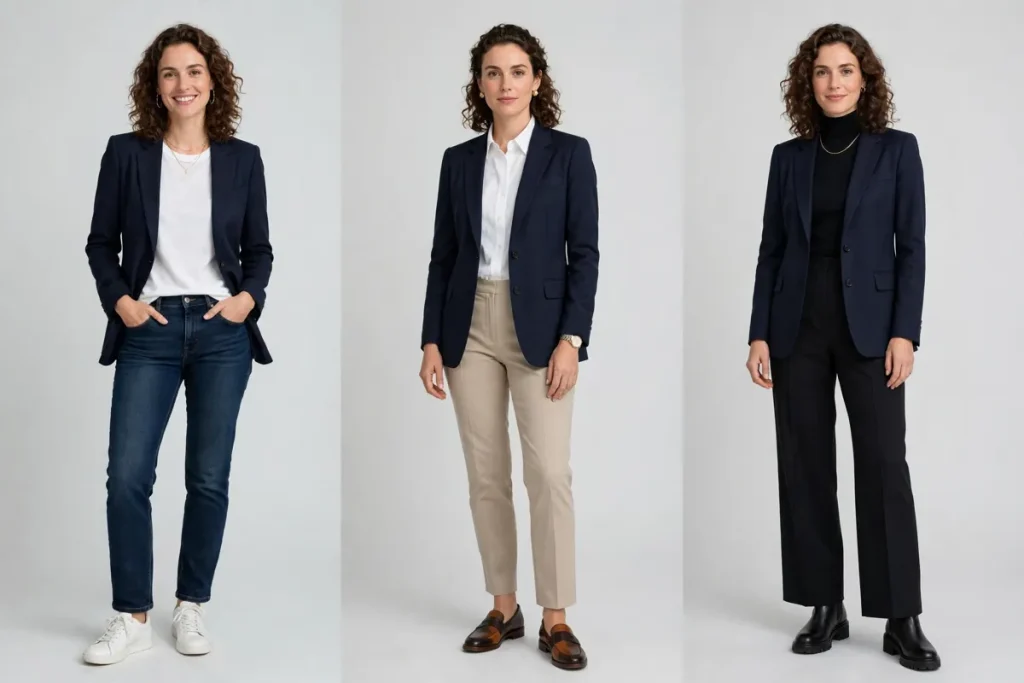

Learning how to style a blazer is one of the fastest ways to make an everyday wardrobe feel more polished. A good blazer can turn jeans into a smart-casual outfit, sharpen a work look, and finish an evening outfit without a full suit. The trick is not owning many blazers. It is choosing one or two that fit well, knowing which colours pair easily, and building simple outfits around them.
This guide explains how a blazer should fit, covers colour pairing basics, and gives you nine outfit ideas for work, smart-casual days, evenings, and weekends. The advice is written for both women and men where it genuinely applies, because fit, proportion, and colour work the same way even when the pieces underneath are different.
How a Blazer Should Fit
Fit matters more than brand or price. A blazer that is too tight will pull at the button, while one that is too large will hide your shape and look borrowed. Use these checks before you buy or before you decide to keep one you already own.
Shoulders
The shoulder seam should sit at the edge of your own shoulder, not drooping down your arm or pulling inward. If the shoulders are too wide, a tailor can rarely fix them easily. If they are too narrow, the blazer will feel tight when you move your arms. This is the first fit point to check, and the hardest to alter.
Sleeve Length
With your arms relaxed, the blazer sleeve should end around your wrist bone, showing about a centimetre or half an inch of shirt cuff if you are wearing a long-sleeved shirt. Sleeves that cover your hands look too long, while sleeves that ride up when you move may be too short. Sleeve length is one of the easiest alterations, so it is worth fixing if the shoulders fit.
The Button Rule
For a single-breasted blazer with two buttons, fasten only the top button and leave the bottom one undone. For a three-button blazer, fasten the middle button, and sometimes the top one, but never the bottom button alone. For a one-button blazer, fasten it when standing and undo it when sitting. When the button is fastened, the fabric should lie flat without pulling or gaping. If it pulls, try a larger size or a different cut.
Length and Shape
A classic blazer usually covers the waistband and ends around mid-hip. Shorter, cropped blazers work well with high-waisted trousers, jeans, and skirts, while longer blazers can balance a dress or a slim trouser. The blazer should follow your shape without clinging. You should be able to sit, reach forward, and cross your arms comfortably.
Colour Pairing Basics
Start with neutrals, because they pair with almost everything. Navy is the most versatile blazer colour: it works with white, grey, black, beige, denim, and most pastels. Black is best for evenings and formal work looks, and it pairs cleanly with white, grey, and jewel tones. Grey, especially charcoal or mid-grey, is a useful workhorse for office outfits. Beige or camel softens a look and works beautifully in spring and summer with white, navy, denim, and earth tones.
A simple rule is to pair one darker piece with one lighter piece. For example, a navy blazer with white trousers or a light top, a black blazer with a white shirt, or a beige blazer with dark jeans. If your blazer is patterned, such as a check or herringbone, keep the rest of the outfit plain so the pattern has room to stand out.
9 Blazer Outfits for Work, Casual Days, and Evenings
1. The Classic Work Outfit
Pair a navy blazer with matching or dark tailored trousers, a white shirt or blouse, and smart shoes. This is a reliable office look for both women and men. Keep accessories simple: a leather belt, a watch, and a structured bag or briefcase. If the office is more relaxed, swap the shirt for a fine knit top in the same colour family.
2. Blazer With a Dress for Work
A knee-length shift dress or shirt dress in black, navy, or grey looks instantly work-ready under a blazer. Choose a blazer that ends at or just above the hip so it does not overwhelm the dress. Add closed-toe shoes and minimal jewellery. For a softer look, try a beige blazer over a navy dress.
3. Blazer With Jeans for Smart-Casual Days
Dark, straight or slim jeans are the easiest way to dress a blazer down without looking untidy. Add a plain white or black tee, a navy or grey blazer, and loafers, clean trainers, or ankle boots. The key is contrast: dark jeans with a lighter top, or a dark blazer with a light tee, so the outfit does not blend into one block of colour.
4. The Relaxed Weekend Blazer
For weekends, choose an unstructured blazer, which is softer and less padded than a traditional tailored blazer. Wear it open over a simple tee and relaxed jeans or chinos, with trainers or flat shoes. Choosing the right tee matters here, because a well-fitting, good-quality tee keeps a casual blazer outfit looking intentional rather than thrown together. This guide to choosing men’s tees explains fabric, fit, and weight in simple terms, and the same fit principles help anyone pick a tee that sits well under a blazer.
5. The Evening Blazer and Dress
For evenings, choose a black blazer over a simple dress in black, deep red, or jewel green. Keep the dress plain so the blazer and accessories do the work. Add heeled shoes or elegant flats, a small bag, and one statement piece, such as earrings or a bracelet, rather than several competing pieces.
6. The Evening Blazer and Tailored Trousers
A black or charcoal blazer with slim tailored trousers and a silk or satin top makes a polished evening outfit for anyone who prefers trousers to dresses. Add smart shoes and a slim belt. For men, this is a dinner-ready alternative to a full suit; for women, it is a confident, comfortable evening option.
7. Blazer With a Skirt
A blazer works with a pencil skirt for work, a pleated midi skirt for smart-casual days, and a satin midi skirt for evenings. Balance is key: pair a longer blazer with a shorter skirt, or a cropped blazer with a longer skirt, so the proportions feel intentional. Tuck in the top to show where the skirt begins.
8. The Layered Blazer for Cooler Days
In cooler weather, layer a blazer over a fine knit jumper or turtleneck, with trousers or jeans and boots. Choose a slightly roomier blazer so the knit fits underneath without pulling. A scarf in a neutral colour adds warmth without bulk. This is an easy way to keep a blazer in rotation through autumn and winter.
9. The Summer Linen Blazer
A beige or light grey linen blazer is ideal for warm days. Wear it with a white tee or vest, light trousers or a light skirt, and loafers or sandals. Linen creases naturally, so embrace a relaxed look rather than aiming for a sharp, pressed finish. For a casual summer base, relaxed everyday pieces show how comfort and structure can work together, as in this look at everyday streetwear fashion, where simple, neutral layers keep an outfit easy to wear.
Shoes and Accessories
Shoes change the tone of a blazer outfit instantly. Loafers and ballet flats keep it smart-casual, ankle boots add structure in cooler months, clean white trainers make it weekend-ready, and heels or smart dress shoes make it evening-ready. Avoid very sporty trainers with a tailored blazer, unless the blazer itself is unstructured and casual.
For accessories, less is usually more. Choose one focal point: a watch, a belt, a scarf, or a simple necklace. Match your belt to your shoes where possible, and keep your bag in proportion to the outfit. A structured bag suits work and evening looks, while a crossbody bag suits casual days.
Common Styling Mistakes
The most common mistakes are wearing a blazer with shoulders that are too wide, fastening the bottom button, pairing a formal blazer with very casual shorts, and adding too many patterns at once. Another mistake is choosing a blazer that is too long for your height, which can shorten your legs visually. If a blazer does not fit in the shoulders, it is usually better to try another size or cut than to hope tailoring will fix it.
Frequently Asked Questions
Can I wear a blazer with jeans?
Yes. Dark jeans, a plain tee or shirt, and a well-fitting blazer make a reliable smart-casual outfit. Keep the jeans free of heavy rips or fading for a smarter look, and choose loafers, ankle boots, or clean trainers to finish it.
Should a blazer be buttoned or unbuttoned?
Button a single-breasted blazer when standing, following the button rule above, and undo it when sitting. Wearing it open over a tee or knit is also fine for casual outfits, especially with an unstructured blazer.
What colour blazer should I buy first?
Navy is the best first choice for most people because it pairs with white, grey, black, beige, and denim, and it works for work, casual days, and evenings. Black is a good second choice if you attend many evening events.
Can women and men follow the same blazer fit rules?
Yes, the core rules are the same: shoulders should sit at the shoulder edge, sleeves should end near the wrist, and the button should close without pulling. The main difference is the cut underneath, such as a dress, skirt, or trousers, not the fit principles themselves.
How do I make a blazer look less formal?
Wear it open over a plain tee, pair it with dark jeans or chinos, and choose casual shoes such as loafers or clean trainers. An unstructured blazer in navy, grey, or beige also looks less formal than a sharply padded suit jacket.