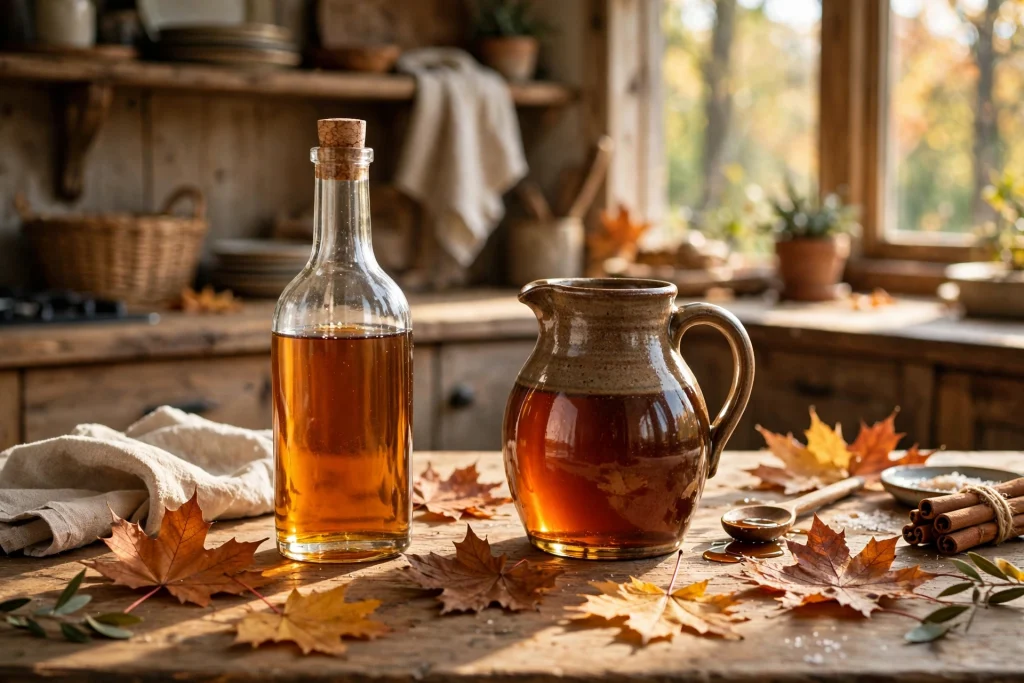

Can maple syrup go bad? Yes, it can — although pure maple syrup lasts much longer than most pantry foods. Unopened, it can keep for years, but once you open the bottle, air, moisture, and time give mold and yeast a chance to grow. The good news is that spoiled maple syrup is usually easy to spot, and with the right storage you can keep it tasting fresh for a very long time.
In this guide, you will learn exactly how long maple syrup lasts before and after opening, the signs that it has gone bad, whether moldy syrup is safe to save, and the best way to store it in the pantry, fridge, or freezer. If you only remember one rule, make it this one: refrigerate maple syrup after opening.
Does Maple Syrup Go Bad?
Yes, maple syrup can go bad, but it does not spoil in the same way milk or fresh juice does. Pure maple syrup is about two-thirds sugar and one-third water, with very little protein or fat for bacteria to feed on. That high sugar concentration, plus the heat used during production, makes it a hostile environment for most microbes. That is why an unopened bottle can sit in a cool pantry for years without any noticeable change in flavor.
Once the seal is broken, the situation changes. Every time you open the bottle, you let in air and tiny amounts of moisture and airborne mold spores. The syrup is still very sugary, but the surface can become diluted enough, especially around the cap and neck, for mold to grow. Warmth speeds the process up. A bottle left on a sunny kitchen counter in summer will spoil far sooner than the same bottle kept in the fridge.
It is important to distinguish real maple syrup from pancake syrup. Pancake syrup is usually corn syrup flavored with artificial maple flavor, and it often contains preservatives. It can also spoil, but it behaves differently and generally keeps longer at room temperature. The advice in this article is for 100% pure maple syrup, the kind made by boiling maple tree sap.
How Long Does Maple Syrup Last?
Shelf life depends on whether the bottle is sealed, where you keep it, and how carefully you handle it. The table below gives realistic, conservative estimates for pure maple syrup stored properly. Always check the best-by date on the bottle, but remember that date is about quality, not a hard safety deadline.
| Storage situation | Typical shelf life | Notes |
|---|---|---|
| Unopened, cool dark pantry | 2 to 3 years, often longer | Keep away from heat and light |
| Opened, refrigerated | 12 months or more | Best option after opening |
| Opened, at room temperature | 1 to 3 months | Mold risk rises quickly |
| Frozen in a sealed container | Indefinitely for quality | Syrup stays pourable when cold |
Unopened maple syrup stored in a cool, dark cupboard often tastes perfectly fine well past its printed date. The main risk is not bacteria, but slow flavor changes and, in rare cases, a swollen or leaking container. If the bottle is damaged, the seal is broken, or the syrup smells wrong, do not use it.
Opened maple syrup is a different story. In the refrigerator, a bottle that is tightly capped and handled with clean hands will usually last at least a year, and many people use it for even longer without problems. At room temperature, you should aim to finish it within a few weeks to a couple of months, and check it every time you pour. If you buy syrup in large jugs, consider pouring a small amount into a squeeze bottle for daily use and keeping the rest sealed in the fridge or freezer.
Signs Maple Syrup Has Gone Bad
Your senses are the best test. Check the syrup before you pour it, especially if the bottle has been open for months. Look at it in good light, smell it, and pay attention to the texture.
1. Mold on the surface or around the cap
The most common sign of spoilage is mold. It usually appears as fuzzy white, green, gray, or black spots floating on the surface or clinging to the inside of the cap. Even a small patch means the syrup is contaminated. Do not simply scoop the mold off the top and assume the rest is fine without treating the syrup properly, as explained below.
2. A sour, yeasty, or fermented smell
Fresh maple syrup smells sweet, warm, and woody, a little like caramel and vanilla. If it smells sour, sharp, alcoholic, or like bread dough, yeast has probably started fermenting the sugars. That is a clear sign to throw it away, because the flavor will be unpleasant even if you heat it.
3. Cloudiness, bubbles, or a strange texture
Syrup that has gone cloudy, developed bubbles when it has not been shaken, or become unusually thick, stringy, or slimy should not be used. Some crystallization is different: sugar crystals at the bottom of the bottle are harmless and can be dissolved by warming the bottle gently in warm water. Cloudiness combined with an off smell, however, points to spoilage.
4. An off or bitter taste
If the syrup looks and smells normal but tastes sour, bitter, or oddly sharp, stop using it. Taste only a tiny amount when you are unsure, and never taste syrup that has visible mold or a fermented smell. When in doubt, throw it out — a bottle of syrup is not worth a stomach upset.
Is Moldy Maple Syrup Safe to Eat?
This is the question most people ask, and the answer is nuanced. Food safety experts often say that surface mold on maple syrup can be dealt with by skimming off the mold, bringing the syrup to a boil, skimming again, and then refrigerating it in a clean container. Because maple syrup is a high-sugar, low-water food, mold usually grows only on the surface, and boiling kills the mold and yeast present in the syrup.
That method can work for a small amount of surface mold on syrup that otherwise smells normal, but it is not a guarantee, and it does not improve the flavor if fermentation has already started. Some molds can produce toxins that heat does not fully destroy, and people with mold allergies, weakened immune systems, or young children in the household should be more cautious. The safest choice, especially if the mold is extensive, the syrup smells fermented, or you are unsure, is to discard the bottle.
If you do decide to save lightly moldy syrup, do it carefully: skim off all visible mold, heat the syrup to a rolling boil for a few minutes, skim any foam, let it cool, and pour it into a clean, dry, airtight container. Refrigerate it and use it soon. Do not return boiled syrup to the original dirty bottle, and do not save syrup that has mold through the whole bottle or a sour smell.
How to Store Maple Syrup Properly
Good storage is simple, and it makes the biggest difference to shelf life. Follow these habits every time you buy a new bottle.
Keep unopened syrup in a cool, dark place
Store sealed bottles in a pantry or cupboard away from the stove, dishwasher, and direct sunlight. Heat and light slowly degrade flavor and color, even through a sealed cap. A basement shelf or a cool kitchen cupboard is ideal. The same cool, dark, dry approach helps other pantry foods keep their flavor too, as explained in our guide to dried herbs and how to store them.
Refrigerate after opening
Once you open maple syrup, put it in the refrigerator and keep the cap tightly closed. Cold slows mold and yeast dramatically. Wipe the neck and cap clean before you close the bottle, because sticky residue around the opening is a favorite place for mold to start. Always pour with clean hands and avoid touching the inside of the cap.
Use clean, dry containers
If you transfer syrup to another container, make sure it is completely clean and dry. Even a few drops of water can dilute the surface and invite mold. Glass bottles and food-safe plastic containers with tight lids work well. Label the container with the date you opened it, so you know how long it has been in use. Similar care with storage and cleanliness matters for other foods as well — see our guide to how to cook, use, and store ham hock for another example of why clean, airtight storage matters.
Freeze it for long-term storage
Freezing is the best option if you buy maple syrup in bulk or use it only occasionally. Maple syrup does not freeze solid because of its high sugar content, so it stays thick but pourable straight from the freezer. Pour it into a freezer-safe container, leave a little headroom for expansion, seal it tightly, and label it. Frozen syrup keeps its flavor for a year or more, and you can thaw a small portion in the fridge whenever you need it.
What About Crystallization?
Sugar crystals in maple syrup are not a sign that it has gone bad. They form when water evaporates or the syrup is stored in a very cold place, and they are completely harmless. To fix crystallized syrup, place the bottle in a bowl of warm — not boiling — water and stir gently until the crystals dissolve. Do not microwave a plastic bottle, and do not overheat the syrup, because high heat can darken the flavor. If crystals return quickly or the syrup also smells off, check the other signs of spoilage above.
Frequently Asked Questions
Can maple syrup go bad if unopened?
Yes, but very slowly. Unopened pure maple syrup kept in a cool, dark pantry usually lasts two to three years and often longer. Check the seal, the bottle, and the smell before using a very old bottle, and discard it if anything seems off.
Does maple syrup need to be refrigerated after opening?
Yes. Refrigeration is the single best way to keep opened maple syrup fresh. It slows mold and yeast growth and can extend the life of an opened bottle to a year or more, compared with only a few weeks or months at room temperature.
Can you eat maple syrup with mold on it?
Light surface mold can sometimes be removed by skimming and boiling the syrup, but the safest option is to throw moldy syrup away, especially if the mold is extensive or the syrup smells fermented. People with allergies or weakened immunity should not try to save it.
How long does maple syrup last in the fridge?
Opened maple syrup stored in a tightly closed bottle in the refrigerator usually lasts at least 12 months. Keep the cap clean, avoid adding water, and check for mold, cloudiness, or a sour smell before each use.
Can you freeze maple syrup?
Yes. Maple syrup freezes well and stays pourable because of its high sugar content. Store it in a sealed, freezer-safe container, label it with the date, and thaw only the amount you need in the refrigerator.
Conclusion
Can maple syrup go bad? Yes, but it is one of the most forgiving foods in your kitchen. Keep it sealed in a cool, dark place until you open it, refrigerate it after opening, keep the bottle clean and tightly capped, and freeze any extra for long-term storage. Check for mold, a sour or fermented smell, and cloudiness before you pour, and when in doubt, throw it out. With those simple habits, a bottle of pure maple syrup will stay sweet, clear, and delicious for months — and often for a year or more.