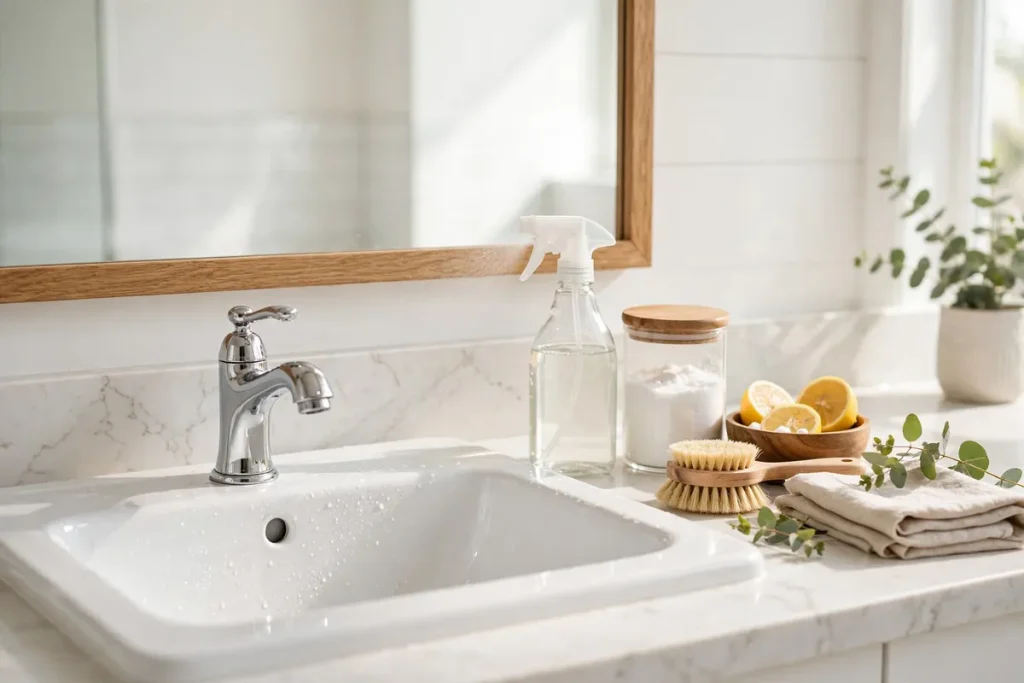

Good bathroom cleaning hacks do more than save time. They use the right cleaner, in the right place, for long enough to work, so you scrub less and damage nothing. This guide brings together the most useful bathroom cleaning hacks, adds clear steps and dwell times, and shows you how to keep the room cleaner between deep cleans. You do not need expensive products. White vinegar, baking soda, dish soap, citric acid, and hydrogen peroxide cover almost every job, as long as you use each one safely.
Start with the golden rule: let the cleaner do the work. Spray, wait, then wipe. Most streaks, soap scum, and hard-water marks are not caused by weak products. They are caused by wiping too soon. A ten-minute dwell time often turns hard scrubbing into a simple wipe, and it protects grout, chrome, and stone from aggressive scouring.
Shower, Glass, and Soap Scum Hacks
Soap scum is a sticky mix of soap, body oils, and hard-water minerals. It builds up fastest on shower glass, tiles, and around the tub. The classic fix is equal parts white vinegar and dish soap. Warm the vinegar slightly, mix it with dish soap in a spray bottle, spray the surface generously, and leave it for 10 to 15 minutes. Scrub lightly with a non-scratch sponge, then rinse well. For a deeper guide to this exact problem, see our advice on how to remove soap scum from showers, tubs, and glass.
1. Use a dish wand for daily shower cleaning
Fill a dish wand with half dish soap and half distilled white vinegar. Keep it in the shower and give the walls a quick scrub while you wait for conditioner to work, or during a two-minute daily sweep. Rinse after. This small habit prevents the thick, cloudy layer that later needs a long soak.
2. Squeegee after every shower
Keep a squeegee in the shower and wipe glass doors and tiled walls after every use. It takes less than a minute and stops water drops from drying into hard-water spots and soap scum. Dry the bottom track with a cloth once a week, because trapped water there causes mold and a musty smell.
3. Soak the showerhead in vinegar overnight
If water sprays unevenly, mineral deposits are probably blocking the holes. Fill a plastic bag with white vinegar, tie it around the showerhead so the head is fully submerged, and leave it overnight, or for at least four hours. Remove the bag, run the shower for a minute, and clear any remaining holes with an old toothbrush. Do not use vinegar on a showerhead with a damaged or plated finish if the maker warns against acids; test a small spot first.
Grout, Tiles, and the Bathtub
Grout is porous, so it traps dirt and mildew. A baking soda paste is the safest first step. Mix baking soda with a little water to form a thick paste, spread it on grout lines, and leave it for 15 to 20 minutes. Scrub with an old toothbrush, then rinse. For stained grout, spray the paste lightly with vinegar after the dwell time and scrub again, but rinse thoroughly. Do not leave vinegar on grout for hours, and never use it on natural stone.
For the bathtub, sprinkle baking soda over the tub, spray it with a vinegar and dish soap mix, wait 10 minutes, and scrub in circles. Rinse from the top down so dirty water does not settle on clean areas. If you have a compact bathroom, a small bathtub for a small bathroom is easier to keep clean simply because there is less surface to trap soap and water, but the same routine still applies: rinse after every bath and dry the rim.
Toilet, Sink, and Faucet Hacks
For the toilet bowl, sprinkle one cup of baking soda around the bowl, add one cup of white vinegar, and let it fizz for 15 minutes. Scrub under the rim and around the waterline, then flush. For brown mineral rings, use a pumice stone made for toilets, wet, and rub gently. Never use a dry pumice stone, and do not use it on colored or coated bowls without checking first.
For sinks and faucets, citric acid is excellent on hard-water stains. Dissolve one tablespoon of citric acid in a cup of warm water, soak a cloth in it, and lay the cloth on the stain for 10 minutes. Wipe and rinse. Lemon juice works in a similar way for light stains, but citric acid is more consistent. Polish chrome with a dry microfiber cloth after cleaning, and keep oil away from stone and grout.
4. Deodorize the sink drain naturally
Pour half a cup of baking soda down the drain, followed by one cup of white vinegar. Cover the drain for 10 minutes, then flush with a kettle of hot, not boiling, water. This helps with odors and light buildup. It will not clear a fully blocked drain, and it is not a substitute for removing hair from the trap. Use a drain snake or a hair catcher first for slow drains.
Mirror, Mold, and Smell Hacks
For a streak-free mirror, spray equal parts water and white vinegar, wipe with a microfiber cloth in an S-shape, and finish with a dry cloth. For a fog-free mirror, rub a very thin layer of dish soap or shaving cream over the glass, then buff it until clear. The thin film stops condensation for a few days. Reapply after a deep clean, and keep the layer thin, or the mirror will look cloudy.
For mold and mildew on grout and silicone, spray 3 percent hydrogen peroxide, leave it for 10 minutes, scrub, and rinse. Ventilate the room and wear gloves. Never mix hydrogen peroxide or vinegar with bleach, and never mix bleach with vinegar or ammonia. If mold covers a large area, smells strongly, or keeps returning after cleaning, check for a leak and get professional advice instead of just cleaning the surface again.
For a fresher bathroom, clean the places people forget: the toilet base, the faucet handles, the light switches, and the trash can. A small open box of baking soda behind the toilet absorbs odor. Replace it monthly. You can also learn to make natural cleaning products at home, so you always have a safe all-purpose spray, a glass cleaner, and a scrub paste ready without buying a separate bottle for every surface.
Hack-by-Problem Table: The Exact Fix, Dwell Time, and What to Avoid
Most top guides list hacks by room area. This table is different: start with the problem you see, use the exact natural solution, wait the stated time, and avoid the cleaner that can damage that surface. This is the extra angle that saves you from guessing, and from using the wrong acid or abrasive on the wrong material.
| Problem | Exact natural solution | Dwell time | Do NOT use it on |
|---|---|---|---|
| Soap scum | Equal parts white vinegar and dish soap, sprayed on | 10 to 15 minutes | Natural stone, marble, and granite |
| Hard-water stains | Citric acid solution or white vinegar on a soaked cloth | 10 minutes | Natural stone and damaged plated finishes |
| Mold and mildew | 3 percent hydrogen peroxide, sprayed on grout or silicone | 10 minutes | Colored grout or fabric without a spot test |
| Foggy mirror | Thin layer of dish soap or shaving cream, buffed clear | Buff immediately, no soak | Anti-fog coated mirrors, unless the maker allows it |
| Clogged or slow drain | Half a cup baking soda, one cup vinegar, then hot water | 10 minutes covered | A fully blocked drain or a drain with chemical cleaner already in it |
| Dirty grout | Baking soda paste, scrubbed with an old toothbrush | 15 to 20 minutes | Natural stone grout with vinegar left on for hours |
Safety Rules Every Bathroom Cleaner Should Follow
Natural does not mean harmless in every combination. Never mix bleach with vinegar, ammonia, or hydrogen peroxide. Never mix vinegar and baking soda in a closed bottle, because pressure builds up. Always spot-test a new cleaner on a hidden area, especially on stone, colored grout, and plated fixtures. Wear gloves for mold and peroxide, and open a window or run the fan while you clean. Rinse every surface well, because leftover acid or soap attracts dirt and leaves streaks.
A 15-Minute Weekly Bathroom Cleaning Routine
- Clear counters, spray all surfaces, and let the cleaner dwell for five minutes.
- Scrub the toilet, sink, and tub while the shower cleaner works.
- Wipe mirrors and faucets, squeegee the glass, and rinse the tub.
Frequently Asked Questions
What is the best homemade bathroom cleaning solution?
Equal parts white vinegar and dish soap is best for soap scum and shower glass, while a baking soda paste is best for grout and tubs. Use citric acid for hard-water stains.
How often should I clean my bathroom?
Do a quick wipe and squeegee daily, a 15-minute clean weekly, and a deep clean of grout, drains, and the showerhead once a month.
Can vinegar damage bathroom surfaces?
Yes, vinegar can etch natural stone such as marble and granite, and it can damage some plated finishes. Spot-test first and avoid long soaks on stone.
How do I remove hard-water stains from a shower door?
Spray vinegar and dish soap on the door, wait 10 to 15 minutes, scrub lightly, rinse, and squeegee after every shower to stop new spots forming.
How can I prevent mold in my bathroom?
Run the fan during and for 20 minutes after showers, squeegee wet surfaces, dry the shower track weekly, and fix leaks promptly so grout and silicone stay dry.