
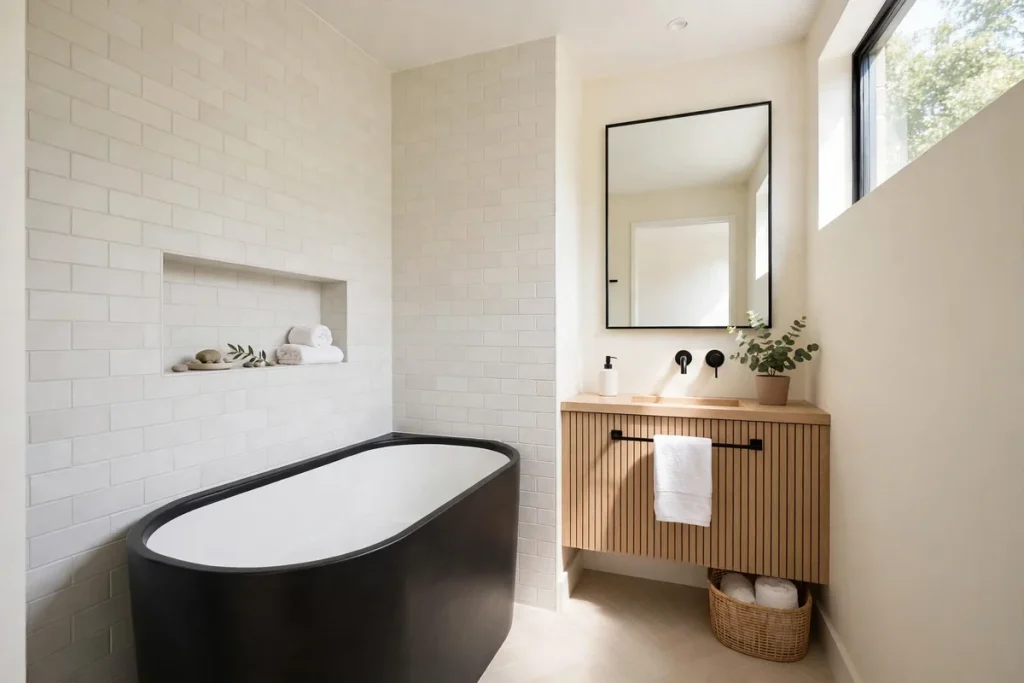

A small bathroom does not mean you have to give up on a bath. When you search for a bathroom small bathtub, you will find compact tubs designed to fit into tight corners, short walls, and awkward alcoves while still giving you enough room to soak comfortably. The trick is to measure carefully, choose the right shape, and check plumbing and door clearance before you buy.
This guide explains standard small tub sizes, the main types available, what materials work best, and how to avoid the most common buying mistakes. Whether you are renovating a tiny ensuite, a guest bathroom, or a city apartment, you can find a tub that fits your space and your budget.
First, Measure Your Space Properly
Start by measuring the length, width, and height of the space where the tub will go, including the position of the drain, water supply, and any doors, windows, or radiators. Leave at least 30 inches of clear space in front of the tub for getting in and out safely, and check that the tub can actually be carried into the bathroom through doors and hallways. Many returns happen not because the tub is the wrong size for the room, but because it will not fit through the front door.
It also helps to understand the whole room before you choose a tub. Our guide to Standard Bathroom Size: Full, Three-Quarter, and Half Bath Dimensions Explained shows how different bathroom layouts affect what will fit, and where a compact tub works best.
Standard Small Bathtub Sizes
Most standard tubs are about 60 inches long, 30 inches wide, and 14 to 16 inches deep. Small tubs are usually shorter, narrower, or both. Common compact sizes include 54 inches long, 48 inches long, and even 45 inches for very small spaces. Some small tubs are deeper than standard tubs, which helps you soak even though the footprint is smaller.
Types of Small Bathtubs
Alcove Tubs
Alcove tubs fit into a three-walled recess and are the most common choice for small bathrooms. Short alcove tubs, often 48 to 54 inches long, work well when you replace an old standard tub without moving plumbing. Look for a model with a slightly deeper interior if you still want a proper soak.
Corner Tubs
Corner tubs use a corner that might otherwise be wasted, and many are triangular or curved to save floor space. They can feel roomier than their footprint suggests, but check the entry step and the space needed to get in and out. A corner tub is a good choice when the long wall is already used by a vanity or toilet.
Freestanding Small Tubs
Small freestanding tubs, including compact oval and Japanese-style soaking tubs, are ideal for bathrooms where plumbing can be placed in the floor. Japanese soaking tubs are short but deep, so you sit upright in warm water rather than lying back. They suit small footprints very well, but they are not ideal if you need to lie flat or have limited mobility.
Walk-In and Accessible Tubs
Compact walk-in tubs have a door and a low step, which helps people with mobility problems. They take up a similar footprint to a small alcove tub, but they need a water heater that can fill them quickly and a drain that empties fast. Check those practical details before choosing this type.
| Type | Typical size | Best for | Watch out for |
|---|---|---|---|
| Alcove | 48 to 54 inches long | Replacing a standard tub | Shallow models feel cramped |
| Corner | 48 to 60 inches wide | Using a wasted corner | Entry space and step height |
| Freestanding compact | 55 to 60 inches long | Style and deep soaking | Floor plumbing and cleaning behind it |
| Japanese soaking | 40 to 48 inches long | Very small rooms | Upright sitting only |
| Walk-in compact | 48 to 54 inches long | Accessibility | Fill and drain time |
Materials Compared
Acrylic is the most popular choice for small tubs because it is light, warm to the touch, easy to clean, and available in many shapes. Fiberglass is cheaper but can feel less solid and may scratch more easily. Cast iron is very durable and holds heat well, but it is heavy, so check that your floor can support it and that you have help to install it. Steel enamel is a good middle ground, though it can chip if a heavy object is dropped.
Buying Tips Before You Order
Check the interior dimensions, not just the outside size, because thick walls can reduce soaking room. Sit in the tub in a showroom if you can, or at least check the depth and back angle. Confirm the drain position, left or right, matches your plumbing, and ask whether the tub includes a waste and overflow kit. Also check the weight, the warranty, and whether the tub needs a specific base or support frame.
Think about cleaning from the start. A small tub with many curves or jets looks appealing, but it takes longer to clean, and soap scum builds up faster in hard-to-reach corners. For practical cleaning advice, see our guide on How to Remove Soap Scum: A Complete Guide to Sparkling Showers, Tubs, and Glass. A smooth, simple interior is often the easiest to keep looking new in a small bathroom.
Installation and Space-Saving Ideas
Use wall-mounted taps or a filler that does not take up tub rim space. A shower screen instead of a curtain can make a small bathroom feel larger, and a recessed niche for shampoo keeps the tub edge clear. Light colours, a large mirror, and good lighting also help a small bathroom feel less cramped, even after a tub is fitted. If your bathroom is very tight, consider a tub-shower combination, which gives you both functions in one footprint.
Common Mistakes to Avoid
Do not buy on outside size alone, do not forget door clearance, and do not ignore the drain position. Also check the weight of a filled tub, especially upstairs, and confirm your water heater can fill a deep soaking tub in a reasonable time. A quick call to a plumber before ordering can save an expensive return.
Finally, keep your expectations realistic. A small tub will not feel like a large spa bath, but a deep, well-shaped compact tub can still be very comfortable for daily use. Focus on depth, back support, and a smooth interior rather than length alone.
Frequently Asked Questions
What is the smallest practical bathtub size?
A tub of about 48 inches long and 30 inches wide can work for most adults, especially if it is deeper than average. Japanese soaking tubs can be even shorter, at 40 to 48 inches, because you sit upright.
Can a small bathtub still be comfortable?
Yes, if it is deep enough and has good back support. Depth matters more than length for comfort, so look for a tub with an interior depth of at least 16 to 18 inches.
Are small bathtubs more expensive?
Not necessarily. Compact acrylic tubs are often similar in price to standard tubs, while cast iron, walk-in, and custom models cost more. Installation costs depend on plumbing changes, not just tub size.
Can I replace a standard tub with a small one without moving plumbing?
Often yes, if the drain position matches and the new tub fits the existing alcove. If the drain is on the opposite side, a plumber will need to move it, which adds cost.
What material is best for a small bathtub?
Acrylic is the best all-round choice for most small bathrooms because it is light, warm, easy to clean, and available in compact shapes. Cast iron suits buyers who want maximum durability and heat retention.



Pingback: Bathtub Remodel: Costs, Ideas and a Step-by-Step Guide