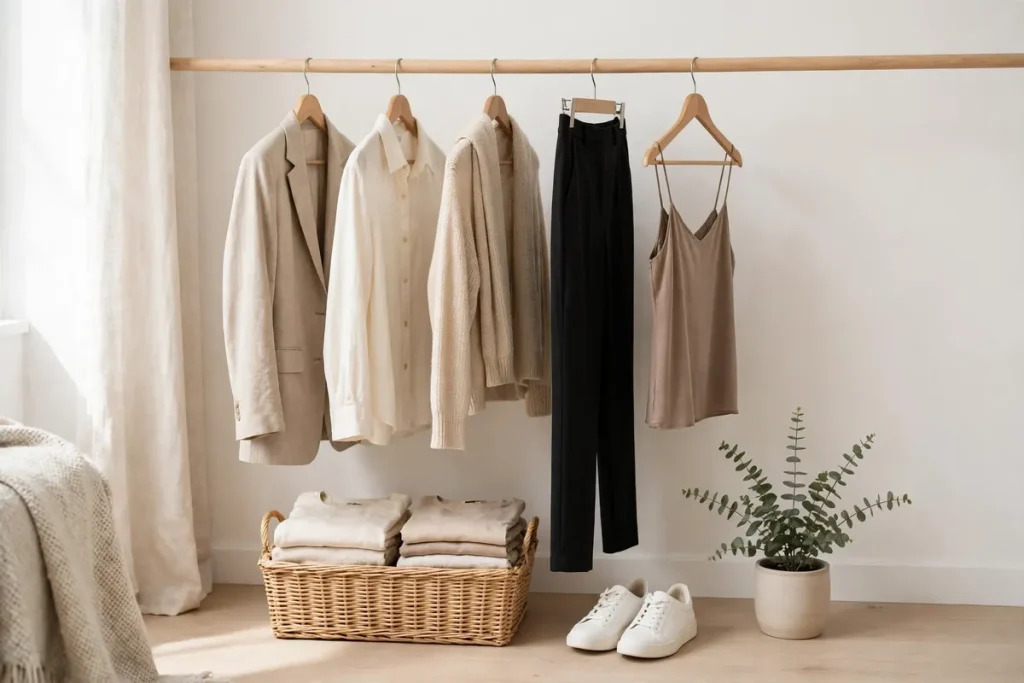

A women’s clothing capsule is a small, carefully chosen wardrobe in which almost every piece works with almost every other piece. Instead of a closet full of clothes with nothing to wear, you own fewer items that fit well, suit your lifestyle, and can be mixed and matched for work, weekends, and evenings out. The result is less decision fatigue in the morning, less money wasted on one-wear buys, and a more polished look overall.
This guide explains what a women’s clothing capsule is, how many pieces you need, and how to build one that actually suits your life. It also includes a ready-made 25-piece list and a two-week outfit rotation, so you do not have to start from a blank page.
What Is a Women’s Clothing Capsule?
A capsule wardrobe is a limited collection of versatile clothing, usually built around a consistent color palette and a mix of basics and statement pieces. The idea, popularized in the 1970s and revived by minimalist fashion writers, is simple: quality over quantity. Each new purchase must earn its place by pairing with at least three items you already own.
A good capsule is personal, not a fixed uniform. A teacher, a nurse, a remote worker, and a new parent will all need different capsules, even if they share the same core principles. The capsule should reflect your climate, your daily activities, and your personal style, whether that is classic, relaxed, romantic, or bold.
How Many Pieces Should Be in a Capsule?
Most guides suggest between 25 and 50 pieces per season, excluding underwear, sleepwear, workout clothes, and accessories such as jewelry. Beginners often do best at the lower end. Twenty-five pieces are enough to create dozens of outfits, while still forcing honest choices about what you truly wear.
Count only the main clothing items: tops, bottoms, dresses, outerwear, and shoes. If a piece has not been worn in a year, does not fit comfortably, or only works with one other item, it probably does not belong in the capsule.
Choosing a Color Palette
Start with three or four neutrals, such as black, white, navy, camel, gray, or cream. Add two accent colors that flatter you and lift the neutrals, for example sage green and rust, or burgundy and soft blue. When most of your clothes share this palette, getting dressed becomes a matter of combining, not coordinating from scratch.
Fit and Fabric Come First
Fit matters more than brand or trend. Trousers should sit comfortably at the waist, shirts should button without pulling, and jackets should allow you to move your arms freely. Choose fabrics that suit your routine: breathable cotton and linen for warm days, wool blends for cooler weather, and easy-care fabrics if you dislike ironing.
The 25-Piece Women’s Clothing Capsule List
Use this list as a starting point, then swap items to match your job, climate, and taste. The goal is versatility, not perfection.
Tops (7)
- White cotton T-shirt
- Black T-shirt
- Striped long-sleeve top
- White button-up shirt
- Silk or satin blouse in a neutral tone
- Lightweight knit sweater
- Relaxed camisole for layering
Bottoms (5)
- Straight-leg dark jeans
- Black tailored trousers
- Wide-leg trousers in a neutral tone
- A-line midi skirt
- Comfortable everyday shorts or a second pair of jeans, depending on climate
Dresses and Layers (5)
- Simple black midi dress
- Printed day dress in your accent color
- Classic blazer
- Denim jacket
- Longline cardigan
Outerwear, Shoes, and Accessories (8)
- Trench coat or wool coat, depending on season
- White sneakers
- Black loafers
- Block-heel sandals or pumps
- Ankle boots
- Leather tote
- Crossbody bag
- Scarf and simple jewelry to change the mood of an outfit
How to Build Your Capsule in Five Steps
First, empty your closet and try everything on. Keep only pieces that fit, feel comfortable, and match your palette. Next, identify gaps: most people lack a good third layer, a versatile pair of trousers, or shoes that work for both work and weekends. Then shop with a list, not on impulse, and choose the best quality you can afford for items you will wear weekly.
When you add a blazer, think about how it will work beyond the office. A classic blazer can smarten jeans for dinner or polish a dress for a meeting, and how to style a blazer shows nine ways to wear one across work, casual days, and evenings. Likewise, when you choose shirts, consider button-up vs button-down shirts and which collar suits your neckline and the occasions you dress for.
Finally, test the capsule for two weeks before buying more. Note which pieces you reach for, which combinations feel repetitive, and which item you wish you had. Adjust from evidence, not from a shopping urge.
Seasonal Swaps and Dress Codes
A capsule should change with the seasons, not be rebuilt from scratch. In summer, swap wool for linen, add sandals, and keep the same neutrals. In winter, layer the same dresses over tights, add a coat, and switch sneakers for boots. Store out-of-season pieces out of sight so your daily choices stay simple.
For occasions that sit between formal and casual, aim for polished but relaxed: tailored trousers, a blouse, and loafers rather than a suit or jeans and a T-shirt. Our guide to what is dressy casual explains the balance in detail, and it is a useful reference when a dinner or office event has no clear dress code.
Mistakes to Avoid
Do not buy a whole capsule at once. Building slowly lets you learn your real preferences and avoids expensive duplicates. Do not copy someone else’s list exactly, and do not keep clothes out of guilt or because they were expensive. A capsule only works if every piece is worn and loved. Finally, do not chase every trend: one or two seasonal updates per year are enough to keep a classic capsule feeling current.
The 2-Week Outfit Rotation: The Extra Angle
Most capsule guides list pieces but never show how they combine day after day. This rotation uses only the 25 pieces above, repeats no exact outfit in fourteen days, and covers work, weekends, and one evening out. Follow it as written for two weeks, then create your own rotations from the same pieces.
| Day | Outfit combination | Occasion |
|---|---|---|
| Day 1 | White button-up shirt, black trousers, blazer, loafers | Work |
| Day 2 | Striped top, dark jeans, denim jacket, white sneakers | Casual |
| Day 3 | Satin blouse, wide-leg trousers, block heels, tote | Work |
| Day 4 | White T-shirt, midi skirt, cardigan, loafers | Weekend |
| Day 5 | Knit sweater, black trousers, ankle boots, scarf | Work |
| Day 6 | Black T-shirt, dark jeans, blazer, white sneakers | Evening out |
| Day 7 | Printed dress, denim jacket, block sandals, crossbody | Weekend |
| Day 8 | White button-up shirt, wide-leg trousers, loafers, tote | Work |
| Day 9 | Camisole, blazer, midi skirt, block heels | Evening out |
| Day 10 | Striped top, black trousers, cardigan, white sneakers | Casual work |
| Day 11 | Black midi dress, trench coat, ankle boots, crossbody | Work |
| Day 12 | Knit sweater, dark jeans, ankle boots, scarf | Weekend |
| Day 13 | Satin blouse, dark jeans, blazer, block heels | Dinner |
| Day 14 | White T-shirt, wide-leg trousers, denim jacket, loafers | Casual |
Notice the pattern: the same blazer, jeans, and trousers appear in different roles, while shoes, bags, and a scarf change the formality. That is the real test of a capsule: versatility you can see, not just claim.
Frequently Asked Questions
How many clothes are in a women’s clothing capsule?
Most capsules contain 25 to 50 main pieces per season. Twenty-five is a good starting point for beginners.
What colors work best for a capsule wardrobe?
Three or four neutrals, such as black, white, navy, and camel, plus one or two accent colors you love to wear.
How often should I update my capsule?
Review it each season, replace worn-out staples, and add only one or two trend pieces per season.
Can a capsule wardrobe work for the office?
Yes. Tailored trousers, a blazer, a button-up shirt, and a midi dress cover most office dress codes when combined well.
Do I need to buy expensive clothes for a capsule?
No. Spend more on pieces you wear weekly, such as shoes and coats, and save on simple basics like T-shirts.