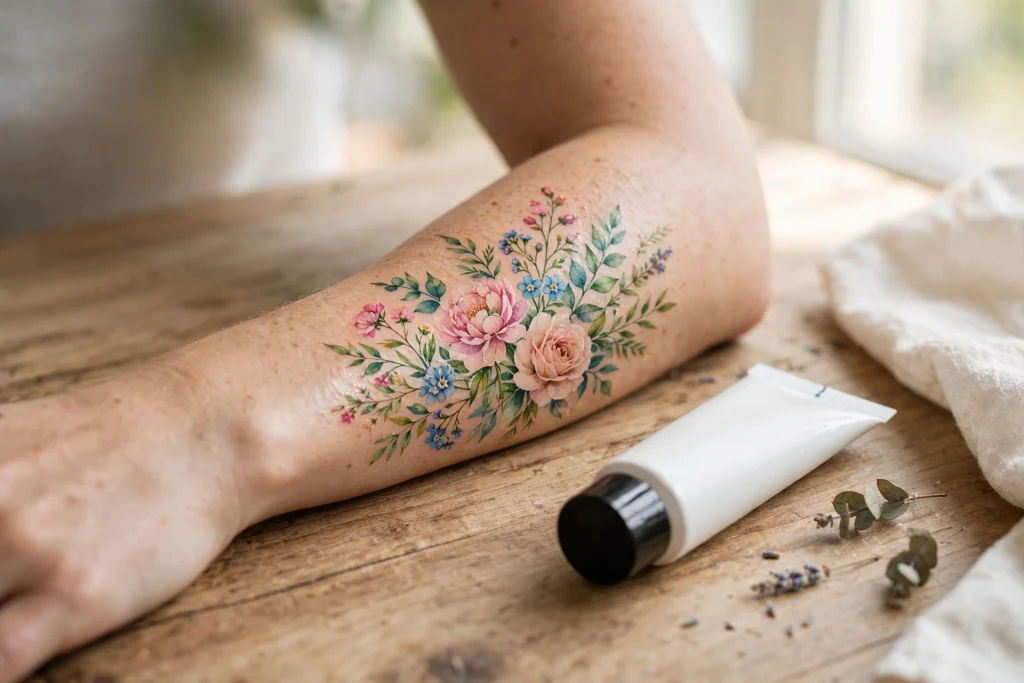

A fresh tattoo is an open wound, even when it looks like a simple piece of art. The ink sits in the second layer of your skin, and your body needs time to heal around it. The right tattoo lotion can make that healing smoother, keep the colors bright, and lower the chance of itching, scabbing, and infection. The wrong product can clog pores, irritate raw skin, or pull ink out before it settles.
This guide explains what tattoo lotion is, how it differs from regular body lotion, which ingredients help and which to avoid, and how to apply it at each stage of healing. You will also find a simple buying checklist and answers to the questions most people ask after getting a new tattoo.
What Is Tattoo Lotion?
Tattoo lotion is a light, fast-absorbing moisturizer made for tattooed skin. It is designed to keep the skin hydrated without leaving a thick, greasy layer on top. Most tattoo lotions are fragrance-free, dye-free, and non-comedogenic, which means they are less likely to block pores or cause breakouts around a healing tattoo.
Regular body lotion is not always a good substitute. Many everyday lotions contain perfume, alcohol, or heavy oils that can sting a fresh tattoo and slow healing. A product made for tattoos is usually gentler, and many formulas include soothing ingredients such as shea butter, vitamin E, and panthenol to support the skin barrier while it repairs itself.
Why Moisturizing Matters After a Tattoo
After tattooing, the skin barrier is broken. The area may weep a little plasma and ink in the first day, then form a thin scab or peel like a sunburn. If the skin dries out, it can crack, itch more, and scab heavily, which can pull color out and leave patchy areas.
A thin layer of lotion keeps the skin flexible and comfortable. It also helps the outer layer shed evenly, so the tattoo heals with cleaner edges and more even color. Moisturizing does not replace washing, keeping the tattoo clean, or following your artist’s instructions. It works alongside those steps, and it should start only when your artist says the tattoo is ready for lotion, usually after the first wash and once the initial bandage is removed.
Tattoo Lotion vs Ointment vs Balm
Many artists start healing with a thin layer of ointment, then switch to lotion after a few days. Each product has a different job, and using the right one at the right time matters.
| Product | Best For | Texture | When to Use |
|---|---|---|---|
| Ointment | Protecting a very fresh tattoo | Thick, greasy | First 1 to 3 days, very thin layer only |
| Tattoo lotion | Daily healing and long-term care | Light, fast absorbing | After day 2 or 3, through full healing |
| Balm | Extra dry or itchy spots | Rich, waxy | Healing stage, sparingly on dry patches |
| Regular body lotion | Healed tattoos only | Varies | After the tattoo is fully healed |
Ointment seals in moisture, but too much can suffocate the skin and trap bacteria. Lotion is better for daily use because it hydrates without smothering the tattoo. Once healing is complete, usually after three to four weeks, you can use almost any gentle moisturizer to keep the tattoo looking bright.
Ingredients to Look For
Look for a short, gentle ingredient list. Good signs include water, glycerin, shea butter, cocoa butter, vitamin E, panthenol, and aloe vera. These ingredients hydrate the skin, support healing, and soothe irritation without adding strong scent or color.
Some tattoo lotions also contain coconut oil, jojoba oil, or sunflower oil. Those oils can be helpful in small amounts, but they should not make the lotion feel heavy or greasy. A lotion that sinks in within a minute or two is usually the right weight. If it sits on the skin like a film, use less next time.
Ingredients to Avoid on a Fresh Tattoo
Avoid fragrance, dyes, alcohol, menthol, and exfoliating acids such as glycolic acid and salicylic acid while a tattoo is healing. Petroleum jelly is debated: a very thin layer is common in the first days, but heavy use can trap moisture. Avoid products with sunscreen on a fresh tattoo as well, because chemical sunscreens can irritate raw skin. Wait until the tattoo is healed before using sunscreen, then use it every day in the sun to protect the ink from fading.
How to Apply Tattoo Lotion Step by Step
Clean hands are essential. Wash your hands with soap and water before you touch a healing tattoo. Wash the tattoo itself gently with lukewarm water and a mild, fragrance-free soap, then pat it dry with a clean paper towel or let it air dry for a few minutes. Do not rub it with a towel.
Squeeze a pea-sized amount of lotion for a small tattoo, or a little more for a larger piece. Warm it between your hands, then spread a thin, even layer over the tattoo. The skin should look lightly moisturized, not shiny or wet. If you can see a thick white layer, you used too much. Blot the excess off with a clean paper towel.
Apply lotion two to three times a day during healing, or as often as your artist advises. More is not better. Over-moisturizing can soften scabs too much and slow healing. If the tattoo feels tight or dry between applications, a small extra amount is fine. If it feels sticky or damp all day, cut back.
Healing Stages and What to Expect
Days 1 to 3: The Fresh Stage
The tattoo may be red, tender, and slightly swollen. It may leak clear fluid and a little ink. Keep it clean, follow your artist’s bandage instructions, and start lotion only when advised, usually after the first wash.
Days 4 to 7: Peeling Begins
Light peeling and flaking often start now, similar to a sunburn. Itching may increase. Do not pick or scratch, even if flakes look loose. Keep moisturizing with a thin layer of lotion, and let flakes fall off on their own.
Days 7 to 14: The Itchy Stage
Peeling usually continues, and itching can be strong at this stage. This is normal for many people. A cool, damp cloth can help, but do not soak the tattoo in a bath, pool, or hot tub. Short showers are fine.
Weeks 3 to 4: Looking Healed
The surface often looks healed by now, but the deeper skin is still settling. Keep moisturizing daily, and you can switch to a regular gentle lotion if you prefer. Full healing can take up to four weeks for most tattoos, and longer for large or heavily shaded work.
How to Choose the Best Tattoo Lotion for You
Start with your skin type. If your skin is sensitive or you have eczema, choose a fragrance-free lotion with a short ingredient list and test a small amount on a healed area first. If your skin is very dry, a lotion with shea butter or glycerin may feel more comfortable than a very light gel lotion.
Consider scent, even if you like scented products. A fragrance-free lotion is the safest choice for a new tattoo, because perfume is a common cause of stinging and redness. You can switch to a scented lotion after healing if you want. Also check the packaging: a pump bottle is more hygienic than a tub, because you do not dip your fingers into the product.
Price is not a reliable guide to quality. Many affordable, fragrance-free lotions work as well as tattoo-specific brands. What matters most is that the formula is gentle, light, and easy to spread in a thin layer. Ask your tattoo artist what they recommend, because they know how your skin reacted during the session and what has worked for their clients.
Common Mistakes to Avoid
Using too much lotion is the most common mistake. A thick layer can trap heat and moisture and make the tattoo feel soggy. Using a scented or exfoliating product too early is another common error, and it can cause redness and prolong healing.
Do not pick scabs, do not scratch, and do not expose a fresh tattoo to direct sun, swimming pools, hot tubs, or baths. Wear loose clothing over the tattoo when you can, so fabric does not rub the area. Sleeping can also rub a new tattoo, so try to sleep in a way that keeps pressure off it. If you are unsure how to protect a tattoo on your back or shoulder at night, read about the best position to sleep for your back and choose a position that avoids the fresh ink.
Good skin care is a daily habit, not just a healing routine. The same gentle approach applies to other parts of the body, from choosing a fragrance-free wash to learning how to smell good all day without irritating sensitive skin. Gentle products are also the theme in family care, where a soft baby toothbrush is chosen for the same reason: delicate skin and tissue need soft, simple care.
Can You Use Regular Lotion on a Tattoo?
You can use regular lotion on a fully healed tattoo, and most people do. Choose a gentle, fragrance-free formula if your skin is sensitive, and use sunscreen on the tattoo when you are outdoors. On a fresh tattoo, stick to a tattoo lotion or a plain, fragrance-free moisturizer that your artist approves. Avoid lotions with perfume, alcohol, glitter, or exfoliating ingredients until healing is complete.
Conclusion
The best tattoo lotion is light, fragrance-free, and easy to apply in a thin layer. Start with a product your artist recommends, wash your hands and the tattoo before each application, and moisturize two to three times a day without overdoing it. Let peeling run its course, protect the tattoo from sun and water, and switch to regular lotion and sunscreen once healing is complete. With steady, gentle care, your tattoo will heal more comfortably and keep its color longer.
Frequently Asked Questions
When can I start using tattoo lotion?
Most artists advise starting lotion after the first wash and once the initial bandage is removed, usually within the first day or two. Follow your artist’s specific timing, because it can vary with the size and location of the tattoo.
How often should I apply tattoo lotion?
Two to three times a day is enough for most people during healing. Apply a thin layer after washing the tattoo and whenever the skin feels tight or dry. Using more will not speed healing and can make the skin soggy.
Can I use Vaseline or Aquaphor on a new tattoo?
Many artists use a very thin layer of ointment in the first days, but heavy use is not recommended. A thin layer protects the skin, while a thick layer can trap moisture and bacteria. Switch to lotion after the first few days unless your artist tells you otherwise.
Why is my tattoo itchy after I apply lotion?
Mild itching is normal during healing as the skin repairs itself. If lotion makes itching or redness much worse, the product may contain an ingredient your skin dislikes, such as fragrance or alcohol. Stop using it, switch to a fragrance-free formula, and ask your artist or a clinician if the irritation does not settle.
When can I use sunscreen on a tattoo?
Wait until the tattoo is fully healed, usually after three to four weeks, before using sunscreen on it. After that, use a broad-spectrum sunscreen with SPF 30 or higher whenever the tattoo is exposed to the sun, because sunlight is one of the main causes of tattoo fading.