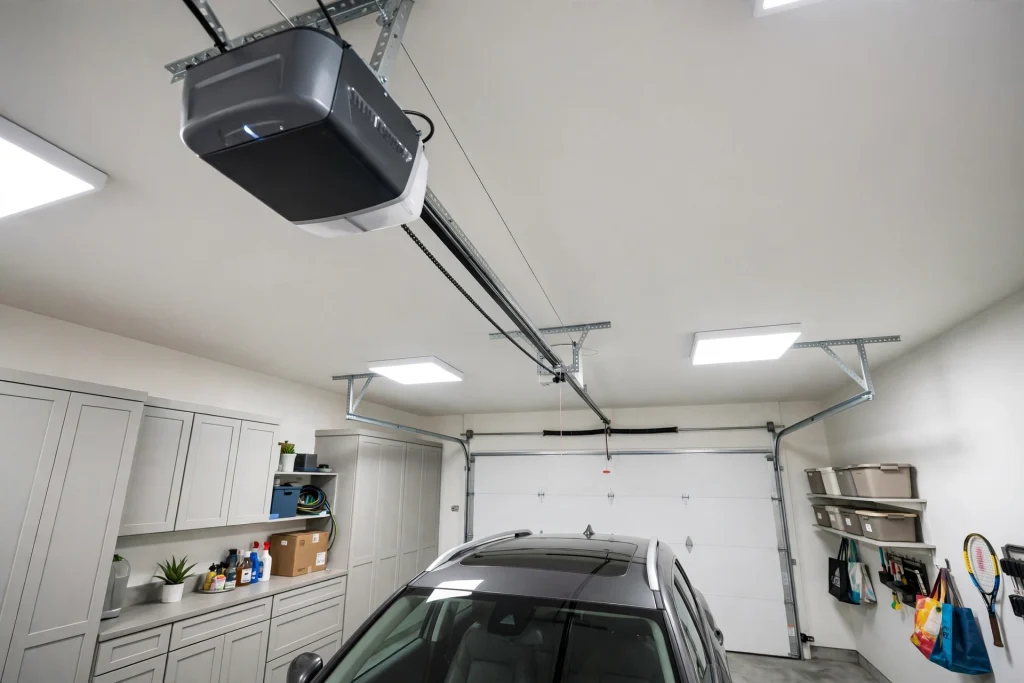

A garage door opener is one of those home devices you use several times a day but rarely think about until it stops working. The right opener lifts a heavy door smoothly, quietly, and safely, and it can add real convenience with features such as a smartphone app, a battery backup, and a built-in camera. The wrong opener is noisy, slow, and may struggle with a heavy or insulated door.
This guide explains the best garage door opener options by type, how much power you need, the features that matter most, and how to choose a model for your door, your budget, and your home. You will also find installation and maintenance tips and answers to common questions.
What Is a Garage Door Opener?
A garage door opener is a motorized device that opens and closes your garage door. It is mounted on the ceiling of the garage, connected to the door by a rail and a trolley, and controlled by a wall button, a remote control, or a keypad. Most modern openers also connect to Wi-Fi, so you can open or close the door from your phone and check whether you left it open.
Openers are rated by horsepower and by the type of drive system they use. The main drive types are chain, belt, screw, and direct drive, plus a newer wall-mounted type called a jackshaft opener. Each type has a different balance of noise, cost, and maintenance needs.
Types of Garage Door Openers Compared
| Type | How It Works | Noise | Best For | Typical Cost |
|---|---|---|---|---|
| Chain drive | A metal chain moves the trolley along a rail | Loudest | Heavy doors, budget buyers | Lowest |
| Belt drive | A rubber belt moves the trolley | Quietest | Bedrooms above the garage | Mid-range |
| Screw drive | A threaded rod turns to move the trolley | Medium | Simple design, fewer parts | Mid-range |
| Direct drive | The motor itself moves along the rail | Very quiet | Quiet operation, low maintenance | Higher |
| Jackshaft | Mounts on the wall beside the door | Quiet | High or vaulted ceilings, extra storage | Highest |
For most homes, a belt drive opener is the best all-around choice. It is quiet, reliable, and widely available. A chain drive is a good choice if you have a heavy wooden or insulated door and you do not mind noise, because it is strong and affordable. A jackshaft opener is worth considering if your garage has a high ceiling or you want to free up ceiling space for storage.
How Much Horsepower Do You Need?
Horsepower, or HP, measures how strong the opener motor is. A 1/2 HP opener is enough for most standard single and double garage doors. A 3/4 HP model is a better choice for a heavy, insulated, or double-wide wooden door, because it lifts more weight without straining the motor.
Door weight matters more than door size alone. A steel door is lighter than a solid wood door of the same size, and an insulated door is heavier than a non-insulated one. If you are not sure how heavy your door is, check the manufacturer’s label or ask a garage door professional. Choosing a slightly stronger opener is usually better than choosing one that is barely strong enough, because it will run smoother and last longer.
Key Features to Look For
Quiet Operation
If a bedroom sits above or next to the garage, noise matters. Belt drive and direct drive openers are the quietest, and many models use a DC motor, which runs more smoothly than a traditional AC motor. A soft-start and soft-stop feature also helps, because the door speeds up and slows down gently instead of jerking.
Smart Control and Wi-Fi
Wi-Fi built into the opener lets you control the door from a phone app, get alerts when the door opens or closes, and set schedules. Some models work with voice assistants such as Alexa and Google Assistant, and some offer delivery access so a package can be left safely inside the garage. Make sure the app is easy to use and that the opener supports your home Wi-Fi network.
Battery Backup
A battery backup lets you open and close the garage door during a power outage. This is especially useful if the garage is your main entrance, or if you live in an area with frequent outages. Battery backups usually provide a limited number of cycles per charge, often around 20, and the battery will need replacing after a few years.
Security and Safety
Look for rolling code technology, which changes the remote code each time you use it, so it is harder for someone to copy your signal. Safety sensors near the floor should stop and reverse the door if something blocks the beam. A timer-to-close feature can close the door automatically after a set time, which helps if you forget. A built-in camera and motion-sensing light can add extra security and convenience.
Best Garage Door Opener by Use Case
Best overall: A 3/4 HP belt drive opener with Wi-Fi, battery backup, and a quiet DC motor. It covers most homes, lifts a heavy door easily, and stays quiet enough for a bedroom above the garage.
Best for a quiet garage: A belt drive or direct drive opener with soft-start and soft-stop. These models are noticeably quieter than chain drive openers and are the best choice if noise is your main concern.
Best on a budget: A 1/2 HP chain drive opener with basic safety sensors and a wall control. It is strong and reliable, even if it is louder, and it costs less than most smart models.
Best for a heavy door: A 3/4 HP or higher chain or belt drive opener, and a jackshaft opener if your door is very heavy. Check the opener’s lifting capacity and the door’s weight before you buy.
Best smart opener: A Wi-Fi opener with a good phone app, alerts, and camera support. It is worth the extra cost if you want to check the door while you are away, share access with family, or receive delivery notifications.
Installation: DIY or Professional?
Installing a garage door opener is a moderate do-it-yourself project for a handy homeowner. A standard installation takes about three to six hours and requires basic tools, a drill, and a step ladder. You will need to assemble the rail, mount the motor to the ceiling, connect the door bracket, install the safety sensors, and adjust the travel limits and force settings. If your garage ceiling is high, or you need to run new electrical wiring, consider hiring a professional.
Safety is the main reason to get help. Garage doors are heavy and under spring tension. Do not try to adjust or replace the torsion springs yourself, because they store a large amount of energy and can cause serious injury. Call a professional for spring work, and for any opener that will not move the door smoothly after installation. Before you start a project like this, it helps to have the basics organized in a simple tool storage system, and to review the essential tools for DIY projects so you do not stop halfway to buy a missing tool.
Maintenance Tips to Make It Last
Lubricate the chain or screw, rollers, and hinges once or twice a year with a garage door lubricant, not regular WD-40. Tighten loose bolts, check the door balance by disconnecting the opener and lifting the door halfway by hand, and test the safety sensors monthly by waving an object in front of the beam while the door is closing.
Replace the remote batteries when the range drops, and replace the backup battery every three to five years. Keep the rail clean and free of dust, and wipe the safety sensor lenses with a soft cloth. If the door makes a grinding noise, moves unevenly, or reverses for no reason, stop using it and have it inspected. A garage is also a good place to keep safety in mind, and a working natural gas detection sensor is a useful addition if you have gas heating or a gas water heater in or near the garage.
How Much Does a Garage Door Opener Cost?
A basic chain drive opener costs about 150 to 250 dollars for the unit alone. A mid-range belt drive opener with Wi-Fi costs about 250 to 400 dollars, and a high-end jackshaft or smart opener with a camera can cost 400 to 600 dollars or more. Professional installation usually adds 150 to 300 dollars, depending on your area and the complexity of the job.
When you compare prices, include the cost of accessories such as extra remotes, a keypad, and a battery replacement. A cheaper opener that needs frequent repairs can cost more over time than a well-made model that lasts 10 to 15 years. Look for a warranty of at least a few years on the motor, and longer on the belt or chain.
Conclusion
The best garage door opener for your home depends on your door, your noise tolerance, and the features you will actually use. For most people, a 3/4 HP belt drive opener with Wi-Fi and a battery backup is the best balance of quiet operation, strength, and convenience. A chain drive opener is a solid budget choice, and a jackshaft opener is the best option for a high ceiling or for freeing up space.
Measure your door, check its weight, and choose an opener with enough power for it. Install it carefully, test the safety sensors, and keep it maintained with simple yearly care. A good opener should work quietly and reliably for a decade or more, and it makes every trip in and out of the garage a little easier.
Frequently Asked Questions
What is the quietest garage door opener?
Belt drive and direct drive openers are usually the quietest, especially models with a DC motor and soft-start. They are the best choice if a bedroom is above the garage or if you use the garage early in the morning.
How long do garage door openers last?
Most garage door openers last 10 to 15 years with normal use and basic maintenance. The motor often outlasts the belt, chain, and remote batteries, which are easier and cheaper to replace.
Can I replace a garage door opener myself?
Yes, if you are comfortable with basic tools and following instructions, and if the door itself is in good condition. Do not adjust the springs yourself, and call a professional if the door is damaged, unbalanced, or very heavy.
Do I need Wi-Fi on a garage door opener?
Wi-Fi is not required, but it adds useful features such as phone control, alerts, and checking whether the door is closed while you are away. If you do not use a smartphone, a standard opener with a remote and wall control is enough.
Why does my garage door opener not work during a power outage?
Most openers need mains power to run. A battery backup model can still open and close the door a limited number of times during an outage. Without a battery, you can pull the emergency release cord and lift the door by hand.