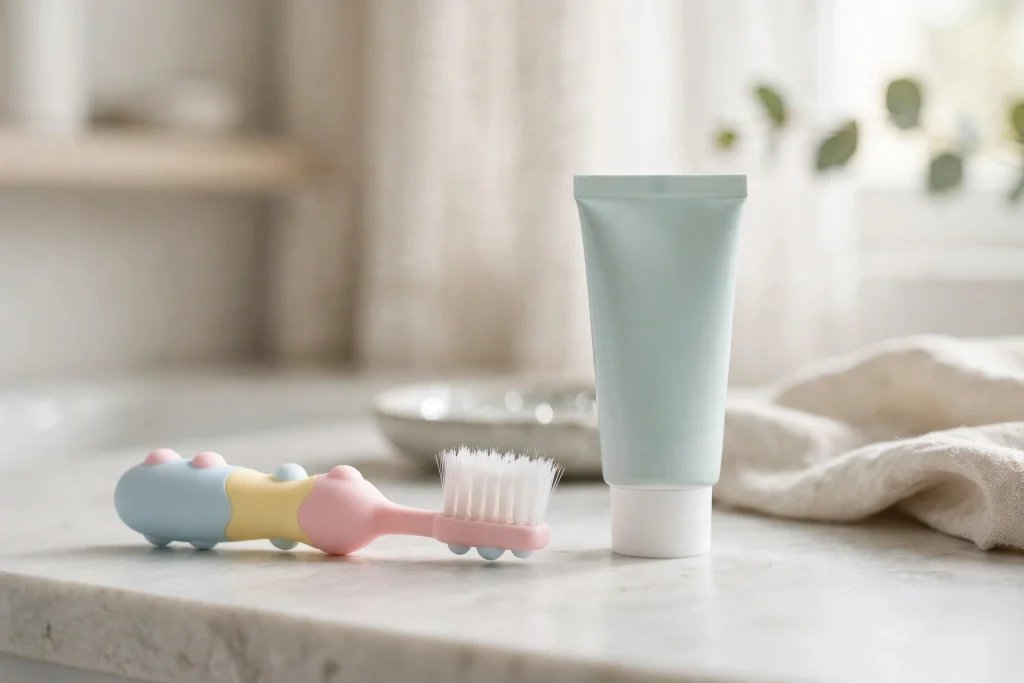

A baby toothbrush is a small, extra-soft toothbrush made for a baby’s first teeth and delicate gums. It is not a scaled-down adult brush: the head is tiny, the bristles are very soft, and the handle is chunky enough for a parent, and later a toddler, to hold safely. Choosing the right one matters, because the first tooth usually appears at around six months, and tooth decay can start as soon as that tooth erupts.
The American Academy of Pediatric Dentistry (AAPD) and the American Dental Association (ADA) both recommend starting to brush as soon as the first tooth appears, twice a day, with a smear of fluoride toothpaste about the size of a grain of rice for children under three. This guide explains when to start, which type of baby toothbrush to buy at each age, how much toothpaste to use, and how to make brushing a habit your baby will accept rather than fight.
When Should You Start Using a Baby Toothbrush?
Start when the first tooth breaks through the gum, usually at about six months, although some babies get a tooth at four months and others not until after their first birthday. Before any teeth appear, you can wipe your baby’s gums with a clean, damp cloth after feeding, which gets them used to having their mouth cleaned. Once a tooth is visible, switch to a baby toothbrush, because a cloth cannot clean the sides and back of a tooth properly.
Brush twice a day: once in the morning and once before bed. The bedtime brush is the more important of the two, because saliva flow drops overnight and any milk or food left on the teeth sits there for hours. Do not let your baby fall asleep with a bottle of milk or juice in their mouth, as that is one of the main causes of early tooth decay, sometimes called bottle caries.
Which Baby Toothbrush by Age?
The right brush changes as your baby grows. A finger brush that suits a six-month-old will be too small for a two-year-old, and a toddler brush is too big for a baby’s mouth. Use the table below as a starting point, and move up a size when the head no longer reaches the back teeth easily.
| Age | Best baby toothbrush type | What to look for |
|---|---|---|
| 0 to 6 months (no teeth) | Gum massager or damp cloth | Soft silicone, no toothpaste yet |
| 6 to 12 months (first teeth) | Finger brush or silicone brush | Fits on a parent’s finger, very soft bristles |
| 12 to 24 months | Small-head manual brush | Extra-soft bristles, short chunky handle, small head |
| 2 to 3 years | Toddler manual brush | Slightly larger head, non-slip handle, fun colours |
| 3 years and over | Toddler manual or small electric brush | Soft bristles, timer or music, child-sized head |
Popular choices in this category include the Frida Baby Grow-with-Me training toothbrush set, Dr Brown’s infant-to-toddler toothbrush, the Radius Totz brush, and Colgate’s toddler brushes, most of which cost $5 to $15. A 360-degree or U-shaped brush, which cleans all sides of the teeth at once, is marketed for toddlers who will not sit still, but many dentists say it does not clean as well as a normal small brush used properly, so treat it as a back-up rather than a replacement.
How to Choose a Baby Toothbrush
- Extra-soft bristles: always choose extra-soft. Medium or hard bristles can hurt a baby’s gums and wear down new enamel.
- Small head: the head should fit easily in your baby’s mouth and reach the back molars without gagging them.
- Chunky, non-slip handle: a thick handle is easier for you to control and, later, for a toddler to grip.
- Safe materials: look for BPA-free plastic or food-grade silicone, and a brush that is easy to rinse and dry.
- Replace often: replace the brush every three months, or sooner if the bristles are splayed, bent or frayed, or after your baby has been ill.
How Much Toothpaste Should a Baby Use?
| Age | Fluoride toothpaste amount | What it looks like |
|---|---|---|
| Under 3 years | A smear, about 0.1 g | A grain of rice |
| 3 to 6 years | A pea-sized amount, about 0.25 g | A small pea |
| Over 6 years | A pea-sized amount | A small pea, spit out, do not swallow |
Use a fluoride toothpaste made for children, and put the toothpaste on the brush yourself: a baby who squeezes the tube will use far too much. Babies under three cannot reliably spit, so the rice-grain amount is deliberately tiny. After brushing, wipe away the extra toothpaste with a cloth rather than rinsing with water, so the fluoride stays on the teeth longer.
How to Brush a Baby’s Teeth, Step by Step
- Sit the baby on your lap, facing away from you, with their head resting against your chest so you can see into their mouth.
- Put a rice-grain smear of fluoride toothpaste on the baby toothbrush.
- Brush gently in small circles on the front, back and chewing surfaces of each tooth, and along the gum line. Aim for about two minutes in total for a toddler, less for a baby with only one or two teeth.
- Lift the lip to check the front teeth, where plaque builds up most easily.
- Wipe away the extra toothpaste with a damp cloth. Do not rinse with water.
- Let the baby hold the brush for a few seconds afterwards, so brushing feels like their activity too, but always do the proper brush yourself first.
Brushing works best as part of a calm bedtime routine. Brush teeth after the last feed, then read a book or sing a song, and put your baby down to sleep. A predictable routine helps in other areas too: our guides to sleep training a newborn and 12 hours of sleep by 12 weeks old explain how a regular evening pattern helps babies settle, and choosing the right baby cot makes the sleep space itself safer and more comfortable.
Manual or Electric Baby Toothbrush?
For babies under three, a manual brush is usually best: it is cheap, gentle, and you control the pressure. An electric brush can help from about age three, especially if your child finds brushing boring, because the timer and the vibration do some of the work and many models play a tune for two minutes. The evidence does not show that electric brushes clean baby teeth better than a manual brush used properly; the best brush is the one your child will let you use twice a day, every day.
Common Mistakes to Avoid
- Using too much toothpaste: a full strip of toothpaste is far too much for a baby. Use a rice-grain smear under three, and a pea-sized amount from three to six.
- Using a hard-bristled brush: hard bristles hurt gums and can damage enamel. Always choose extra-soft.
- Sharing a toothbrush: never share a brush, because it spreads the bacteria that cause decay.
- Skipping the night brush: the bedtime brush matters most, because bacteria work all night on any sugar left on the teeth.
- Waiting too long for the first dentist visit: the AAPD recommends a first dental visit by your baby’s first birthday, or within six months of the first tooth appearing.
How to Make Brushing Fun
Most babies resist brushing at first, and that is normal. Sing a short brushing song, let your baby choose between two brushes, brush your own teeth at the same time so they can copy you, and keep the session short and cheerful. Praise the effort, not the result, and do not turn brushing into a battle: a calm, quick brush every night is better than a long, tearful one once a week. If your baby bites the brush, stay calm, wait for them to let go, and finish the brush yourself.
Frequently Asked Questions
When should a baby start using a toothbrush?
As soon as the first tooth appears, usually at about six months. Before that, wipe the gums with a clean, damp cloth after feeding.
Should a baby use fluoride toothpaste?
Yes. The ADA and AAPD recommend fluoride toothpaste from the first tooth, in a rice-grain smear for children under three and a pea-sized amount for children aged three to six. Fluoride strengthens enamel and prevents decay.
How often should I replace my baby’s toothbrush?
Every three months, or sooner if the bristles are bent, splayed or frayed, or after your baby has been ill. A worn brush does not clean properly and can hurt the gums.
Can a baby use an electric toothbrush?
An electric brush is usually best from about age three, with a child-sized head and soft bristles. For younger babies, a manual finger brush or small manual brush gives you better control.
The Bottom Line
A baby toothbrush is a small purchase with a big payoff. Start when the first tooth appears, choose an extra-soft brush with a small head, use a rice-grain smear of fluoride toothpaste, brush twice a day, and book a first dental visit by your baby’s first birthday. Do that, and you are giving your child’s teeth the best possible start.