
The TSA 3-1-1 rule is the simple formula that controls how much liquid, gel, and cream you can bring in your carry-on bag on a flight departing the United States. The numbers stand for 3.4 ounces, one quart-sized bag, and one bag per passenger. If you understand that formula, packing for security becomes much easier, and you are far less likely to have items confiscated at the checkpoint.
This guide explains exactly what counts as a liquid, how to measure containers, what exceptions apply, and how to pack a quart bag that passes inspection first time. The rule is about container size, not how much liquid is left inside, and that detail catches many travellers out.
What the 3-1-1 Rule Means
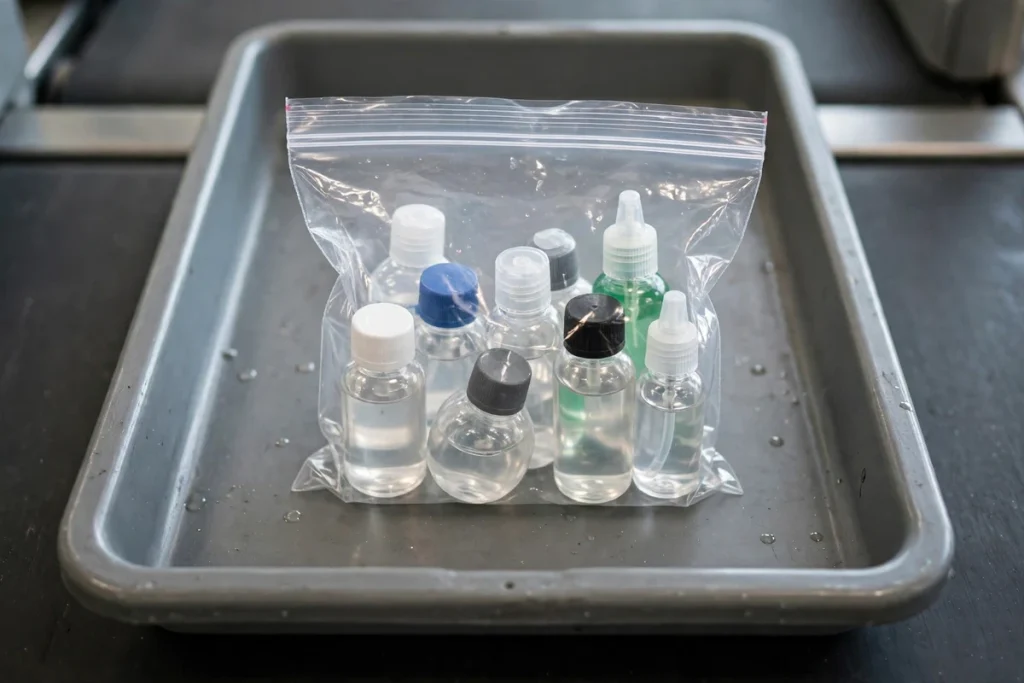
The first 3 refers to 3.4 ounces, or 100 millilitres, which is the maximum size for each container. The 1 refers to one quart-sized, clear, resealable plastic bag, about 20 x 20 centimetres, in which all your containers must fit comfortably. The final 1 means one bag per passenger, so you cannot bring two quart bags to double your allowance.
Put simply: each container must be 3.4 ounces or smaller, all containers must fit in one quart bag, and you may bring only one such bag through security. Larger containers must go in checked luggage, even if they are almost empty.
What Counts as a Liquid, Gel, or Cream?
TSA counts far more than water and drinks. Shampoo, conditioner, body wash, lotion, sunscreen, toothpaste, liquid foundation, mascara, lip gloss, hair gel, and liquid soap all count. So do peanut butter, jam, honey, yoghurt, sauces, and soups, because they are spreadable or pourable. If you can spill it, spray it, pump it, or spread it, assume it counts.
Solid items do not count in the quart bag. Bar soap, solid deodorant, powder, lipstick, and solid shampoo bars can go in your carry-on outside the bag. That distinction is useful: switching to solid toiletries can free up a lot of space in your quart bag.
Exceptions to the 3-1-1 Rule
Some items are exempt, but they still need to be declared at security. Medications, including liquid medicines, inhalers, and insulin, are allowed in reasonable quantities, even if they are over 3.4 ounces. Baby formula, breast milk, and baby food are also exempt for travellers with infants, though they may be screened separately. Duty-free liquids bought after security are allowed in sealed, tamper-evident bags with a receipt, for connecting flights.
Other exemptions include ice for medical purposes, and liquids needed for a medical condition. If you are unsure, declare the item at the checkpoint, keep it separate from your quart bag, and bring documentation or a prescription if you have it. Officers have the final say, so allow extra time for screening if you are carrying an exemption.
| Item | 3-1-1 rule applies? | What to do |
|---|---|---|
| Shampoo, lotion, sunscreen | Yes | 3.4 oz or less, in quart bag |
| Toothpaste, liquid foundation | Yes | 3.4 oz or less, in quart bag |
| Bar soap, solid deodorant | No | Pack outside quart bag |
| Medication, baby formula | Exempt | Declare at checkpoint, separate screening |
| Water, drinks bought before security | Yes, and usually not allowed | Finish or check them, or buy after security |
| Duty-free after security | Exempt if sealed | Keep sealed bag and receipt |
How to Pack Your Quart Bag
Use a clear, quart-sized, zip-top bag, not a larger toiletry bag. Place containers upright, close the bag fully, and keep it near the top of your carry-on so you can take it out quickly at security. Do not overfill it: if the bag will not close, remove an item or switch to a solid alternative. Travel-sized containers, decanted from larger bottles at home, are cheaper and more reliable than buying mini versions at the airport.
Remember that the quart bag rule applies to your carry-on, not to your personal item alone. If you pack liquids in a small backpack that you use as a personal item, the same limits apply, and the bag must still be taken out for screening. For help choosing that bag, see our guide on Is a Backpack a Personal Item? Airline Rules Explained, which explains size limits for backpacks that fit under the seat.
For specific products, check the rules before you pack. For example, our guide on Can I Bring Nail Polish on a Plane? TSA Rules Explained shows how a small, common toiletry fits within the 3-1-1 limits. The same principle applies to perfume, contact lens solution, and other small liquids: if the container is 3.4 ounces or less and fits in your quart bag, it can usually fly in your carry-on.
International Travel: Is the Rule the Same?
Most countries use a similar 100 millilitre rule, often called the liquids rule, with one transparent, resealable bag of about one litre per passenger. The exact bag size and wording differ slightly, but the principle is the same. When you travel internationally, follow the rule of the country you are departing from, and check any stricter rules for connecting flights, especially in Europe and Australia.
Common Mistakes at Security
The most common mistake is bringing a large container that is almost empty. TSA judges by container size, not contents, so a half-empty 200 millilitre bottle will still be confiscated. Another mistake is forgetting the quart bag altogether and leaving liquids loose in a toiletry bag. A third is packing liquids in checked luggage that you actually need during the flight, such as medication, which should stay with you and be declared separately.
Also remember that aerosols count as liquids, including deodorant spray, hairspray, and shaving foam. Check those containers too, and switch to solid or roll-on alternatives where possible to save quart bag space.
Frequently Asked Questions
What is the TSA 3-1-1 rule?
The TSA 3-1-1 rule allows containers of 3.4 ounces or less, in one quart-sized clear bag, with one bag per passenger, in your carry-on luggage. Larger containers must go in checked luggage.
Can I bring a full-size shampoo in my carry-on?
No, unless it is in a container of 3.4 ounces or less that fits in your quart bag. Full-size bottles must go in checked luggage, even if they are almost empty.
Do medications count under the 3-1-1 rule?
Medications are generally exempt in reasonable quantities, but you should declare them at the checkpoint and keep them separate from your quart bag for screening.
Can I bring water through security?
No, water and other drinks bought before security are not allowed through the checkpoint, except for baby formula and medical liquids. Buy drinks after security instead.
Does the 3-1-1 rule apply to checked luggage?
No. The 3-1-1 rule applies to carry-on bags only. In checked luggage, you can pack larger liquid containers, subject to airline and safety limits for aerosols and flammable items.
Packing Checklist for Security
Before you leave for the airport, check every container, close your quart bag, and put it where you can reach it quickly. Keep exempt items separate and ready to declare, and put solid toiletries outside the bag to save space. A five-minute check at home can save a long delay at security, and it means you arrive at your gate relaxed, with your toiletries intact and your journey off to a smooth start.
In short, the tsa 311 rule is easy to remember once you have packed it once: small containers, one clear bag, one bag per person.