
Reading words correctly is only half the job. Real reading means understanding what the words mean, remembering the story or information, and being able to talk about it afterwards. If you want to learn how to improve reading comprehension for kids, the good news is that comprehension can be taught, practised, and improved at home and at school, one small strategy at a time.
This guide shares 12 proven strategies that work for primary-age children, including ways to build vocabulary, ask better questions, and make reading a daily habit. You do not need expensive programmes. Short, regular practice, the right books, and conversations about what your child reads will make the biggest difference.
What Reading Comprehension Really Means
Comprehension has several parts. A child needs to decode words, know what those words mean, follow the order of events, understand why characters act as they do, and connect new information to what they already know. If any part is weak, understanding breaks down. That is why a child can read a passage fluently but still struggle to answer questions about it.
Start by finding out where the difficulty lies. Does your child stumble over words, or read smoothly but forget the story? Do they know the vocabulary, or guess at meanings? A teacher or reading specialist can help identify the gap, and the strategies below can then be targeted to that need.
12 Proven Strategies
1. Read Together Every Day
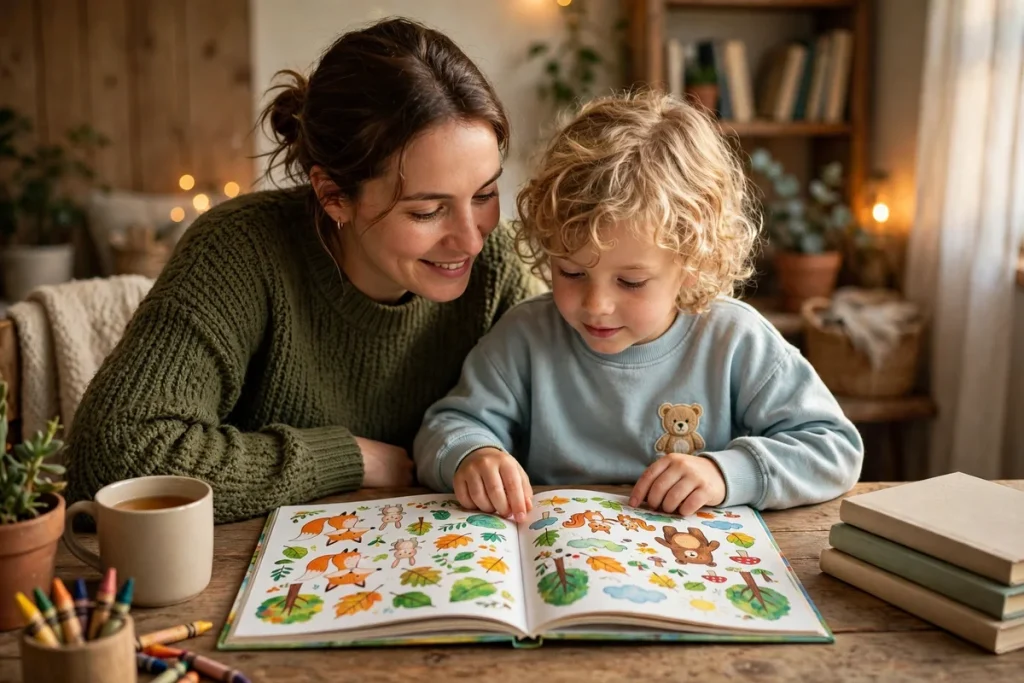
Read with your child for 15 to 20 minutes a day, even after they can read alone. Shared reading lets you model expression, explain tricky words, and pause to discuss what is happening. Choose books that are interesting and slightly challenging, not just easy books your child can already read perfectly.
2. Preview Before Reading
Before starting, look at the cover, pictures, headings, and first paragraph together. Ask: What do you think this will be about? What do you already know about this topic? Previewing activates background knowledge, which makes new information easier to understand and remember.
3. Ask Questions While Reading
Pause every page or two and ask simple questions: What just happened? Why did the character do that? What do you think will happen next? Questions keep children actively thinking, rather than passively turning pages. Encourage your child to ask questions too, especially about words or ideas they do not understand.
4. Build Vocabulary Every Day
Comprehension depends on knowing words. When you meet a new word, talk about its meaning, use it in a sentence, and look for it again in other books. A word wall, a small notebook of new words, or a game of finding a word of the day can make vocabulary fun. Do not just give a dictionary definition; connect the word to your child’s own experience.
5. Retell in Your Own Words
After reading, ask your child to retell the story or explain the main ideas in their own words. Retelling shows what they understood and what they missed. Start with prompts: Who was in the story? What happened first, next, and last? What was the most important part? For older children, retelling also builds the recall skills they need when they present or explain ideas to others.
6. Make Predictions and Check Them
Prediction is a powerful comprehension habit. Before a new chapter, ask what might happen next and why. After reading, check whether the prediction was right. This teaches children to use clues from the text, rather than guessing randomly, and it keeps them engaged with the story.
7. Visualise the Story
Encourage your child to make a picture in their mind as they read. Ask: What does that place look like? How is the character feeling? Drawing a quick sketch after reading can help children who think visually. Visualising helps memory, because the child is building a mental scene, not just decoding words.
8. Use Graphic Organisers
Simple charts help children organise ideas. A story map with characters, setting, problem, and solution works for fiction. A fact chart with headings and key points works for non-fiction. These tools make abstract ideas visible, and they give children a structure for talking and writing about what they read.
9. Reread Difficult Parts
Teach children that rereading is not failure. If a paragraph is confusing, read it again slowly, break it into sentences, and talk through it together. Rereading builds fluency and understanding, especially with non-fiction texts that contain new ideas and vocabulary.
10. Connect Reading to Real Life
Help your child link books to their own life: a story about a farm visit, a book about space, or a recipe they follow in the kitchen. Real-life connections make abstract ideas concrete and help children remember what they read. Cooking, gardening, and museum visits can all become reading activities when you talk about them afterwards.
11. Choose the Right Level
Books that are too hard lead to frustration, while books that are too easy do not stretch comprehension. A good rule is that your child should know most words on a page and be able to talk about what they read. Mix easy books for confidence, instructional books for learning, and read-aloud books that are above their independent level.
12. Make Reading a Daily Habit
Comprehension improves with volume. A regular reading time, a cosy reading spot, and a choice of books your child enjoys will do more than occasional long sessions. Let your child choose some books themselves, even if they are comics, magazines, or non-fiction about a hobby. Enjoyment is the engine of practice.
| Strategy | What it builds | How long it takes |
|---|---|---|
| Preview and predict | Background knowledge | 2 to 3 minutes |
| Ask questions | Active thinking | During reading |
| Vocabulary work | Word meaning | 5 minutes a day |
| Retell and visualise | Memory and understanding | 5 minutes after reading |
| Graphic organisers | Structure and recall | 10 minutes |
| Daily reading habit | Fluency and volume | 15 to 20 minutes a day |
As children get older, the same recall skills help them explain what they have read out loud. For older students, our guide on How to Memorize a Speech Fast: 9 Techniques That Actually Work shows how chunking, cues, and retrieval practice turn understanding into confident spoken recall.
When to Get Extra Help
If your child consistently struggles to understand what they read, avoids reading, or is falling behind peers despite regular practice, talk with their teacher. Early support makes a big difference, and a reading assessment can identify whether the issue is decoding, vocabulary, fluency, or comprehension itself. Support is not a sign of failure; it is how children get the targeted teaching they need.
Keep reading positive. Praise effort, celebrate progress, and avoid turning every book into a test. Children who enjoy reading will read more, and children who read more will understand more. That virtuous circle is the most powerful strategy of all.
Frequently Asked Questions
How long should my child read each day?
Aim for 15 to 20 minutes of reading a day, plus read-aloud time with a parent. Short, regular sessions work better than long, infrequent ones, especially for younger children.
What if my child can read words but not understand them?
Focus on vocabulary, questioning, and retelling rather than speed. Pause during reading, discuss meanings, and ask your child to explain ideas in their own words.
Are comics and magazines good for comprehension?
Yes. Comics, magazines, and non-fiction about hobbies all build vocabulary, background knowledge, and reading stamina, as long as children also read books at an appropriate level.
Should I correct every mistake my child makes?
No. Correct mistakes that change meaning, and let small errors go if your child self-corrects or keeps the meaning. Too much correction can damage confidence and enjoyment.
How can I help with homework reading?
Preview the text together, read difficult parts aloud, ask questions during reading, and finish with a short retell. Keep sessions short, positive, and focused on understanding, not just finishing.