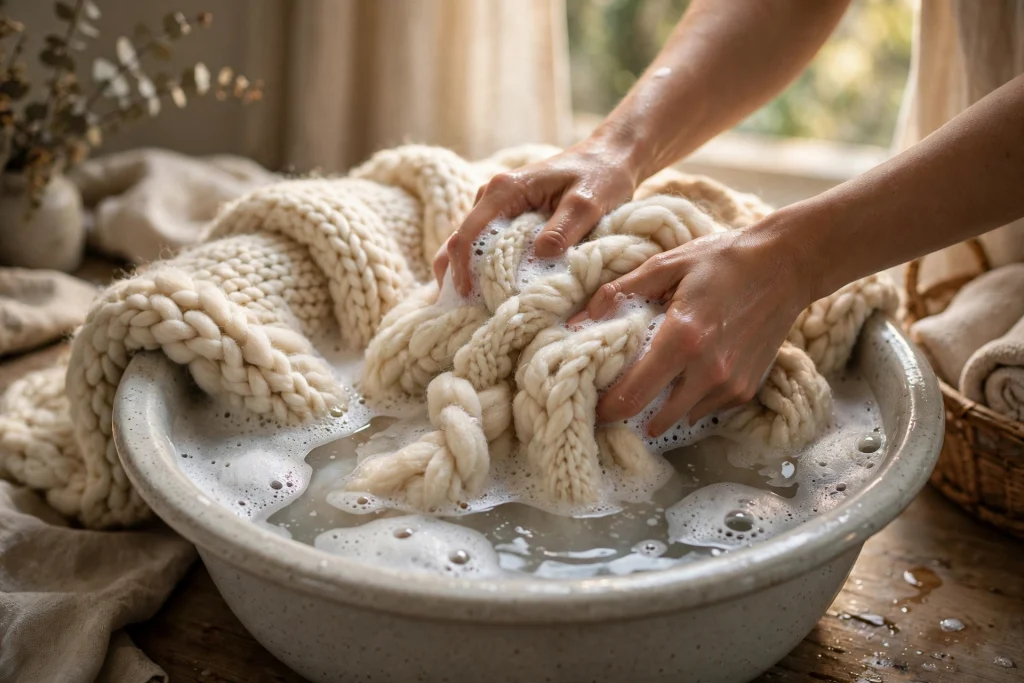

Short answer: The safest way to wash a wool blanket is by hand in cool water with a wool-specific detergent, then dry it flat. You can also machine wash most wool blankets on a cold, gentle or wool cycle, as long as the care label allows it. Wool is a tough fiber, but hot water, agitation, and heat are what cause shrinking and felting, so the rules are simple: keep the water cool, be gentle, and never put a wool blanket in the dryer. This guide explains how to wash wool blanket by hand and in the machine, which detergent to use, how to dry it flat, and the mistakes that cause shrinking and felting.
Can You Wash a Wool Blanket?
Yes, most wool blankets can be washed at home, but the care label is the final word. Check the label first: if it says dry clean only, take it to a professional, because the fibers or dyes may not survive water. If it says hand wash or machine wash cold, you can wash it yourself. Wool fibers are covered in tiny scales. When those scales meet hot water and agitation, they lock together and the fibers felt, which is why a blanket can come out of a hot wash several inches smaller. That is the only real risk. Airing a wool blanket outside for a few hours often removes odors, so you do not need to wash it as often as cotton bedding. Wash it when it is visibly dirty, smells, or after heavy use, usually two to four times a year for a blanket in regular use.
What You Need Before You Start
- A wool-specific detergent or a gentle, pH-neutral detergent. Regular detergent is too harsh and can strip the natural lanolin that keeps wool soft.
- A clean bathtub, large basin, or a washing machine with a wool or hand-wash cycle.
- Two large, clean towels for pressing out water.
- A drying rack or a clean sheet on the floor for flat drying.
- White vinegar (optional) for softening and removing odors.
- A soft brush or a lint roller for loose fibers.
Read the care label first. If you are unsure what the symbols mean, our guide to clothing wash care symbols explains every symbol on the tag.
Wool Blanket Washing Methods Compared
| Method | Best for | Water | Time | Risk |
|---|---|---|---|---|
| Hand washing | Most blankets, including delicate wool | Cool | About 30 minutes | Lowest |
| Machine, gentle cycle | Sturdy machine-washable wool | Cold | About 40 minutes | Low |
| Spot cleaning | Small stains | Cool | About 10 minutes | Lowest |
| Dry cleaning | Dry-clean-only blankets | None | Drop-off | None |
How to Wash a Wool Blanket by Hand
Hand washing is the safest method for any wool blanket, and it takes about 30 minutes of active work.
- Fill a clean bathtub or large basin with cool water, no warmer than 30°C (86°F). Hot water is the main cause of shrinking.
- Add a small amount of wool detergent and swish it through the water until it dissolves.
- Submerge the blanket and press it gently into the water so it is fully soaked. Let it soak for 10 to 15 minutes.
- Gently squeeze and move the blanket through the water. Do not rub, twist, or wring it, because friction causes felting.
- Drain the dirty water and refill with cool, clean water. Rinse by pressing the blanket gently until the water runs clear. Add a splash of white vinegar to the final rinse to soften the fibers and remove soap.
- Lift the blanket out in a bundle, supporting its full weight so it does not stretch. Press out water by rolling it in clean towels.
- Reshape the blanket to its original size and lay it flat to dry, away from direct sunlight and heat.
How to Machine Wash a Wool Blanket
Machine washing is fine for blankets labeled machine washable, if you use the right settings.
- Check the label. Only machine wash if it says machine washable or hand wash.
- Use a front-loader if possible. Top-loaders with a central agitator are rougher on wool.
- Select the wool, hand-wash, or delicate cycle, and set the water to cold. Turn off the spin or use the lowest spin speed.
- Add wool detergent and wash the blanket on its own so it has room to move.
- When the cycle ends, remove the blanket right away and reshape it before drying.
Never use hot water, bleach, or fabric softener on wool. Bleach damages the fibers, and fabric softener coats them and reduces wool’s natural ability to breathe. If your blanket smells musty, add half a cup of baking soda to the wash — see our guide to baking soda in laundry for exact amounts and what it does.
How to Dry a Wool Blanket
Never put a wool blanket in the dryer. The heat and tumbling will felt and shrink it, often permanently. Instead, lay the blanket flat on a clean, dry towel or a drying rack, and gently pull it back into its original shape and size. Flip it once or twice as it dries so both sides get air. Keep it out of direct sunlight, which can fade the color, and away from radiators and heaters. A heavy wool blanket can take 24 to 48 hours to dry completely, so plan ahead and be patient. Do not hang a wet wool blanket over a line: the weight of the water will stretch it out of shape.
How to Remove Stains and Smells From a Wool Blanket
Spot-clean small stains as soon as you notice them. Blot — never rub — the stain with a clean cloth and cool water, then dab a little diluted wool detergent on the mark and rinse. For odors, air the blanket outside on a dry, breezy day for a few hours; wool naturally releases smells when it airs. For stronger smells, soak the blanket in cool water with half a cup of baking soda for 30 minutes before washing, or sprinkle baking soda on the dry blanket, leave it for an hour, and shake it off. Food and drink stains usually come out with the hand-wash method above. For sweat or body odor, the vinegar rinse helps, and for pet smells, a second wash is usually enough. If a stain has set for months, a professional cleaner is the safer choice.
Common Mistakes That Shrink Wool Blankets
- Washing in hot water. Even one hot wash can felt a wool blanket permanently.
- Using a normal or heavy wash cycle. Agitation is the second cause of felting, after heat.
- Wringing out the blanket. Twisting crushes the fibers together. Press water out with towels instead.
- Drying in the dryer or on a radiator. Heat plus tumbling is the fastest way to shrink wool.
- Using bleach or harsh detergent. Both strip lanolin and weaken the fibers.
- Hanging a wet blanket to dry. The weight stretches it out of shape.
- Skipping the care label. Wool blends behave differently from pure wool, and the label tells you which rules apply.
Can You Put a Wool Blanket in the Dryer?
No. A dryer combines the two things wool hates most: heat and agitation. Even a low-heat or air-only cycle can cause some felting, and a hot cycle can shrink a blanket by a third in a single run. If you need to freshen a blanket quickly, tumble it for no more than 10 minutes on a no-heat air fluff setting with no dryer sheets — but flat drying is always safer. If a blanket has already shrunk, soaking it in cool water with hair conditioner can sometimes relax the fibers enough to stretch it back, but this only works for mild shrinkage.
How Often Should You Wash a Wool Blanket?
Two to four times a year is enough for a blanket in regular use. Wool is naturally odor-resistant, so airing it outside between washes is usually all it needs. Wash it more often if it is used by pets or children, if someone has been ill, or if it has visible stains. Between washes, shake it out, air it in fresh air, and store it in a breathable cotton bag rather than a plastic one, which traps moisture. Wool care is similar for other wool garments too — see our guide to the alpaca jumper for more on why wool stays warm and how to look after it.
Frequently Asked Questions
Can you wash a 100% wool blanket in the washing machine?
Yes, if the care label says machine washable. Use a cold, gentle or wool cycle, wool detergent, and the lowest spin. If the label says hand wash only or dry clean only, do not machine wash it.
What detergent is best for wool blankets?
A wool-specific detergent is best, because it is pH-neutral and preserves lanolin. A gentle, fragrance-free liquid detergent is a good second choice. Avoid bleach, biological detergents with enzymes, and fabric softener.
How do I wash a wool blanket without shrinking it?
Use cool water, a gentle cycle or hand washing, and no heat at any stage. Do not agitate, wring, or tumble dry the blanket, and dry it flat.
Can I use vinegar on a wool blanket?
Yes. A splash of white vinegar in the final rinse softens the fibers, removes soap residue, and helps with odors. Do not use vinegar with bleach, and do not soak wool in undiluted vinegar.
How long does a wool blanket take to dry?
A wool blanket dried flat usually takes 24 to 48 hours, depending on thickness and airflow. Turn it over halfway through and keep it away from direct heat and sunlight.
Learning how to wash wool blanket the right way is mostly about avoiding heat and rough handling. Wash it by hand or on a cold gentle cycle, dry it flat, and it will stay soft and warm for years. Treat it gently and it will repay you every winter.