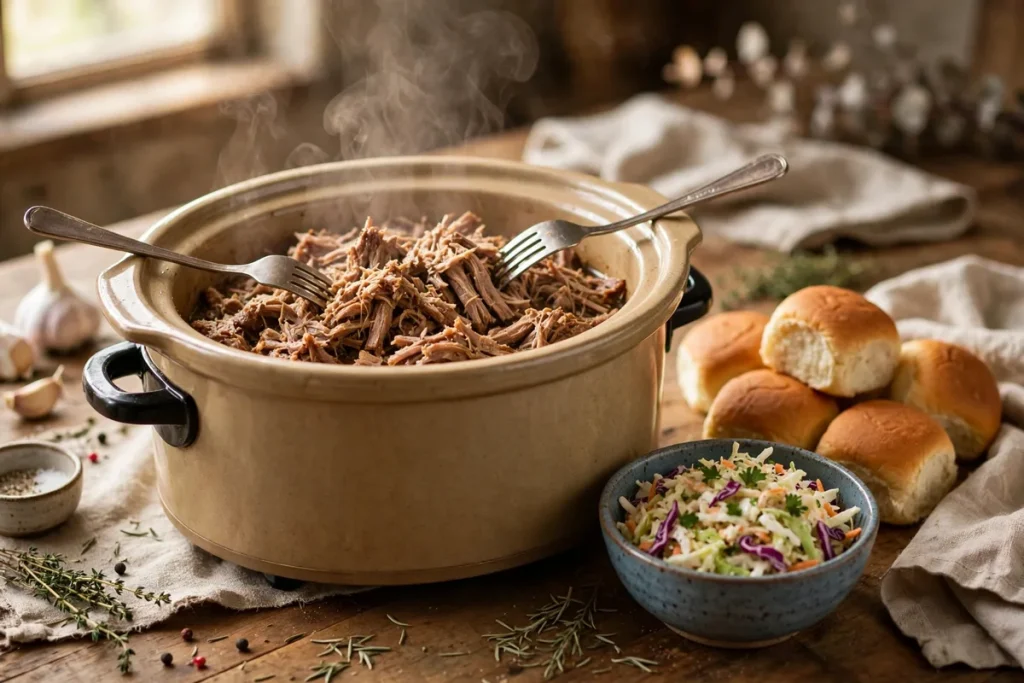

A pork shoulder crock pot dinner is one of the easiest ways to feed a family without spending the day in the kitchen. You season the meat in the morning, set the slow cooker, and come back hours later to pork that falls apart with a fork. It is forgiving, budget friendly, and flexible enough for sandwiches, tacos, rice bowls, and simple weeknight plates. This guide explains why pork shoulder suits slow cooking, how to choose the right cut, how long to cook it, and how to shred, crisp, serve, and store it safely.
Why Pork Shoulder Suits Slow Cooking
Pork shoulder is a hard-working muscle from the front leg area of the pig. It has a good amount of fat and connective tissue, which is exactly what slow cooking handles best. Over many hours at a low, steady temperature, that connective tissue softens into gelatin. The result is meat that feels rich and moist rather than dry and stringy. Leaner cuts, such as pork loin, can dry out in a slow cooker because they do not have the same fat and collagen to keep them juicy.
That slow transformation is also why patience matters. Pork shoulder does not become tender by cooking it hotter and faster. It becomes tender by giving the tissue time to break down. If you rush it, the meat may be cooked through but still tough to chew. If you let it finish, it will shred with very little effort. The crock pot is ideal for this because it holds a gentle, even heat and keeps moisture in the pot.
A pork shoulder crock pot recipe also fits real life. You can start it before work, before school drop-off, or before a busy afternoon. There is no need to watch it constantly, stir it often, or worry about an open flame. You only need to check it near the end of the cooking time, when you test whether it is truly fork-tender. If you enjoy this style of cooking, these slow cooker chicken recipes use the same low-and-slow idea with a lighter protein.
Choosing the Cut: Bone-In vs. Boneless
At the store, pork shoulder may be labeled as pork shoulder, pork butt, or Boston butt. Despite the name, Boston butt comes from the upper part of the shoulder, not the rear of the animal. It is well marbled and is a great choice for pulled pork. Picnic shoulder comes from lower on the leg and often has more skin and a different shape. Both can work, but Boston butt is usually the easiest choice for shredding.
Bone-in pork shoulder is a popular choice because the bone adds flavor and helps the roast hold its shape while it cooks. It can take a little longer to reach full tenderness, and you will need to pull the bone out before shredding. Many cooks like bone-in because the meat near the bone stays especially juicy, and the bone slipping out easily is a good sign that the pork is done.
Boneless pork shoulder is easier to season, easier to cut into pieces if needed, and easier to shred at the end because there is no bone to work around. It may cook a little faster than a bone-in roast of the same weight, so start checking it a bit earlier. If boneless is on sale, or if you prefer a simpler prep, it is a fine choice. Either way, look for meat with visible marbling, a pinkish-red color, and a layer of fat on one side. That fat helps keep the pork moist during the long cook.
What Size Should You Buy?
For most families, a 3 to 5 pound pork shoulder is a good size. It fits a standard 6-quart slow cooker and gives enough pulled pork for dinner plus leftovers. A 5 to 7 pound roast can work in a larger cooker, but make sure it fits with the lid closed and with room for air to move around it. Do not force a roast into a cooker that is too small.
As a rough guide, plan on about three-quarters to one pound of raw pork shoulder per person if pulled pork is the main dish and you want some leftovers. If you are serving many sides, or if the pork is only one part of a larger spread, you can plan on less per person. Leftovers are useful, so buying a little extra is rarely a problem when you have a plan to store and reheat them.
A Simple Dry Rub and Liquid
You do not need a complicated sauce to make good pulled pork. A simple dry rub gives flavor to the outside of the meat, and a small amount of liquid keeps the slow cooker moist. Start by patting the pork dry with paper towels. This helps the rub stick and gives a better surface for browning if you choose to sear it first, although searing is optional in a crock pot recipe.
For a basic rub for a 4 to 5 pound roast, mix 2 tablespoons brown sugar, 1 tablespoon paprika, 2 teaspoons salt, 2 teaspoons garlic powder, 1 teaspoon onion powder, 1 teaspoon black pepper, and half a teaspoon of chili powder if you like a little warmth. Rub it all over the pork, including the sides. If you have time, you can season it the night before, cover it, and keep it in the fridge. That extra time helps the flavor soak in.
For liquid, use about half a cup to one cup in total. Chicken broth, apple juice, or a mix of broth and a splash of apple cider vinegar all work well. Do not fill the slow cooker with liquid. Pork shoulder releases its own juices as it cooks, and too much liquid can make the final pork watery. The liquid is there to create steam and prevent sticking, not to boil the meat.
Place the pork in the slow cooker with the fat side up if it has a fat cap. As the fat melts, it bastes the meat below. Add sliced onion around the sides if you like, and put the lid on. Try not to lift the lid during cooking. Each time you lift it, heat escapes and the cooking time gets longer.
Pork Shoulder Crock Pot Cook-Time Table
Cook times vary by the size of the roast, the shape of the meat, and how your slow cooker runs. Some cookers run hot, and a thick roast takes longer than a flat one. Use the table below as general guidance, and always judge doneness by tenderness, not only by the clock.
| Pork shoulder weight | On LOW | On HIGH |
|---|---|---|
| 3 to 4 pounds | 8 to 9 hours | 4 to 5 hours |
| 4 to 5 pounds | 8 to 10 hours | 4 to 6 hours |
| 5 to 7 pounds | 10 to 12 hours | 5 to 6 hours |
As a simple rule for a pork shoulder crock pot cook, plan on LOW for 8 to 10 hours or HIGH for 4 to 6 hours for a typical 4 to 5 pound roast. LOW is usually the better choice when you have the time. It gives the connective tissue more time to soften, and the pork often ends up more tender. HIGH works well when you start later in the day, but check the meat early so it does not dry out.
How to Tell When It Is Done
Fork-tender is the key test. Push a fork into the thickest part of the pork and twist gently. If the meat pulls apart easily and feels soft all the way through, it is ready. If it still resists or feels tight, it needs more time. Put the lid back on and check again in 30 to 60 minutes. This is the most common fix for tough pulled pork: it is usually not overcooked, it is undercooked.
Temperature can help you check, too. Pork shoulder shreds easily around 195 to 205 degrees Fahrenheit, which is well above the minimum safe cooking temperature for pork. At that range, the collagen has had time to soften. Use an instant-read thermometer in the thickest part, away from the bone. Do not rely on temperature alone, though. Two roasts at the same temperature can feel different, so use the fork test as your final check.
Resting and Shredding
When the pork is tender, move it to a large plate or cutting board and let it rest for 15 to 20 minutes. Resting lets the juices settle back into the meat instead of running out when you shred it. Cover it loosely with foil while it rests. Keep the cooking liquid in the slow cooker for now, because you will use some of it to keep the shredded pork moist.
To shred, use two forks and pull the meat apart along its natural grain. Remove any large pieces of fat, gristle, or bone as you go. You can also use clean hands once the meat is cool enough to handle, or a pair of meat claws if you have them. Work in small sections so the shreds stay even. Then spoon a little of the strained cooking liquid over the pork and toss it lightly. This adds flavor and stops the meat from drying out, especially if you are serving it later.
Crisping the Edges (Optional)
For extra texture, spread the shredded pork on a sheet pan, drizzle it lightly with cooking liquid, and broil it for 3 to 5 minutes, watching closely, until some edges turn crisp. Toss it once and broil briefly again if you like. This step is optional, but it adds a nice contrast to soft pulled pork in sandwiches and tacos.
Serving Ideas, Storage, and Food Safety
Serve pulled pork on soft buns with coleslaw, in warm tortillas with pickled onion, or over rice, mashed potatoes, or a baked potato. For a party spread, make small sliders and pair them with appetizers and hors d’oeuvres so guests can build their own plates. Keep toppings simple: a little barbecue sauce, pickles, or a fresh slaw is usually enough.
For safety, always thaw pork in the fridge before cooking, never cook a frozen shoulder in a slow cooker, because it can stay too long in the temperature range where bacteria grow. Refrigerate leftovers promptly, within two hours, in shallow containers. Eat refrigerated pulled pork within 3 to 4 days, or freeze it for up to 3 months. Reheat it until it is steaming hot throughout, adding a splash of broth or cooking liquid to keep it moist.
Frequently Asked Questions
How long does pork shoulder take in a crock pot?
A 4 to 5 pound roast usually takes 8 to 10 hours on LOW or 4 to 6 hours on HIGH.
Should I use bone-in or boneless pork shoulder?
Both work. Bone-in is often juicier, while boneless is easier to shred.
How do I know when pork shoulder is done?
It is done when it is fork-tender and shreds easily, usually around 195 to 205 degrees Fahrenheit.
Can I cook frozen pork shoulder in a crock pot?
No. Thaw it in the fridge first so it does not stay too long at unsafe temperatures.
How long do leftovers keep?
Refrigerate within two hours and eat within 3 to 4 days, or freeze up to 3 months.