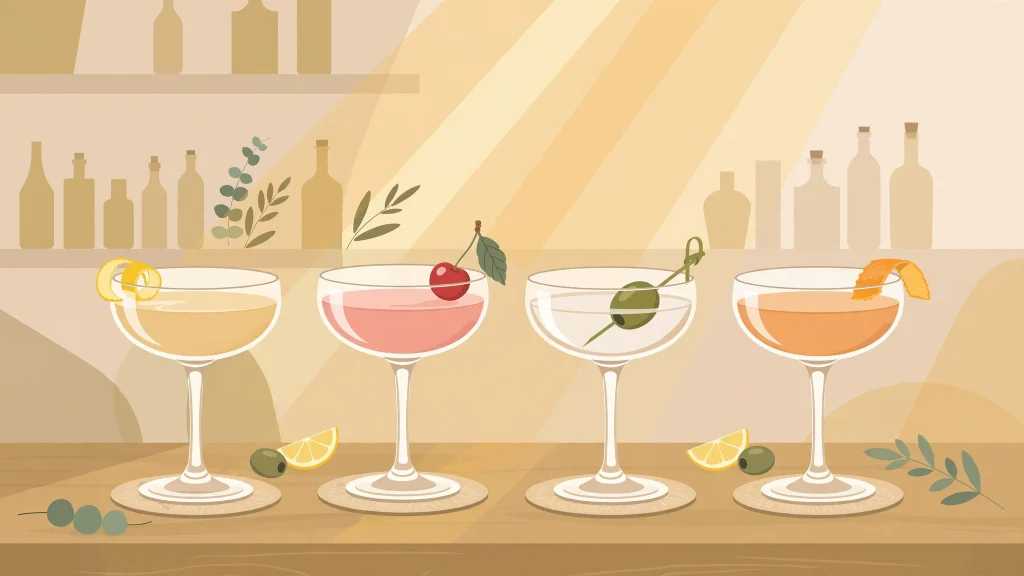

Coupe glasses are the wide, shallow bowls on a stem that you have seen in old films, in cocktail bars, and on wedding tables. Elegant and a little theatrical, they are the glass of choice for champagne toasts, classic cocktails, and anyone who wants their drinks to look as good as they taste. But coupe glasses are more than a pretty shape: their history stretches back centuries, their design affects how a drink smells and tastes, and choosing a good set involves more than picking the prettiest pair on the shelf. This guide explains what coupe glasses are, where they came from, what they are used for, and how to choose, use, and care for a set.
A coupe glass, sometimes called a champagne coupe, has a broad, shallow bowl, a stem, and a flat foot. The bowl is much wider and flatter than a wine glass or a champagne flute, which gives the drink a large surface area and lets aromas open up. The stem keeps your hand away from the bowl so the drink stays cool, and the shape makes the glass easy to hold up in a toast. Modern coupes hold roughly 150 to 300 millilitres, and they come in glass, crystal, and even metal, with designs ranging from plain and classic to etched, coloured, and vintage-inspired.
The History of Coupe Glasses
The coupe is one of the oldest champagne glass shapes, and its origins are wrapped in a famous legend. According to the story, the coupe was modelled on the shape of Marie Antoinette’s breast, or, in some versions, on the breast of another French noblewoman. It is a charming tale, but historians doubt it: the coupe shape existed in France in the 1600s, before Marie Antoinette was born, and it was originally used for drinking champagne and other sparkling wines. What is true is that the coupe became the fashionable champagne glass of the 18th and 19th centuries, appearing in portraits, at court, and in the grand hotels of Paris and London.
In the early 20th century, the coupe fell out of favour for champagne as the tall, narrow flute became popular, because the flute keeps bubbles longer. But the coupe found a new life in the cocktail world. During Prohibition and the golden age of cocktails in the 1920s and 1930s, bartenders adopted the coupe for drinks served up, meaning shaken or stirred and served without ice. The wide bowl showed off the drink’s colour and garnish, and the shape made it easy to sip. In recent years, the coupe has enjoyed a full revival: craft cocktail bars brought it back, home bartenders followed, and today it is once again the default glass for a Martini, a Manhattan, a Daiquiri, or a champagne toast.
What Are Coupe Glasses Used For?
Coupe glasses are versatile, but they suit some drinks better than others. They are the classic choice for cocktails served up, because the wide bowl lets you appreciate the aroma and the garnish, and the stem keeps the chilled drink cold. They are also traditional for champagne and sparkling wine at celebrations, particularly for toasts and for building champagne towers, where the wide bowls stack into a pyramid. In addition, coupes work well for dessert drinks, for serving sorbet or small desserts, and even as a decorative piece on a bar cart.
There are limits, though. The wide, shallow bowl lets carbonation escape quickly, so champagne goes flat faster in a coupe than in a flute. The shape also makes the glass easier to spill if you are walking around with it, and it is not the best choice for drinks served over ice, which need a tumbler or a rocks glass. Think of the coupe as a glass for short, elegant, chilled drinks that are meant to be enjoyed fairly quickly, and it will serve you well. For drinks that need to stay fizzy for a long time, or for long drinks with plenty of ice, choose a different glass.
Coupe Glass vs Flute vs Martini Glass
People often confuse coupe glasses with flutes and Martini glasses, so it helps to know the difference. A champagne flute is tall and narrow, designed to keep bubbles rising in a stream and to preserve fizz, so it is the better choice for a long, slow glass of champagne. A Martini glass has a wide, V-shaped cone on a stem, which looks dramatic but spills easily and warms the drink quickly. The coupe sits between them: wider and more stable than a Martini glass, more open and aromatic than a flute, and easier to drink from than either when you are standing at a party. Many bars now use coupes for Martinis as well, because they are less likely to slosh and because the shape feels more relaxed and modern.
Your choice depends on the drink and the occasion. For a champagne toast where the bubbles matter, reach for a flute. For a Martini or a Daiquiri at a cocktail party, a coupe is the classic and practical choice. For a dessert cocktail or a celebratory drink where presentation matters, the coupe wins again. If you can only own one special-occasion glass, a set of coupes is the most versatile choice of the three.
How to Choose a Set of Coupe Glasses
Choosing a set of coupe glasses is about balancing looks, durability, and practicality. Start with how you will use them. If they are for occasional toasts and dinner parties, you can prioritise beauty and choose delicate crystal. If they will be used often, or outdoors, or by a busy household, sturdier glass with a slightly thicker rim will survive much longer. A set of four is enough for a small household, while a set of six or eight suits people who entertain regularly. Buying a set rather than individual glasses keeps the design consistent and usually works out cheaper per glass.
Size and capacity
Most coupe glasses hold between 150 and 300 millilitres, and the right size depends on the drinks you serve. A smaller coupe, around 150 to 200 millilitres, suits cocktails served up, because the drink stays cold and the glass is easy to hold. A larger coupe, around 250 to 300 millilitres, suits champagne toasts and dessert drinks, where a generous pour looks the part. Check the rim diameter too: a very wide bowl looks impressive but is easier to spill, while a slightly narrower bowl is more practical for standing at a party. If you plan to chill the glasses before serving, make sure they fit in your fridge or freezer door.
Material: glass, crystal, or metal
Ordinary glass is the most affordable and the most durable option, and modern glass coupes can be beautifully thin and clear. Crystal is more expensive but noticeably lighter, clearer, and finer, with a thinner rim that feels better to drink from. Crystal is also more delicate and usually needs hand washing. Metal coupes, often in copper or stainless steel, are a stylish choice for outdoor use and for themed bars, but they hide the colour of the drink, which is part of the pleasure of a coupe. For most buyers, a good quality glass set is the best starting point, with crystal reserved for a special set kept for celebrations.
Stem, foot, and design details
Look at the stem length and the foot size. A longer stem keeps your hand further from the drink and looks more elegant, but a very long stem makes the glass top-heavy. A wide, flat foot makes the glass stable on a table and less likely to tip. Check the rim: a rolled rim is stronger and more chip-resistant, while a cut or laser-cut rim is thinner and more refined. Etched or patterned bowls catch the light beautifully, but plain bowls show off the drink’s colour best and suit any table setting. Vintage-style coupes with a slightly narrower bowl and a decorative stem are popular at the moment, and they pair well with both modern and traditional tableware. If you are building a home bar, choose your coupe glasses alongside your other glassware so the whole set feels coordinated, just as you would match the tools for your morning coffee: for example, picking an espresso grinder for home espresso is a similar exercise in matching the equipment to how you actually use it.
How many should you buy?
Buy at least four, and six if you entertain. Coupe glasses break, especially the delicate crystal ones, so having spares matters. Many sets are sold in fours or sixes, and it is worth buying one extra set or a couple of spares if the design is one you love, because ranges are discontinued and matching a single broken glass later can be difficult. If you are buying for a wedding or a big event, count your guests and add a few extra for breakages.
How to Use and Care for Coupe Glasses
Chill your coupe glasses before serving a cold drink: ten minutes in the freezer or filled with ice water while you mix the drink makes a real difference. Hold the glass by the stem, not the bowl, so the drink stays cold and the glass stays clear of fingerprints. Pour to just below the widest part of the bowl, leaving room for the aroma and for the drink to be carried without spilling. For champagne towers, pour slowly into the top glass and let the champagne cascade down; it is a party trick that works best with steady hands and a stable table.
Cleaning is where coupe glasses most often get damaged. Hand washing is safest: use warm water, a little washing-up liquid, and a soft cloth, and dry the glasses immediately with a lint-free towel to avoid water spots. Hold the glass by the bowl rather than the stem when washing, because twisting the stem is how most coupes break. If your glasses are dishwasher safe, place them securely in the top rack with space between them, and skip the heated dry cycle. Store coupes upright, never stacked inside each other, and keep them in a cupboard where they will not be knocked. With care, a good set of coupe glasses lasts for years and becomes part of your celebrations.
Frequently Asked Questions About Coupe Glasses
What is the difference between a coupe glass and a champagne flute?
A coupe has a wide, shallow bowl that lets aromas open up and shows off the drink, while a flute is tall and narrow to keep champagne fizzy for longer. Choose a coupe for cocktails and celebrations where presentation matters, and a flute for a long, slow glass of champagne.
Are coupe glasses good for cocktails?
Yes, coupe glasses are one of the best choices for cocktails served up, such as Martinis, Manhattans, and Daiquiris. The wide bowl shows off the drink and its garnish, the stem keeps it cold, and the shape is more stable and easier to drink from than a V-shaped Martini glass.
Can coupe glasses go in the dishwasher?
Some sturdy glass coupes are dishwasher safe, but hand washing is safer, especially for crystal. If you do use a dishwasher, place the glasses securely in the top rack with space between them, use a gentle cycle, and skip the heated dry setting.
How do you serve champagne in a coupe glass?
Chill the glass first, pour the champagne slowly down the side of the bowl to control the foam, and fill to just below the widest part. Serve promptly, because champagne loses its fizz faster in a coupe than in a flute. Coupe glasses also make a wonderful centrepiece for a celebration table, whether you are serving drinks or simply dressing the table for a dinner party. They sit happily alongside the food and drink you serve: a coupe of something sparkling is a natural companion to a good meal, from a simple supper to a dish like a perfectly cooked baked potato with crispy skin and a fluffy inside.
Are coupe glasses worth buying?
Yes, if you enjoy cocktails, host dinner parties, or celebrate with champagne. A set of coupe glasses is versatile, elegant, and relatively affordable, and a good set lasts for years with proper care. Start with a set of four or six in good quality glass, and add crystal later if you want a special-occasion set. Coupe glasses also pair well with a well-stocked kitchen and a relaxed approach to entertaining: keep the drinks simple, the food generous, and the glasses ready. And when you are planning the menu, it helps to know the practical details, such as whether you can freeze tortillas for later, so the food is as ready as the drinks.