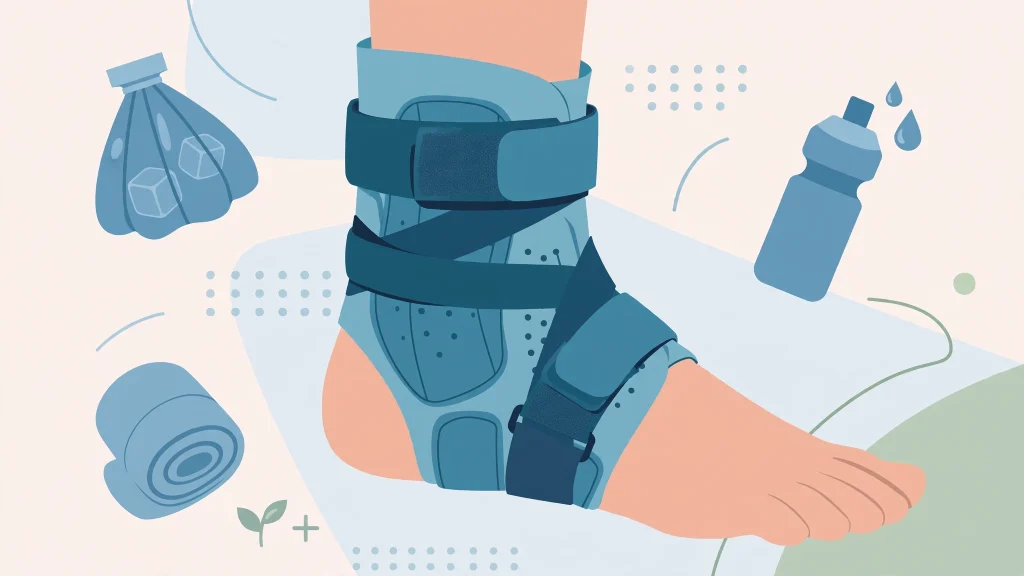

Ankle support is one of those things most people ignore until they need it. One awkward landing on a run, a twist on uneven ground, or a long day on your feet can leave an ankle swollen, weak, and painful, and suddenly a simple brace or sleeve becomes the difference between moving confidently and limping through the week. Ankle supports and braces come in many forms, from soft elastic sleeves to rigid lace-up braces and walking boots, and choosing the right one depends on your injury, your activity, and how much stability you actually need. This guide explains the main types of ankle support, when each one makes sense, how to choose the right fit, and how to use a brace safely so it helps you recover instead of holding you back.
Your ankle is a busy joint. It carries your full body weight with every step, adjusts to uneven surfaces, and absorbs the shock of running and jumping. It relies on ligaments, tendons, and muscles working together, and when any of those are strained or weakened, the joint becomes unstable. An ankle support works by limiting excessive movement, compressing the joint to control swelling, and giving your brain extra feedback about where the joint is in space. That combination reduces pain, lowers the risk of rolling the ankle again, and lets you stay active while tissues heal. It is not a cure on its own, but used well, it is one of the most practical tools in injury recovery and prevention.
What Is Ankle Support and How Does It Work?
Ankle support is any device worn around the ankle to stabilise, compress, or protect the joint. The simplest versions are elastic sleeves that slide on like a sock and provide gentle compression and warmth. More structured supports add straps, laces, or rigid side stays that restrict sideways movement while still allowing the up-and-down motion you need for walking. The most supportive options, such as stirrup braces and walking boots, hold the ankle almost still and are used after serious sprains or fractures.
A good support does three things at once. First, it limits the movements that cause re-injury, especially the inward roll that causes most sprains. Second, compression improves blood flow and reduces swelling, which eases pain and speeds healing. Third, the pressure on the skin improves proprioception, your sense of the joint’s position, which helps you correct your footing before another twist happens. The trade-off is that too much support for too long can let the muscles around the ankle weaken, so the goal is always the lightest support that gives you the stability you need, worn for the shortest time that makes sense.
Types of Ankle Support and Braces
Choosing an ankle support starts with knowing what is available. The right choice depends on whether you are recovering from an injury, preventing one, or managing a long-term condition such as chronic instability or arthritis. Here are the main types, from lightest to most supportive.
Compression sleeves and socks
Elastic sleeves and compression socks are the lightest form of ankle support. They provide even compression, gentle warmth, and mild stability, and they fit easily inside most shoes. They suit mild sprains, general soreness, swelling after a long day, and people who want light support during sport. They do not stop the ankle rolling, so they are not the right choice after a significant sprain or for someone with repeated instability. Their advantage is comfort: most people can wear one all day without noticing it.
Strap and wrap supports
Wrap-around supports use adjustable straps, often with Velcro, to let you control how tight the brace is and where the pressure falls. Some include a figure-of-eight strap that mimics the taping a physiotherapist would apply. These supports offer moderate stability, are easy to adjust during the day, and work well for returning to sport after a mild or moderate sprain. They are also useful for people whose ankles swell during the day, because the straps can be loosened as needed.
Lace-up braces
Lace-up braces look like a small boot without a sole and are tightened with laces, sometimes with added straps and plastic or metal side stays. They give strong, even support and are a favourite among athletes in sports with cutting and landing, such as basketball, volleyball, and football. A lace-up brace restricts sideways movement well while still allowing running and jumping. It takes longer to put on than a sleeve and usually needs a roomier shoe, but for active prevention and for moderate sprains, it is often the best balance of protection and freedom.
Stirrup and rigid braces
Stirrup braces have rigid plastic shells on the inside and outside of the ankle, held together by straps or an air-filled pad. They allow the ankle to move up and down but block the sideways roll almost completely. Doctors commonly prescribe them in the first days after a sprain, and athletes sometimes wear them as a precaution in high-risk sports. They are bulkier than lace-up braces and fit only in wide shoes, but they offer the strongest protection short of a boot.
Walking boots and casts
A walking boot, sometimes called a moon boot, immobilises the ankle and lower leg and is used after fractures, severe sprains, surgery, or Achilles tendon injuries. It is a medical device rather than a sports accessory, and it should be used under a clinician’s guidance. Recovery in a boot is usually followed by a gradual move to a rigid brace and then to a lighter support as strength returns.
When Should You Use Ankle Support?
Ankle support is most useful in three situations: while recovering from an injury, when returning to activity after an injury, and when an underlying condition makes the ankle unstable. After a sprain, a brace protects the healing ligaments while you walk and work, and it lets you stay mobile instead of resting completely, which in turn helps the joint recover. Athletes who have sprained an ankle once are far more likely to do it again, so many wear a brace for the first few months back in sport, and some continue wearing one during high-risk activities for a season or longer.
Support also helps people with chronic ankle instability, where the ankle gives way repeatedly, and people with arthritis, tendon problems, or weakness after a long period in a cast. In these cases a brace is often a long-term tool rather than a short-term one. It is also worth considering for physically demanding work, hiking on rough ground, or playing sports that involve jumping and quick direction changes, particularly if you have had an ankle injury before. If you are unsure whether your pain needs medical attention, read up on foot injuries first: for example, a Lisfranc injury of the midfoot can feel similar to a bad sprain but needs specific treatment, so any pain that does not improve in a few days deserves a professional opinion.
There are also times when a support is not the answer. A brace will not fix a fracture, a severe sprain with major swelling and bruising, numbness, or an ankle you cannot put weight on; those need medical assessment promptly. It also should not be used to push through sharp pain during sport. Pain is a signal, and masking it with a brace can turn a minor injury into a long-term problem. If your ankle keeps giving way, swells every time you use it, or has not improved after a couple of weeks of rest and support, see a doctor or physiotherapist rather than simply buying a stronger brace.
How to Choose the Right Ankle Support
Choosing well means matching the support to your situation, your foot, and your shoes. Start with the level of support you need: a sleeve for mild soreness or light prevention, a strap or lace-up brace for moderate sprains or returning to sport, and a rigid brace or boot for serious injury or medical advice. Think about your activity too. A runner needs a low-profile support that fits in a running shoe and does not rub, while a basketball player may prefer a lace-up brace with side stays, and someone on their feet all day at work may want a comfortable sleeve that can be worn for hours.
Getting the right size and fit
Fit matters more than brand. Measure around the narrowest part of your ankle and around the arch of your foot, and compare those numbers with the manufacturer’s size chart rather than guessing from your shoe size. The support should feel snug and secure without cutting off circulation: your toes should stay warm and normal in colour, and you should be able to slide one finger under a strap. Put it on with the shoe you will wear it with, and walk around the shop or your home before committing. If it pinches, slips, or changes how you walk, it is the wrong size or the wrong design, and a badly fitting brace can cause blisters, pressure sores, and even new injuries.
Comfort, materials, and shoes
Look for breathable, moisture-wicking materials, especially if you will wear the support for sport or in warm weather. Neoprene provides warmth and compression but can get hot; elastic and knitted fabrics breathe better but offer less structure. Check whether the support is designed for the left or right foot, or is universal, and whether it can be worn over or under a sock. A thin sock underneath reduces friction and helps with hygiene. Finally, check your shoes: a rigid or lace-up brace usually needs a shoe with a removable insole or a slightly larger size. If your usual shoes are tight with the brace inside, your gait will suffer, so it is worth trying the combination together.
How long should you wear ankle support?
For a mild sprain, most people wear a support for one to three weeks, gradually using it less as pain and swelling settle. After a moderate sprain, four to six weeks is common, with the brace used mainly during activity. For prevention during sport, wear it during training and matches for the first few months after an injury, then reassess. Wearing a brace all day, every day, for months without a plan can weaken the muscles that stabilise the ankle, so the aim is to use it while you rebuild strength, not instead of rebuilding strength. Pairing the brace with simple balance and strengthening exercises is what turns a temporary aid into a lasting recovery, and looking after your general wellbeing matters too: small daily habits such as those in a guide to simple self-care habits that actually help support recovery in ways people often overlook.
Strengthening Your Ankle So You Need Less Support
A brace protects your ankle, but exercises rebuild it. Once pain allows, gentle movement is usually better than complete rest. Start with ankle circles and alphabet tracing, moving the foot slowly through its range of motion several times a day. Add calf raises, holding onto a chair for balance, and progress to standing on one foot, first on a firm floor and later on a cushion or wobble board. Resistance bands are useful for strengthening the muscles that control sideways movement: loop a band around the forefoot, anchor the other end, and slowly turn the foot inward and outward. Ten to fifteen minutes a day is enough to make a real difference over a few weeks.
Balance training deserves special attention because it retrains the reflexes that stop the ankle rolling. Stand on one foot while brushing your teeth, progress to doing it with your eyes closed, and then try catching a ball while balancing. If you play sport, add hopping and landing drills only when walking and balancing are pain-free, and land softly with the knee slightly bent. Keep wearing the brace during these activities until your physiotherapist or doctor agrees you are ready to train without it. Strength and balance are also part of staying safe at home: if mobility is limited while you recover, simple aids around the house help, from a sturdy handrail to choosing an elevated toilet seat for safety and comfort that makes sitting and standing easier on a sore ankle.
Common Mistakes When Using Ankle Support
The most common mistake is wearing a brace that is too tight. A support should feel firm, not painful, and if your foot goes numb, cold, or changes colour, loosen it immediately. Another mistake is wearing the brace on the wrong foot or upside down, which is easy to do with universal designs, so check the labelling.
Frequently Asked Questions About Ankle Support
Should I wear ankle support all day?
Not usually. Wear it during activity, sport, or work on your feet, and take it off to rest, sleep, and do your strengthening exercises unless a doctor tells you otherwise. Constant wear can weaken the muscles that stabilise the ankle.
Can I sleep with an ankle brace on?
For most sprains, no. Sleeping without the brace is more comfortable and lets the joint move naturally. The exception is a walking boot or a brace specifically prescribed for overnight use after surgery or a serious injury.
Is a lace-up brace better than a sleeve?
It depends on your needs. A lace-up brace gives much stronger protection against rolling and suits sport and moderate sprains. A sleeve is lighter, more comfortable, and better for mild soreness, swelling, and all-day wear. Many people use a sleeve for daily life and a lace-up brace for sport.
How do I know if my ankle support fits correctly?
It should feel snug and stay in place without pinching, and your toes should stay warm and normal in colour. Walk around in it with your usual shoes on. If it slips, rubs, or changes your gait, try another size or a different design.
When should I see a doctor about ankle pain?
See a doctor promptly if you cannot bear weight, the ankle is very swollen or bruised, it looks deformed, or the pain does not improve after a few days. Also seek advice if the ankle keeps giving way, if you have numbness, or if the same ankle has been sprained several times.