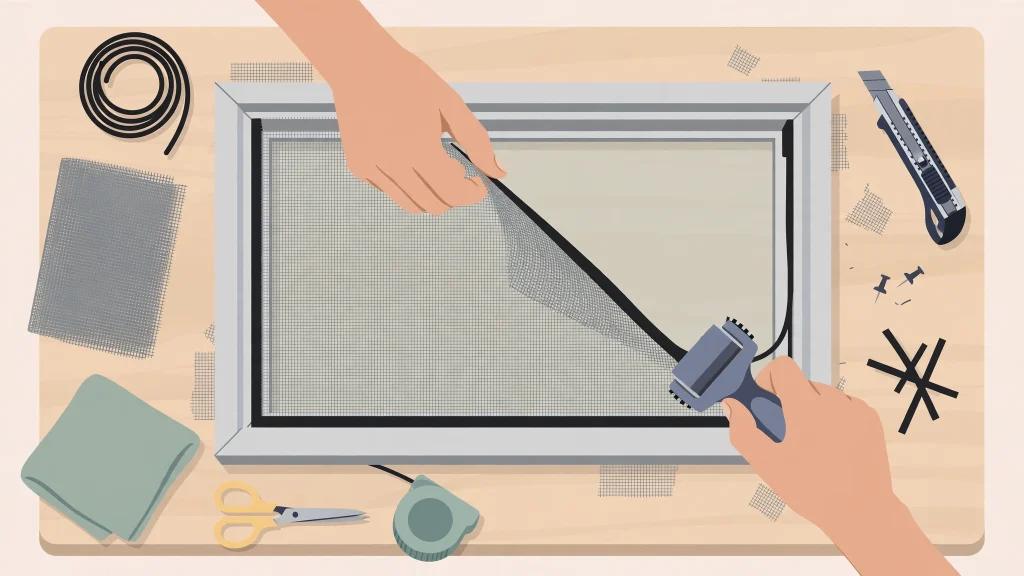

Short answer: To reseal a window, cut out the old caulk, clean the joint, and apply a smooth bead of silicone or polyurethane caulk around the frame, then let it cure for 24 hours. The whole job takes about an hour per window, costs less than $20 in materials, and can cut drafts, stop leaks, and lower your heating and cooling bills. This guide explains how to reseal windows step by step, which sealant to use inside and outside, how long caulk takes to dry, and the mistakes that cause a new seal to fail.
Signs Your Windows Need Resealing
Caulk and seals wear out over time. Look for these signs: a draft you can feel when you hold your hand near the frame; condensation or fog between the panes; peeling, cracked, or missing caulk; water stains on the sill or wall below the window; paint that bubbles or peels near the frame; and heating or cooling bills that keep climbing. A simple test: hold a lit incense stick near the frame on a windy day. If the smoke wavers or blows inward, air is leaking through. If the seal between the glass panes has failed and the window fogs from the inside, resealing the frame will not fix it — the glass unit itself needs replacing.
How to Find Where the Draft Is Coming From
Before you reseal, find the exact leak so you do not seal the wrong place. On a cold or windy day, hold a lit candle or incense stick near the window and watch the flame or smoke. If it flickers near the frame, the seal has failed. If it flickers at the sash, the weatherstripping is worn. Hold a sheet of tissue paper against the closed window: if it flutters, air is getting through. Check the outside too — look for gaps in the caulk, cracked glazing putty, and missing sealant around the frame. Mark each leak with painter’s tape so you can find it again when you start work.
What You Need: Tools and Materials
- A caulk gun and a tube of exterior silicone or polyurethane caulk.
- A utility knife and a caulk removal tool or a stiff putty knife.
- Painter’s tape for clean lines.
- Rubbing alcohol or a household cleaner and rags for cleaning the joint.
- A caulk smoothing tool or a wet finger, and a spray bottle with soapy water.
- Gloves, a dust mask, and a stable ladder for upstairs windows.
- Backer rod (foam cord) for gaps wider than a quarter inch.
Choose your sealant before you start — the table below compares the options. For a full window repair, including torn screens, see our window screen repair guide.
Which Sealant Should You Use?
Use silicone or polyurethane outside, where the seal faces rain and sun. Use paintable acrylic latex inside, where looks matter. Never use interior caulk outside — it will crack within a year.
| Sealant | Best for | Paintable | Lifespan |
|---|---|---|---|
| Silicone | Exterior, wet areas | No | 20+ years |
| Polyurethane | Exterior, movement | Yes | 10-20 years |
| Acrylic latex | Interior trim | Yes | 5-10 years |
| Butyl rubber | Metal frames, roofs | No | 10+ years |
| Expanding foam | Gaps over 1/4 inch | Yes, after trimming | 10+ years |
How to Reseal Windows: Step by Step
Work on a dry day when the temperature is above 5°C (40°F). Caulk does not stick or cure properly in cold or wet weather.
- Remove the old caulk. Cut along both edges of the old bead with a utility knife, then pull it out with a caulk removal tool or a putty knife. Scrape out any remaining bits so the new caulk bonds to the frame, not to old sealant.
- Clean the joint. Wipe the gap with rubbing alcohol or a household cleaner and let it dry completely. Dust and grease stop caulk from sticking.
- Fill wide gaps with backer rod. For gaps wider than a quarter inch, press foam backer rod into the joint so the caulk has something to grip and does not sink in too deep.
- Tape the edges. Run painter’s tape along both sides of the joint, leaving a gap about a quarter inch wide for the caulk bead.
- Cut the caulk tube tip at a 45-degree angle, sized to the gap, and load it into the caulk gun.
- Apply the caulk in one steady bead. Hold the gun at 45 degrees and move slowly along the joint, keeping steady pressure so the bead is even.
- Smooth the bead. Wet your finger or a smoothing tool with soapy water and run it along the bead in one motion to press the caulk into the joint and give it a clean finish.
- Remove the tape while the caulk is still wet, pulling it away at an angle, and let the caulk cure for at least 24 hours before painting or getting it wet.
How to Reseal the Inside vs. the Outside
Reseal the outside first, because that is where rain and wind attack the window. Use silicone or polyurethane outside and let it cure fully before it rains. Inside, reseal the joint between the window frame and the wall with paintable acrylic latex, which you can paint to match the trim. Do not seal the small weep holes at the bottom of the window frame — they drain water out of the frame. If you see daylight through a gap, seal it; if the frame itself is rotted, caulk will not save it and the frame needs repair or replacement.
How Long Does Caulk Take to Dry?
Most caulk feels dry to the touch in 30 minutes to 2 hours, but it is not cured. Silicone caulk cures in about 24 hours, polyurethane in 24 to 48 hours, and acrylic latex in 2 to 3 days for a full cure. Cold or humid weather slows curing. Do not paint over caulk until it is fully cured, and keep it dry during that time. For exact times by product, see our guide to how long caulk takes to dry.
Resealing Different Window Types
- Double-hung windows: seal the joint where the frame meets the wall, and replace worn weatherstripping on the sashes.
- Casement windows: check the seal around the whole frame and the gasket that presses against the sash.
- Sliding windows: clean the track first, then seal the outer frame joints.
- Skylights: use a high-quality polyurethane sealant and check the flashing as well as the seal; a leaking skylight is often a flashing problem, not a caulk problem.
- Metal and vinyl frames: use silicone, which sticks well to smooth surfaces and handles movement.
How Much Does It Cost to Reseal Windows?
Doing it yourself costs $10 to $20 per window for caulk, tape, and tools you do not already own. A professional charges $100 to $300 per window, depending on size and access. Resealing a whole house yourself usually costs under $100 in materials and takes a weekend. Compare that with the cost of a drafty window: a badly sealed window can add 10 to 25 percent to your heating and cooling bills, so resealing usually pays for itself within one season. If more than half your windows need work, consider a bigger project — see our whole house remodeling guide for how to plan larger home improvements.
Resealing vs. Replacing Windows
Reseal when the frames are solid and the problem is the caulk or the weatherstripping. Replace when the frames are rotted, the glass is cracked, the seals between the panes have failed, or the windows are single-pane and you want modern insulation. Resealing costs a fraction of replacement, so always try it first. If a window still leaks after a careful reseal, the problem is usually the frame, the flashing, or the installation, and a professional should look at it.
Common Mistakes to Avoid
- Caulking over old caulk. The new seal will peel off with the old one.
- Caulking in cold or wet weather. The caulk will not bond or cure.
- Using the wrong sealant. Interior caulk outside fails within a year.
- Leaving gaps too wide for caulk. Use backer rod or foam for gaps over a quarter inch.
- Smoothing with a dry finger. It drags and leaves a rough finish; use soapy water.
- Sealing the weep holes. They drain water, and blocking them causes rot.
- Painting too soon. Paint over uncured caulk cracks and peels.
Frequently Asked Questions
How often should you reseal windows?
Inspect the seals every year and reseal every 5 to 10 years, or sooner if the caulk cracks, peels, or shrinks. South-facing windows wear out faster because of sun exposure.
Can you reseal windows in winter?
Yes, if the temperature is above 5°C (40°F) and the surfaces are dry. In cold weather, choose a caulk rated for low temperatures and keep the tube warm indoors before use.
What is the best caulk for windows?
Silicone is best for the outside because it lasts longest and handles weather. Polyurethane is best where you need to paint over the seal. Acrylic latex is best for interior trim.
Do I need to remove old caulk before resealing?
Yes. New caulk sticks to clean surfaces, not to old, crumbling sealant. Remove all of the old caulk, clean the joint, and let it dry before you apply the new bead.
How do I know if my window seal is broken?
Look for drafts, condensation between the panes, peeling caulk, and water stains. If the glass itself fogs from the inside, the seal between the panes has failed and the glass unit needs replacing.
Learning how to reseal windows is one of the best-value home repairs: an hour per window, a few dollars in materials, and a warmer, drier home. Remove the old caulk, clean the joint, apply a smooth bead, and let it cure. Do it once, do it properly, and your windows will keep the weather out for years.