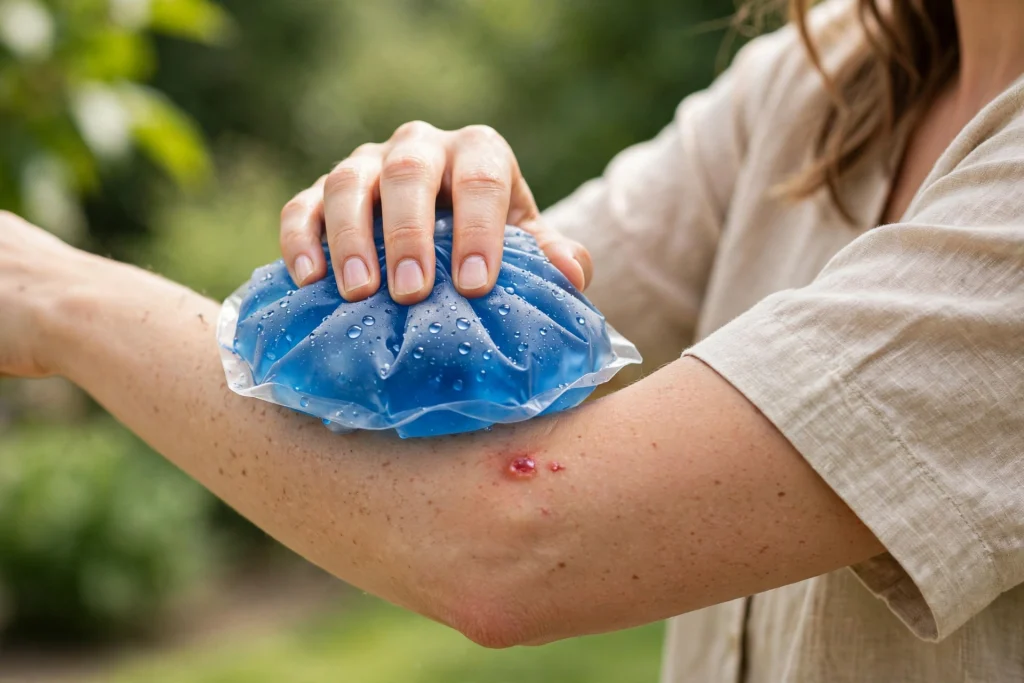

A mosquito bite can turn a pleasant evening outdoors into hours of itching, redness, and swelling. Before you reach for creams or antihistamines, the fastest relief may already be in your freezer. An ice pack for mosquito bites is one of the simplest, cheapest, and most effective first steps you can take, and health authorities such as the CDC recommend cold as part of basic bite care. But ice only helps if you use it the right way, for the right amount of time, and with the right follow-up treatment.
In this guide, you will learn how an ice pack helps a mosquito bite, how long to leave it on, what to do first, which remedies work better for stubborn itching, and the warning signs that mean a bite needs medical attention.
Does an Ice Pack Help a Mosquito Bite?
Yes. An ice pack helps in three ways. First, cold numbs the nerve endings around the bite, which dulls the itch within minutes. Second, cold narrows the small blood vessels under the skin, which reduces swelling and redness. Third, cooling the skin slows the local histamine reaction, which is the immune response that makes a bite itch and swell.
When a mosquito bites, it injects a small amount of saliva into your skin to stop your blood from clotting while it feeds. Your immune system reacts to proteins in that saliva by releasing histamine, and histamine is what causes the itch, the raised bump, and the red ring around it. Cold does not remove the saliva or stop the immune reaction, but it calms the symptoms while your body deals with it. Ice is excellent for fast relief, but it is not a cure on its own. For most people, the itch fades within a day or two, and the bump disappears within a few days. Because ice reduces the urge to scratch, it also lowers the risk of breaking the skin and causing an infection.
How to Use an Ice Pack on a Mosquito Bite
Using an ice pack correctly takes less than a minute, but a few small details make a real difference. Follow these steps in order:
- Wash the bite first. Clean the area gently with soap and water, then pat it dry. This removes bacteria and leftover saliva and reduces the risk of infection if you scratch later.
- Wrap the ice pack. Never put ice, a frozen gel pack, or a bag of frozen peas directly on bare skin. Wrap it in a thin towel or a clean cloth to protect your skin from ice burn.
- Apply it for 10 minutes. Hold the wrapped pack gently against the bite for about 10 minutes. You should feel comfortably cold and numb, not painful. If the cold stings or the skin turns very pale, remove it sooner.
- Take a break. Remove the ice for at least 10 minutes and let the skin warm up before reapplying. You can repeat this cycle a few times over the first hour if the itch returns.
- Follow up with a treatment. After icing, apply a thin layer of 1% hydrocortisone cream or calamine lotion. If the itch is strong, an over-the-counter oral antihistamine can help, especially at night.
If you do not have a proper ice pack, a bag of frozen vegetables, a cold can from the fridge, or a damp cloth chilled in the freezer all work in a pinch. Keeping a couple of reusable gel packs in the freezer during mosquito season means you are always ready, and it is one more reason to repair a torn window screen before summer, so fewer mosquitoes get inside in the first place.
How Long Should You Ice a Mosquito Bite?
The CDC advises icing a mosquito bite for about 10 minutes at a time. That is enough to numb the itch and bring swelling down without risking damage to the skin. Longer is not better: leaving ice on for 20 or 30 minutes can cause ice burn, blistering, or frostbite, especially on thin skin such as the face, the inside of the wrist, or a child’s skin. For children or bites on the face, use 5 minutes at a time. As a simple rule, if the skin feels numb, that is enough. Remove the pack, let the area warm up, and only reapply if the itch comes back. Never fall asleep with an ice pack on your skin, and never tape or strap a frozen pack in place.
Ice Pack vs. Other Mosquito Bite Remedies
Ice is fast, free, and drug-free, but it is not the only option. Different remedies work in different ways, and the best choice depends on whether your main problem is itching, swelling, or pain.
| Remedy | Best for | How fast it works | Downsides |
|---|---|---|---|
| Ice pack | Itch, swelling, and pain | Within minutes | Temporary; must be reapplied |
| Hydrocortisone cream (1%) | Itching and inflammation | 30 minutes to a few hours | Not for broken or infected skin |
| Oral antihistamine | Strong itching, many bites | 30 to 60 minutes | Can cause drowsiness |
| Calamine lotion | Mild itch and irritation | Within minutes | Dries the skin; messy |
| Aloe vera gel | Soothing and cooling | Within minutes | Mild effect on its own |
| Scratching | Nothing | Seconds of relief | Breaks skin and raises infection risk |
For most bites, the winning combination is ice first, then hydrocortisone or calamine. Ice gives you instant relief while the cream starts working, and together they usually keep the itch away for hours. If you have many bites or the itch keeps you awake, add an oral antihistamine in the evening.
What to Pair With Ice for Faster Relief
Hydrocortisone cream is the most useful partner for ice. It is a mild steroid that calms inflammation at the site of the bite. Apply a thin layer two or three times a day for a few days, and stop once the itch and redness settle. Calamine lotion is a gentler alternative that dries out weepy bites and feels cooling as it dries.
An oral antihistamine, such as cetirizine or loratadine during the day, or diphenhydramine at night, blocks histamine throughout the body. That makes it useful when you have several bites or when the itch is worst at night. Aloe vera gel kept in the fridge gives a second round of cooling after the ice comes off. Good general habits matter too: maintaining a healthy lifestyle, with enough sleep and a balanced diet, supports your immune system and helps skin repair itself faster.
Mistakes to Avoid When Icing a Bite
Do not put ice directly on bare skin, even for a few minutes, because it can cause an ice burn that is more painful than the bite. Do not ice for longer than 10 minutes at a time, and do not fall asleep with a pack on. Do not use ice on broken, blistered, or infected skin, and be extra careful with children, older adults, and anyone with poor circulation or diabetes. Do not press the ice pack hard into the skin, since gentle contact is enough. And do not expect ice to fix everything: if symptoms keep getting worse after a day or two, it is time to move on to medical care.
When to See a Doctor
Most mosquito bites are harmless and fade within a few days. See a doctor promptly if the bite becomes increasingly painful, warm, or swollen after 24 to 48 hours, or if you see red streaks spreading out from it, pus, or a growing red area. Those can be signs of a skin infection called cellulitis, which needs antibiotics.
Get urgent care if you develop signs of an allergic reaction: swelling of the lips, tongue, or face, trouble breathing, dizziness, or a widespread rash. Also seek medical advice if you develop a fever, headache, body aches, or a rash in the days after being bitten, especially after travel to an area where mosquito-borne illnesses such as dengue, malaria, or West Nile virus are present.
Frequently Asked Questions
Does an ice pack stop mosquito bite itching?
Yes, for most people it stops or greatly reduces itching within a few minutes. Cold numbs the nerves and narrows blood vessels, which calms the histamine reaction that causes the itch. The relief is temporary, so you may need to reapply it, or follow it with hydrocortisone cream or an antihistamine for longer-lasting results.
How long should I put ice on a mosquito bite?
About 10 minutes at a time, with a cloth between the ice and your skin. Take a 10-minute break before icing again. For children or bites on the face, use 5 minutes at a time. Do not leave ice on for 20 minutes or longer, and never sleep with an ice pack on.
What works better than ice for mosquito bites?
For lasting relief, hydrocortisone cream and oral antihistamines work better than ice alone, because they treat the inflammation and histamine reaction rather than just numbing it. The best approach for a stubborn bite is to combine them: ice first for fast relief, then cream, and an antihistamine if you have many bites or cannot sleep.
An ice pack for mosquito bites is simple, safe, and fast, and it is the best first step you can take in the minutes after a bite. Wash the bite, wrap the ice in a cloth, apply it for about 10 minutes, and then follow up with a cream or an antihistamine if you need longer relief. Keep the bite clean, resist the urge to scratch, and watch for signs of infection. With that routine, most bites settle in a day or two.