

Dry skin is uncomfortable, and it is also very common. It can feel tight after a shower, look flaky or ashy, and itch for no obvious reason. The fix is usually simple: the right moisturizer, used the right way. But walk into any pharmacy and you will face a wall of creams, lotions, balms, and oils, all promising relief, and it is hard to know which one will actually help.
In this guide, you will learn what causes dry skin, how moisturizers work, which ingredients actually help, and the best moisturizers for dry skin for your face and body. You will also find a comparison table, a simple routine, and the warning signs that mean dry skin needs a dermatologist.
What Causes Dry Skin?
Dry skin happens when the outer layer of skin, the skin barrier, loses water faster than it can replace it. The barrier is made of skin cells held together by lipids, including ceramides, cholesterol, and fatty acids. When that barrier is damaged, water escapes, and the skin becomes dry, rough, and itchy.
Common causes include cold, dry air, hot showers, harsh soaps, and over-exfoliating. Age matters too: skin produces less oil as we get older, which is why dry skin is more common after 50. Skin conditions such as eczema, psoriasis, and contact dermatitis also damage the barrier. Some medications, including retinoids and diuretics, can dry the skin as well. The good news is that most dry skin improves quickly once the barrier is repaired and protected with the right moisturizer.
How Moisturizers Work
Moisturizers work in three ways, and the best products for dry skin combine all three. Humectants, such as hyaluronic acid and glycerin, attract water into the skin from the air and from deeper skin layers. Emollients, such as squalane and fatty acids, fill the gaps between skin cells and make the surface feel smooth. Occlusives, such as petrolatum, shea butter, and dimethicone, form a seal over the skin that stops water from escaping.
For dry skin, occlusives matter most. A light lotion that is mostly water will feel nice for a few minutes and then evaporate, leaving the skin dry again. A richer cream or ointment locks moisture in for hours, which is why dermatologists usually recommend creams over lotions for dry skin, and ointments for very dry or cracked skin.
Key Ingredients to Look For
When you read a moisturizer label, look for ingredients that repair the barrier and hold water in. Ceramides are the most important: they are the lipids that hold skin cells together, and products with ceramides help rebuild a damaged barrier. Hyaluronic acid holds up to 1,000 times its weight in water and is excellent for dehydrated skin. Glycerin is a gentle, effective humectant that works for almost everyone.
Other useful ingredients include petrolatum, the most effective occlusive available; shea butter and squalane, which soften and protect; niacinamide, which supports the barrier and calms redness; and urea, which moisturizes and gently exfoliates rough patches. For very sensitive skin, choose fragrance-free products with a short ingredient list, since fragrance and essential oils are common irritants.
Best Moisturizers for Dry Skin
These are the most consistently recommended moisturizers for dry skin, covering face, body, and sensitive skin. Prices are typical US retail prices.
| Moisturizer | Key ingredients | Best for | Price |
|---|---|---|---|
| CeraVe Moisturizing Cream | Ceramides, hyaluronic acid, petrolatum | Face and body, sensitive skin | About $15 |
| Neutrogena Hydro Boost Gel-Cream | Hyaluronic acid, glycerin | Face, dehydrated skin | About $20 |
| La Roche-Posay Lipikar Balm AP+M | Ceramides, shea butter, niacinamide | Very dry, eczema-prone skin | About $20 |
| Vanicream Moisturizing Cream | Petrolatum, glycerin | Very sensitive skin | About $14 |
| Eucerin Advanced Repair Cream | Ceramides, urea | Very dry, rough body skin | About $10 |
| First Aid Beauty Ultra Repair Cream | Colloidal oatmeal, shea butter | Face and body, eczema-prone skin | About $36 |
| Aquaphor Healing Ointment | Petrolatum, glycerin | Cracked hands, heels, lips | About $9 |
CeraVe Moisturizing Cream is the best all-rounder for dry skin. It combines ceramides, hyaluronic acid, and petrolatum in a fragrance-free formula that works on the face and body, and it is widely recommended by dermatologists. Neutrogena Hydro Boost Gel-Cream is lighter and better suited to the face, especially if you want hydration without a heavy or greasy feel.
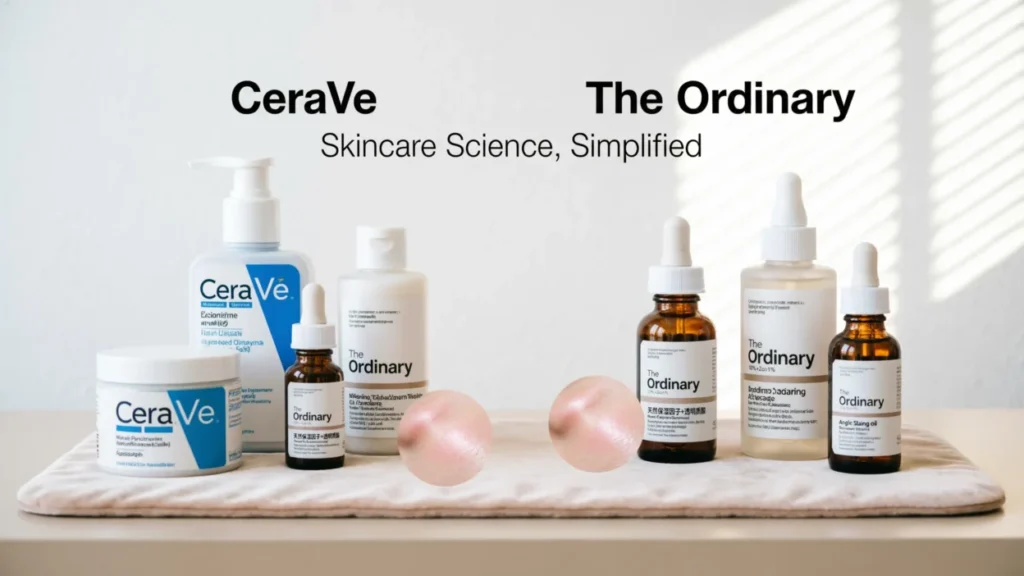
La Roche-Posay Lipikar Balm AP+M is a rich balm that suits very dry and eczema-prone skin, while Vanicream Moisturizing Cream is the best choice for very sensitive skin, since it avoids fragrance, dyes, and common irritants. Eucerin Advanced Repair Cream is a budget-friendly body cream for rough, flaky skin. First Aid Beauty Ultra Repair Cream uses colloidal oatmeal to calm itching, and Aquaphor Healing Ointment is the go-to for cracked hands, heels, and lips. If you want to compare how different brands perform, a head-to-head look at CeraVe vs. The Ordinary skincare shows how ingredient-focused formulas stack up.
Cream vs. Lotion vs. Ointment
The difference is mostly about water content. Lotions are light and mostly water, so they absorb quickly but do not last long. Creams are thicker, with more oil, and they moisturize for hours. Ointments are the thickest and greasiest, with very little water, and they seal in moisture the longest.
For dry skin, creams are usually the best daily choice, and ointments are best for problem spots such as cracked hands, heels, elbows, and lips. Lotions are fine for normal skin or for hot weather, but they are rarely enough for truly dry skin. As a simple rule: if you can pour it, it is probably too light; if you have to scoop it, it is probably right for dry skin.
How to Apply Moisturizer for Best Results
When you apply moisturizer matters as much as which one you choose. Follow these steps:
- Apply to damp skin. Pat your skin dry after a shower, leaving it slightly damp, then apply moisturizer within three minutes. Damp skin absorbs the product better, and the moisturizer seals the water in.
- Use enough. For the body, use about a shot-glass amount of cream. For the face, use a pea-sized amount for each area. Too little will not repair the barrier.
- Apply twice a day. Morning and evening application keeps the barrier protected around the clock. In winter, you may need a third application on the hands and face.
- Layer in the right order. Apply the lightest products first, such as serums, then moisturizer, then sunscreen in the morning. At night, moisturizer is the last step.
Keep showers short and lukewarm, and use a gentle, fragrance-free cleanser instead of harsh soap. Hot water strips the skin’s natural oils, which undoes the work of your moisturizer. Building a routine around gentle, effective products matters: building a kind, effective skincare routine is a good place to start if you want a routine that is simple and consistent.
Common Mistakes to Avoid
The most common mistake is using a light lotion when your skin needs a cream, and then concluding that moisturizer does not work. Another is applying moisturizer to completely dry skin, which misses the chance to seal in water. Do not use fragranced products on dry, cracked, or irritated skin, since fragrance is a common trigger for itching and redness.
Avoid over-exfoliating. Scrubbing dry skin, or using strong acids and retinoids too often, damages the barrier further and makes dryness worse. If your skin stings when you apply moisturizer, switch to a plain, fragrance-free cream and give it a few weeks. And do not skip moisturizer in summer: air conditioning and sun exposure dry the skin too.
When to See a Dermatologist
See a dermatologist if dry skin does not improve after two to four weeks of consistent moisturizing, or if you have cracking, bleeding, or signs of infection such as redness, warmth, or swelling. Persistent itching that disturbs your sleep, or a rash that keeps coming back, also deserves professional attention.
A dermatologist can diagnose eczema, psoriasis, or contact dermatitis and recommend prescription treatment. Laser resurfacing for smoother, healthier-looking skin is one of the procedures a dermatologist may discuss, but it is not a treatment for dryness itself.
Frequently Asked Questions
What is the best moisturizer for dry skin?
For most people, a fragrance-free cream with ceramides, hyaluronic acid, and petrolatum, such as CeraVe Moisturizing Cream, is the best choice. It repairs the skin barrier, holds water in, and suits sensitive skin. For very dry or eczema-prone skin, La Roche-Posay Lipikar Balm or Vanicream are excellent alternatives.
Should I use a cream or a lotion for dry skin?
Use a cream. Creams are thicker and contain more oil, so they lock in moisture for hours. Lotions are mostly water and evaporate quickly, so they rarely provide enough moisture for dry skin. Ointments are even richer and are best for cracked hands, heels, and lips.
How often should I moisturize dry skin?
Twice a day, morning and evening, is the minimum for dry skin. Apply within three minutes of showering, while the skin is still slightly damp. In winter or very dry climates, apply a third time to the hands and face, and reapply after washing your hands.
The best moisturizers for dry skin are rich, fragrance-free creams with ceramides, hyaluronic acid, and an occlusive such as petrolatum. Apply them to damp skin twice a day, keep showers short and lukewarm, and avoid fragranced products and over-exfoliating. Give a new moisturizer two to four weeks to work, and see a dermatologist if the dryness does not improve.