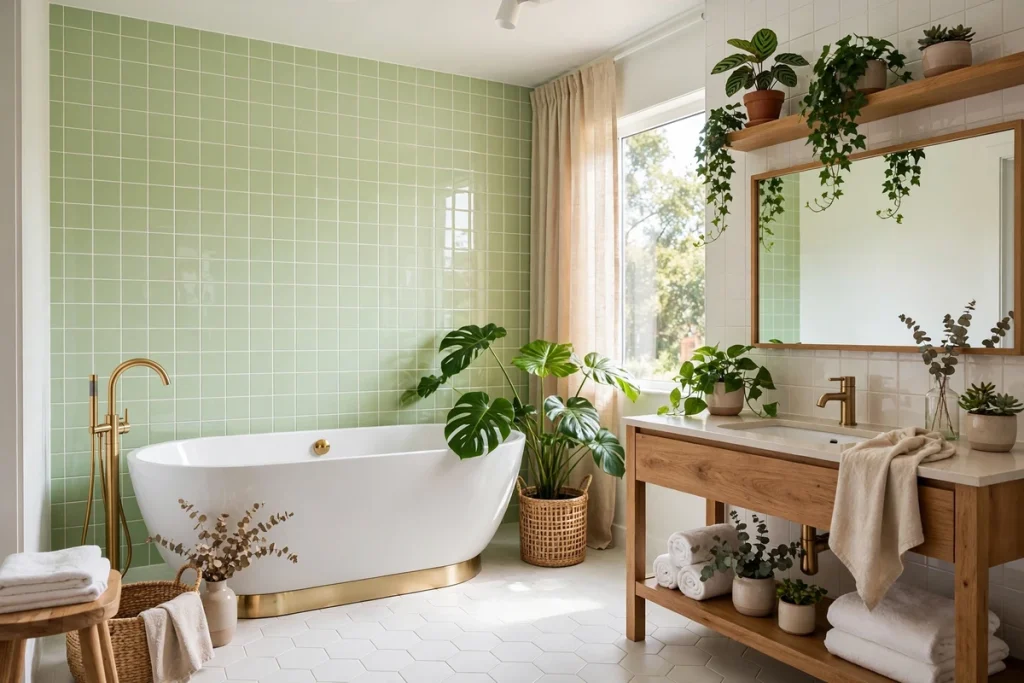

A free standing tub is a bathtub that stands on its own, away from the walls, with its plumbing usually hidden in the floor. The best choice for most bathrooms is a 60 to 67 inch acrylic or stone-resin tub, deep enough to cover your shoulders, with at least 6 inches of clearance around it for cleaning and safe entry. Choose the size first, then the material, then the style — a beautiful tub that does not fit your room or your body will never feel luxurious.
Freestanding tubs have become the centrepiece of modern bathroom remodels because they look sculptural, open up the floor, and make even a plain bathroom feel like a spa. They are not right for every home, though. They need floor space, a strong floor, and plumbing that can reach the middle of the room. This guide covers the types, materials, sizes, costs, and installation questions that top guides cover, plus a fit planner that most of them miss, so you can decide with confidence before you order.
What Is a Free Standing Tub?
Unlike a built-in or alcove tub, a free standing tub is finished on all four sides and does not need a surround or deck. It can sit in the centre of a room, against a feature wall, or under a window. Water supply and drain usually come up through the floor, often with a freestanding tub filler — a tall tap that stands beside the tub. That flexibility is the appeal, and it is also the main planning challenge.
Most freestanding tubs hold 50 to 80 gallons, weigh 100 to 300 pounds empty, and need a water heater that can fill them without running cold halfway through. Check those three numbers — capacity, weight, and hot water — before you fall in love with a shape.
Types of Free Standing Tub
| Shape | Best for | Notes |
|---|---|---|
| Oval | Most bathrooms | Soft lines, comfortable for two, easy to place |
| Rectangular | Modern rooms | Clean lines, more interior length, needs more width |
| Round | Large rooms, statement | Deep soak, takes the most floor space |
| Slipper | Long relaxing soaks | Raised back, classic look, one end higher |
| Clawfoot | Traditional homes | Vintage charm, feet need levelling, harder to clean under |
| Japanese soaking tub | Small spaces, deep soak | Short and deep, sits upright, very water-efficient |
Oval tubs are the safest choice for a first freestanding tub. They suit most bodies, most rooms, and most styles. Rectangular tubs suit modern bathrooms with straight lines, while slipper and clawfoot tubs suit period homes. A Japanese soaking tub is worth considering if your floor space is tight but you still want a deep soak.
Free Standing Tub Materials Compared
Material affects weight, heat retention, price, and how the tub feels. Acrylic is the most popular choice for good reasons: it is light, warm to the touch, affordable, and easy to repair. Stone resin, made from crushed stone and resin, feels solid and holds heat well, but it is heavy and more expensive. Cast iron with enamel is extremely durable and holds heat for a long time, yet it can weigh over 300 pounds and may need floor reinforcement. Copper is beautiful and naturally warm, but it is costly and needs special care. Fibreglass is the cheapest option, but it can flex, scratch, and feel less solid over time.
For most buyers, acrylic or stone resin is the right balance. Choose acrylic if weight, budget, or an upstairs bathroom matters. Choose stone resin if you want a solid, quiet, heat-retaining tub and your floor can carry it. Always ask the seller for the empty weight, the filled weight, and the warranty on the finish before you buy.
Free Standing Tub Sizes: The Fit Planner Most Guides Miss
Top guides list standard sizes, but they rarely tell you how much room the tub needs around it. Use this planner, which combines tub size with the clearance you actually live with, before you measure a showroom model.
| Bathroom size | Tub length | Clearance to leave | Best shape |
|---|---|---|---|
| Small, 5 x 8 ft | 55–60 in | At least 4 in each side, 12 in at entry | Japanese soaking or short oval |
| Medium, 8 x 10 ft | 60–67 in | 6 in sides, 18 in at entry | Oval or rectangular |
| Large, 10 x 12 ft or more | 67–72 in | 12 in or more, room to walk around | Round, oval, or slipper |
Measure the door and hallway as well as the bathroom. A 72 inch tub cannot turn a tight corner, and a tub that arrives but cannot enter the room is an expensive return. Also measure the height of the tub rim against your own height: a rim that is too high makes entry hard, while a rim that is too low can feel exposed. Sit in the tub in the showroom if you can, with your knees bent as they would be in a soak.
How Much Does a Free Standing Tub Cost?
A freestanding tub itself usually costs from about $800 for a basic acrylic model to $3,000 or more for stone resin, cast iron, or copper. Installation adds more: a freestanding tub filler, floor plumbing, drain work, and any floor strengthening can add $1,000 to $3,000, depending on how far the plumbing must move. A total budget of $2,500 to $6,000 covers most mid-range projects, while a high-end tub in a remodelled bathroom can cost far more.
Get quotes that include the filler, drain, waste and overflow, delivery, and any floor work. Ask whether the price includes removing the old tub, and whether the floor needs reinforcement for the filled weight. A low tub price with a high installation price is still a high total price.
Installation: What to Check Before You Buy
First, confirm the drain location. Freestanding tubs often need the drain moved, and moving a drain through a concrete slab is far more costly than moving it through a timber floor. Second, check the floor structure: a filled tub can weigh 600 pounds or more, so an upstairs floor may need a joist check. Third, plan the filler: a floor-mounted filler needs supply pipes in the floor, while a wall-mounted filler needs a wall close enough to reach. Fourth, check your water heater size, because a large tub can drain a small tank before it is full. Fifth, leave access to the drain and overflow for future repairs — a tub that cannot be serviced will cost you later.
Hire a licensed plumber for the rough-in, even if you do the finishing yourself. A slow leak under a freestanding tub can damage a floor for months before you notice it, and the cost of that damage dwarfs the cost of a proper installation.
Cleaning and Care
Clean a freestanding tub with a soft cloth and a non-abrasive cleaner. Avoid scouring pads on acrylic and enamel, and follow the maker’s advice for stone resin and copper. Rinse after each use, dry the rim, and clean under and around the tub weekly — that open space that looks so good also collects dust and hair. Check the filler and drain seals every few months, and reseal or replace washers at the first sign of a drip.
Frequently Asked Questions
Are free standing tubs practical for everyday use?
Yes, if the bathroom is large enough and the plumbing is planned well. They are less practical in very small bathrooms, where a shower-tub combination saves space, and for people who need grab bars or a low step-in height.
Do free standing tubs need special plumbing?
Yes, in most cases. The drain and supply usually come through the floor, and you need a freestanding tub filler or a wall-mounted tap. Plan the plumbing before you choose the tub, not after.
How much space do you need around a free standing tub?
Allow at least 6 inches around the sides for cleaning and at least 12 to 18 inches at the entry side. Larger rooms can allow a full walkway, which makes the tub feel like a centrepiece rather than a tight fit.
Which material is best for a free standing tub?
Acrylic is best for most buyers because it is light, warm, and affordable. Stone resin is best if you want heat retention and a solid feel and your floor can carry the weight. Cast iron is best for durability and heat, if budget and floor strength allow.
Conclusion
A free standing tub can transform a bathroom, but only if it fits the room, the floor, the plumbing, and the person who will use it. Measure first, choose a size from the fit planner, pick acrylic or stone resin for most homes, and budget for installation as well as the tub itself. Do that, and your tub will be a daily pleasure, not a costly compromise.
Related reading: pair your tub with a shower that suits the same room — see Marble Shower for a luxurious shower finish, Walk In Shower No Door for an open shower layout, and Half Bath Dimensions before you plan a small bathroom around a freestanding tub.