
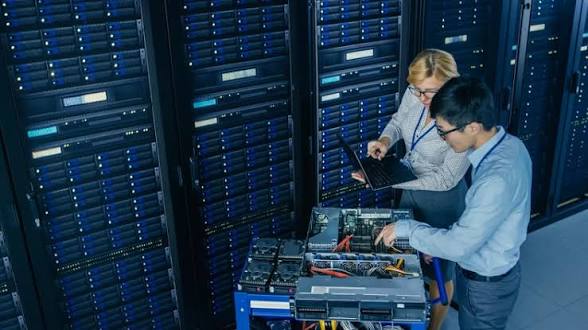

Data centres keep the internet alive. Every email, video stream, and bank transfer runs through one. And right now, demand is exploding. By 2025, global data centre capacity is projected to hit 1,000 GW, according to IEA. That kind of scale means one thing: the quality of the build matters more than ever. Poor construction choices cost money, cause downtime, and destroy trust. This guide breaks down why trusted data centre construction is not optional. It is the foundation everything else stands on.
What Makes a Data Centre Build Actually Trustworthy?
Trust is not a feeling. It is a spec sheet. A trusted build starts with Tier classification from the Uptime Institute. Tier III guarantees 99.982% uptime. That is less than 1.6 hours of downtime per year. Tier IV pushes to 99.995%, which is under 26 minutes annually. Those numbers matter when every minute of outage can cost an enterprise $5,600, per Gartner research.
Location is the next decision that cannot be undone. Flood zones, seismic activity, and proximity to power substations all affect long-term reliability. A cheap site with recurring weather risks will always cost more in the end.
How Does Power Infrastructure Affect Long-Term Performance?
Power is not just about capacity. It is about redundancy. A single-feed power setup is a liability. The industry standard for serious facilities is N+1 redundancy at minimum. That means one backup system for every critical component. Mission-critical builds often run 2N, which doubles every power path.
Power Usage Effectiveness, or PUE, tells you how efficiently a facility uses energy. The global average PUE sits around 1.58, according to the Uptime Institute 2023 Global Data Center Survey. Best-in-class builds hit 1.2 or lower. The closer to 1.0, the less energy is wasted on cooling and infrastructure overhead. That gap between 1.58 and 1.2 is money burning every single month.
Why Does Cooling Design Matter So Much?
Heat kills servers. It is that simple. A server room running at the wrong temperature degrades hardware faster and trips thermal shutdowns. ASHRAE recommends server inlet temperatures between 18°C and 27°C for class A1 equipment.
Modern builds are moving away from traditional CRAC units. Hot aisle and cold aisle containment reduces cooling load significantly. Liquid cooling is becoming standard for high-density AI workloads where rack density can exceed 100kW per rack. That is not something legacy air cooling handles well.
What Structural Standards Separate Good Builds From Great Ones?
Fire suppression, physical security, cable management, and raised flooring are baseline. But real quality shows up in the details. Fire suppression using clean agents like FM-200 or Novec 1230 protects equipment without water damage. Seismic bracing for equipment racks matters in earthquake-prone zones. Concrete slab specifications affect vibration isolation.
Cable infrastructure is also where shortcuts get taken. Structured cabling to TIA-942 standards ensures documentation, labeling, and physical separation of power and data runs. Skipping this creates troubleshooting nightmares three years in when something breaks and nobody knows what connects where.
Who Should Be in the Room During Construction Planning?
The operations team. Not just the engineers and architects. The people who will run this facility daily know exactly where past builds have failed. Involving them early avoids costly retrofits later. A raised floor that is too shallow for cable management. A security checkpoint that creates a choke point during shift changes. These are real problems that show up only after the ribbon cutting.
Third-party commissioning agents should also be standard. They stress-test every system before the facility goes live. Generator failover. UPS switchover. Cooling redundancy. No shortcuts, no assumptions. The data tells the story before a client moves in.