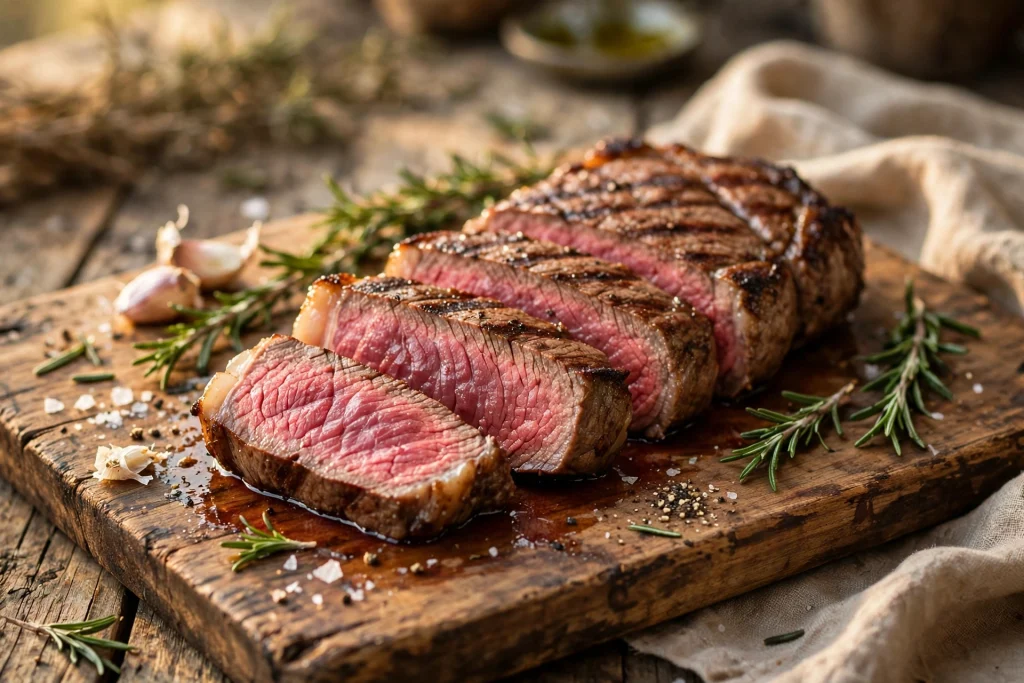

Tritip — spelled tri-tip — is a triangular cut of beef from the bottom sirloin. It weighs about 1.5 to 2.5 pounds, has a rich, beefy flavor, and is leaner than most roasts while staying tender when it is cooked to medium-rare and sliced against the grain. You will also see it spelled as one word, “tritip,” on meat labels and in search results — it is the same cut.
What Is Tri-Tip?
Tri-tip is a small, triangular roast cut from the bottom sirloin, where the sirloin meets the round. It became famous in Santa Maria, California, in the 1950s, when local butcher Bob Schutz started selling it as a standalone roast; before that, it was usually ground into hamburger or cut into stew meat. Today it is still a California favorite — Santa Maria-style tri-tip, seasoned simply and grilled over red oak — but it is now sold across the United States. Tri-tip has a tapered shape: one end is thick and one end is thin, so the thin end cooks faster. It is also sometimes labeled “Santa Maria steak,” “California cut,” or “triangle roast.”
Tri-Tip at a Glance
| Detail | Tri-tip |
|---|---|
| Primal cut | Bottom sirloin |
| Shape | Triangular, tapered |
| Weight | 1.5–2.5 lb (0.7–1.1 kg) |
| Fat | Lean, with a thin fat cap (often trimmed) |
| Tenderness | Tender when cooked to medium-rare |
| Best cooking methods | Grilling, reverse sear, roasting, smoking |
| Serves | 3–4 people |
Where Does Tri-Tip Come From on the Cow?
Tri-tip comes from the bottom sirloin primal, in the rear of the cow, just above the round and below the loin. It is the only cut from that part of the sirloin sold as a roast. The muscle does moderate work, so it has a beefy flavor and a firm bite — more tender than sirloin tip, less marbled than ribeye. The grain of the meat runs in two directions, which matters when you slice it. Most tri-tip is sold trimmed, with a thin layer of fat left on one side. That fat cap protects the meat on the grill and keeps it moist, so leave it on and score it lightly before seasoning.
How to Cook Tri-Tip
Tri-tip is lean, so the secret is the same as with any steak: cook it fast or gently, do not overcook it, and rest it before slicing. Medium-rare (130–135°F) is the sweet spot. Here are the four best methods.
1. Reverse Sear (Best Overall)
Reverse searing is the most forgiving method and gives the most even pink center. Season the tri-tip and place it on a wire rack in a 225–250°F (110–120°C) oven, or on the cool side of a grill, until a thermometer in the thickest part reads 120–125°F — about 30 to 40 minutes for a 2-pound roast. Let it rest for 10 minutes, then sear it in a screaming-hot cast iron skillet or over direct high heat for 2 to 3 minutes per side until the crust is dark and crackly. The result: edge-to-edge pink with a crisp crust.
2. Grilled Tri-Tip
Set up the grill for two zones: direct high heat on one side, indirect heat on the other. Sear the tri-tip over direct heat for 4 to 5 minutes per side, then move it to the indirect side, close the lid, and cook until the center reaches 130°F. Total time is usually 20 to 30 minutes. This is the classic Santa Maria method — the fat cap and oak smoke add flavor no oven can match.
3. Oven-Roasted Tri-Tip
Heat the oven to 425°F (220°C). Sear the tri-tip in an oven-safe skillet for 3 to 4 minutes per side, then move the skillet into the oven and roast for 10 to 15 minutes, until a thermometer reads 130°F. Rest for 10 minutes before slicing. It is the simplest method and works well in any season.
4. Smoked Tri-Tip (and Brisket-Style)
Smoke the tri-tip at 225°F until it reaches 120°F internally, about 60 to 90 minutes, then sear it to finish. You get a smoke ring with a steak-like texture. Some pitmasters cook tri-tip “brisket-style” — low and slow to 200°F or higher until it is fall-apart tender — but that is a different dish: delicious, but you lose the steak-like character that makes tri-tip special. If you like slow-cooked meat, try our pork shoulder crock pot recipe for an easier slow-cook project.
Tri-Tip Doneness Temperature Chart
| Doneness | Pull temperature | Final temp after rest | What it looks like |
|---|---|---|---|
| Rare | 120–125°F (49–52°C) | 125–130°F | Cool red center |
| Medium-rare | 130–135°F (54–57°C) | 135–140°F | Warm pink center (best) |
| Medium | 135–145°F (57–63°C) | 140–150°F | Pink center |
| Medium-well | 145–155°F (63–68°C) | 150–160°F | Slightly pink center |
| Well done | 160°F+ (71°C+) | 165°F+ | Little or no pink |
Always use a meat thermometer, and pull the tri-tip 5 degrees before your target — it keeps cooking while it rests. Rest for 10 to 15 minutes so the juices redistribute instead of running out onto the cutting board.
How to Slice Tri-Tip Against the Grain
Slicing is where most people go wrong. Tri-tip’s muscle fibers run in two different directions, with the grain changing direction about two-thirds of the way along the roast. Cut the roast in half at the point where the grain changes direction, then turn each half so you are cutting across the fibers, and slice thinly, about 1/4 inch thick. Slicing with the grain makes even a perfectly cooked tri-tip chewy; slicing against it makes it tender. Use a long, sharp knife and cut in smooth strokes.
Tri-Tip Seasoning and Marinades
Tri-tip needs very little seasoning. A classic Santa Maria rub is just kosher salt, black pepper, and garlic powder — sometimes with a little onion powder and paprika. Rub it on at least 30 minutes before cooking, or overnight in the fridge. A simple marinade of olive oil, garlic, soy sauce, and black pepper also works, but keep marinades short (2 to 4 hours) so the texture does not turn mushy. Because tri-tip is naturally lean and beefy, heavy sauces are unnecessary; a sprinkle of flaky salt after slicing and a spoonful of chimichurri is all it needs.
What to Serve with Tri-Tip
Tri-tip pairs well with classic steakhouse sides: garlic bread, grilled vegetables, potato salad, and beans. For a full spread, try side dishes for ham — many of the same roasted potatoes and salads work just as well with beef — or gammon side dishes for more ideas. Plan on about 1/2 pound of raw tri-tip per person, a little more if it is the star of the meal.
How to Store and Reheat Leftover Tri-Tip
Let leftovers cool, then wrap tightly and refrigerate for up to 4 days, or freeze sliced tri-tip for up to 3 months. Reheat gently: warm slices in a skillet over low heat with a splash of beef broth, or in a 250°F oven wrapped in foil. The microwave works in a pinch — use 50% power in short bursts. Never re-cook leftover tri-tip to well done, or it will dry out.
Tri-Tip vs Other Beef Cuts
| Cut | Flavor | Tenderness | Best for |
|---|---|---|---|
| Tri-tip | Rich, beefy | Tender at medium-rare | Grilling, reverse sear |
| Sirloin steak | Mild, beefy | Moderate | Quick grilling |
| Picanha | Rich, fatty cap | Tender | Skewers, roasting |
| Brisket | Deep, smoky | Tough unless slow-cooked | Low-and-slow BBQ |
| Flank steak | Beefy, lean | Chewy if overcooked | Fajitas, stir-fry |
Frequently Asked Questions
What is tri-tip?
Tri-tip is a triangular beef roast from the bottom sirloin. It weighs 1.5 to 2.5 pounds, has a rich beefy flavor, and is best grilled or reverse-seared to medium-rare and sliced against the grain.
Is tri-tip a good cut of beef?
Yes. It is one of the best value cuts: cheaper than ribeye, more tender than sirloin, and full of beef flavor. It is lean, so it needs to be cooked to medium-rare and sliced properly to stay tender.
How long does it take to cook tri-tip?
On the grill, about 20 to 30 minutes total for a 2-pound roast. Reverse searing takes 40 to 55 minutes including the sear. Always cook to temperature (130–135°F for medium-rare), not to time.
Do you cut tri-tip with or against the grain?
Against the grain, always. The grain changes direction partway along the roast, so cut it in half at the bend first, then slice each half across its grain in thin slices.
What temperature should tri-tip be cooked to?
130–135°F (54–57°C) for medium-rare, the best doneness for tri-tip. Pull it from the heat 5 degrees early, because the temperature keeps rising while it rests.
Conclusion
Tritip, or tri-tip, is a small roast with outsized flavor: lean, beefy, affordable, and easy to cook once you know the rules. Season it simply, cook it to 130–135°F, rest it for 10 minutes, and slice it against the grain. Do that, and you will see why a cut that once went into the grinder became a California classic.