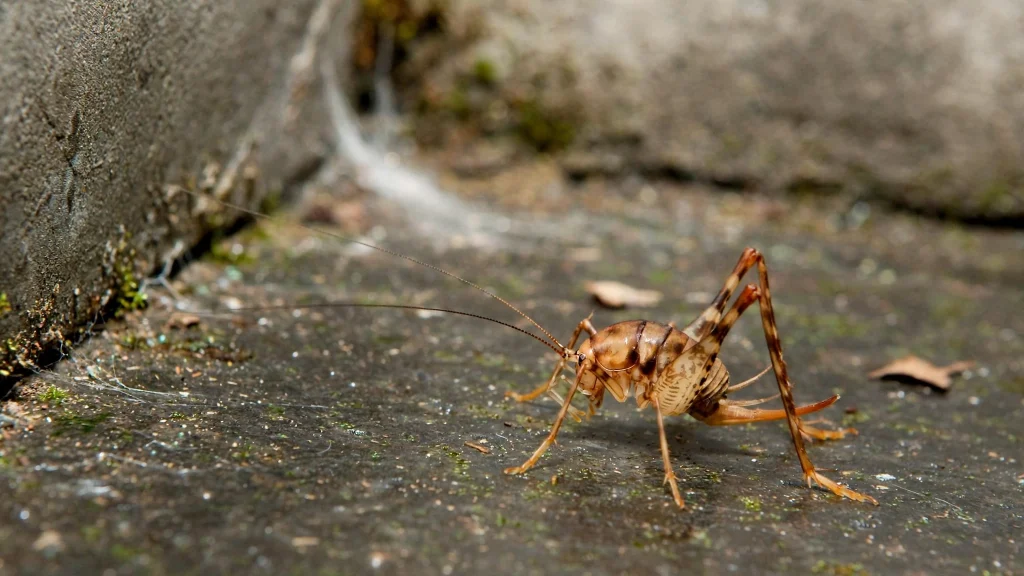

Spider crickets — also called camel crickets or cave crickets — are large, humpbacked insects that look like a cross between a spider and a cricket. They are not dangerous: they do not bite people, they are not venomous, and they do not spread disease. But they are startling — they jump high when disturbed — and in large numbers they can nibble fabric, paper, and houseplants in damp basements. The good news is that getting rid of them is mostly a matter of drying out the places they love and sealing the ways they get in.
What Are Spider Crickets?
Spider crickets belong to the family Rhaphidophoridae, commonly called camel crickets or cave crickets. They get the name “camel cricket” from their humped back, and “spider cricket” from their long, spindly legs and spider-like look. An adult is about 1 to 2 inches long, tan to dark brown, with a humpbacked body, very long hind legs, and long antennae. Unlike house crickets, they have no wings and do not chirp — they are silent. They cannot fly. Their best defense is a powerful jump: they can leap several feet when startled, often straight toward the thing that scared them, which is why people find them so unnerving. They are nocturnal and spend the day hiding in dark, damp places.
Are Spider Crickets Dangerous?
No. Spider crickets are one of the least dangerous insects you can find in a home. They do not bite people — their mouthparts are made for chewing plants and fungi, not skin — and they carry no venom and no known diseases. A large camel cricket can nip if trapped against skin, but such bites are rare and no worse than a pinprick. They do not sting, do not infest food, and do not damage wood framing the way termites or carpenter ants do. What they can do is damage soft materials: in a damp basement, a large group may chew holes in stored clothing, cardboard boxes, and houseplants. They are a nuisance, not a health threat.
Spider Crickets vs House Crickets vs Spiders
| Feature | Spider cricket | House cricket | Spider |
|---|---|---|---|
| Body | Humpbacked, 1–2 in | Flat, ¾–1 in | Two-part body, 8 legs |
| Legs | Very long, spider-like | Medium | 8 long legs |
| Wings | None | Yes | None |
| Sound | Silent | Chirps | Silent |
| Bite | No (rare nip) | No | Some species bite |
| Where found | Damp basements, caves | Warm rooms | Anywhere |
The quickest way to tell a spider cricket from a spider is the body: a spider has two body parts and eight legs, while a spider cricket has one humpbacked body and six legs, with antennae so long they look like extra legs. And unlike a house cricket, it never chirps.
Why Do Spider Crickets Come Indoors?
Spider crickets come inside for three things: moisture, darkness, and shelter. Outdoors they live under logs, rocks, leaf litter, and in caves and hollow trees — anywhere dark and damp. When the weather turns dry, cold, or hot outside, or when their outdoor hiding places disappear, they follow moisture and darkness into basements, crawl spaces, garages, and ground-floor rooms. Leaking pipes, damp laundry rooms, sump pits, and cluttered storage areas are ideal for them. They are most common in late summer and fall, when cooling weather pushes them indoors to overwinter. They eat fungi, mold, decaying plant matter, and sometimes fabric and cardboard — a damp basement with stored boxes is practically a buffet.
How to Get Rid of Spider Crickets
- Vacuum them up. The fastest, safest way to remove the ones you can see. Vacuum corners, behind boxes, and along the walls, then empty the canister outside.
- Set sticky traps. Place glue boards or sticky insect traps along baseboards and in corners where you have seen them. They work well and show you where the crickets are coming from.
- Try a molasses trap. Put a little molasses or jam in the bottom of a tall jar or bucket and lean a stick against it as a ramp. Crickets climb in and cannot climb out of the smooth glass. Empty the jar outside each morning.
- Use soapy water. A spray bottle with water and a few drops of dish soap kills a cricket on contact and is safe to use around kids and pets. It is a handy fix for one-offs, not a long-term solution.
- Dry the space out. This is the step that actually solves the problem: run a dehumidifier and bring the humidity below 50%, fix leaks, and improve ventilation. Dry rooms are uninviting to spider crickets.
- Remove their food and hiding places. Clear clutter, move boxes off the floor into sealed plastic bins, and keep stored fabric in closed containers.
Avoid broad insecticide sprays inside the home: they are not very effective against crickets, they do not fix the dampness that attracted them, and they leave residue around children and pets. Traps and drying out are safer and more effective.
How to Prevent Spider Crickets from Coming Back
- Seal entry points. Caulk cracks in the foundation, seal gaps around pipes and wires, add door sweeps to exterior and garage doors, and repair torn window screens.
- Fix moisture problems. Repair leaking pipes and gutters, make sure downspouts drain away from the house, and keep the basement below 50% humidity with a dehumidifier.
- Clear the yard. Move firewood, leaf piles, and mulch away from the foundation, and trim plants that touch the house so crickets have fewer places to hide near your door.
- Declutter storage areas. Store items in sealed plastic bins on shelves instead of cardboard boxes on the floor — cardboard holds moisture and provides both shelter and food.
- Clean regularly. Vacuum corners, under beds, and behind stored items in basements and spare rooms. A clean, dry room is the best prevention of all.
A damp, musty basement invites more than crickets — if the room smells too, see how to make your house smell good naturally. Spider crickets sometimes hop into spare bedrooms too, so check under beds when you set up a guest bedroom. And vacuuming carpets regularly is one of the simplest ways to catch both crickets and the crumbs they eat — here is how do I use a carpet cleaner the right way.
When to Call a Professional
If you see dozens of crickets night after night, or they keep returning after you have dried and sealed the space, call a pest control company. A professional can find entry points you missed and treat the exterior to keep them out. Ask about moisture-focused plans rather than blanket spraying — the dampness is the root problem, and a good company will tell you that.
Frequently Asked Questions
Do spider crickets bite?
No, spider crickets do not bite people. Their mouthparts are made for chewing plants and fungi, not skin. A large one may nip if trapped against skin, but it is rare and harmless.
Why are there so many spider crickets in my basement?
Basements are dark, damp, and full of hiding places — exactly what spider crickets need. A leak, a sump pit, or stored cardboard boxes makes a basement even more attractive to them.
What attracts spider crickets to a house?
Moisture, darkness, and shelter. Damp basements, crawl spaces, garages, leaf piles near the foundation, and clutter all attract them, especially in late summer and fall.
How do I get rid of spider crickets permanently?
Dry out the space with a dehumidifier (below 50% humidity), seal cracks and gaps, remove clutter and cardboard boxes, and set sticky traps. If they keep returning, the moisture problem is still there — or call a professional.
Are spider crickets the same as camel crickets?
Yes. “Spider cricket,” “camel cricket,” and “cave cricket” are all common names for the same humpbacked, wingless insects in the family Rhaphidophoridae.
Conclusion
Spider crickets look alarming, but they are harmless and easy to manage. They do not bite, sting, or spread disease — they are just drawn to damp, dark corners. Vacuum up the ones you find, dry the space with a dehumidifier, seal the cracks they use to get in, and store things in sealed bins. Do that, and your basement will be a lot less interesting to them — and a lot less startling for you.