
If you have ever asked, “how do i use a carpet cleaner,” you are not alone. The machine looks simple — a tank, a brush, and a trigger — but rushing the job, using too much solution, or skipping drying can leave carpet stiff, sticky, or damp for days. Used correctly, it can lift ground-in dirt, refresh high-traffic lanes, and make a tired room feel new again.
This beginner guide covers the full process: vacuuming, mixing solution, slow cleaning passes, a rinse pass, and proper drying. It works for most upright cleaners, whether you own one or rent one. Always check your machine manual and carpet care label first, because wool, delicate rugs, and some glued-down carpets need extra care.
What a Carpet Cleaner Actually Does
A carpet cleaner sprays hot water and cleaning solution into carpet fibers, brushes them to loosen dirt, and vacuums the dirty water back into a separate tank. That extraction is what separates it from a regular vacuum. Most machines have a clean-water tank and a dirty-water tank, plus settings for light, normal, or deep cleaning.
Before You Start: A Simple Checklist
- Vacuum slowly, in two directions if you can, to remove loose dirt, hair, and crumbs.
- Move furniture, toys, cables, and small rugs out of the way. Put foil or plastic under furniture legs that must stay on damp carpet.
- Check the care label and test solution in a hidden corner. Wait for it to dry and check for color change.
- Fill the clean-water tank with hot tap water — not boiling water — and only the amount of solution the manual recommends.
- Open windows or turn on a fan. Airflow is a major part of drying, not an optional extra.
- Keep pets and children off the carpet until it is fully dry.
If you find a dark or stubborn spot while vacuuming, treat it before the main clean. For stain-by-stain help, see this guide on how to get stains out of carpet. Pre-treating gives the solution time to work while you prepare the machine.
How Do I Use a Carpet Cleaner, Step by Step
Step 1: Vacuum and Prepare the Room
Vacuum thoroughly, even if the carpet looks fairly clean. Go slowly over high-traffic areas, doorways, and edges where dust collects. Pick up anything the machine could snag, such as coins or loose threads. If you skip this step, loose dirt can clog the brush, streak the carpet, and fill the dirty-water tank with grit instead of deep dirt.
Step 2: Mix the Solution Correctly
More solution does not mean a cleaner carpet. Excess soap leaves residue that attracts new dirt and makes carpet feel sticky. Measure carefully, use only a formula made for carpet cleaners, and never pour dish soap or laundry detergent into the machine unless the manual specifically allows it. Fill the tank to the marked line, secure the cap, and wipe drips from the outside.
If you prefer gentler household formulas for spot cleaning between deep cleans, you can learn how to make natural cleaning products, but use only machine-approved solutions inside the carpet cleaner itself.
Step 3: Pre-Treat Stains and High-Traffic Lanes
Spray pre-treatment or a small amount of machine solution onto stains and worn paths, then let it sit for five to ten minutes. Do not soak the area; a light, even application is enough. This dwell time helps break down oils and dried spills so the machine can lift them more easily, and it often means you need fewer wet passes later.
Step 4: Make Slow Wet Passes
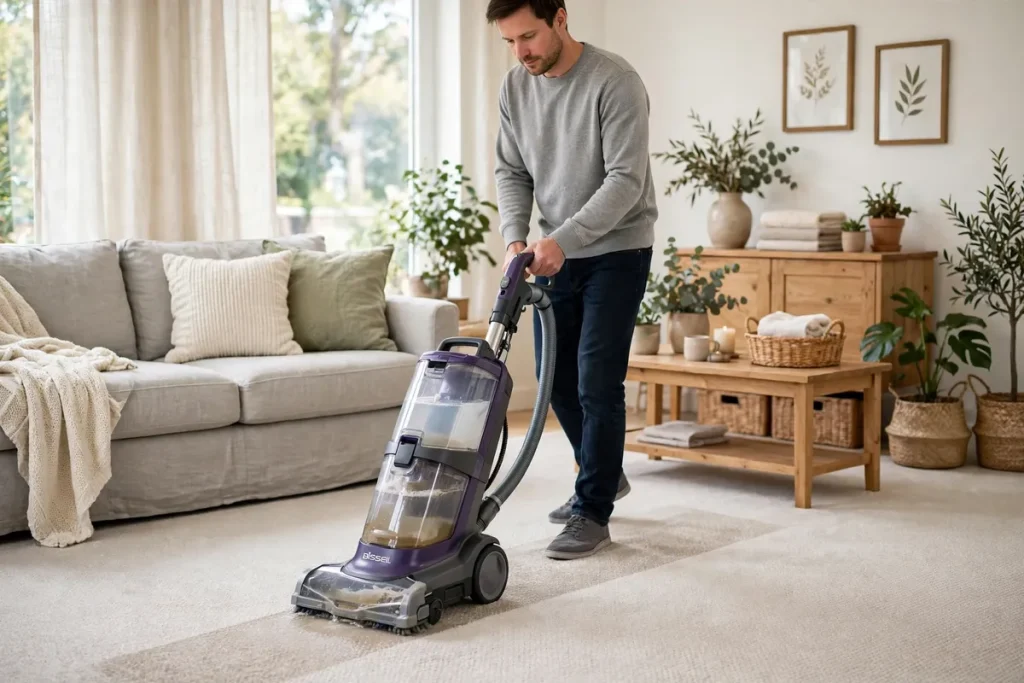
Start in the corner farthest from the door so you can work your way out without walking over wet carpet. Hold the trigger to release solution while you push slowly forward, about one slow step every two seconds. Release the trigger and pull slowly back over the same strip to extract water. Overlap each strip by a few inches so you do not leave dry lines. Speed matters more than pressure: moving too fast leaves solution in the fibers without time to loosen dirt, and leaves too much water behind. If a section is very dirty, make a second slow pass rather than flooding it once.
Step 5: Make Dry Passes Without the Trigger
After each wet pass, make one or two dry passes over the same area with the trigger released. This is simply vacuuming with the machine, and you will be surprised how much extra dirty water comes out, especially on the first clean of an older carpet. Keep going until the water looks lighter and the carpet feels damp rather than soaked.
Step 6: Do a Rinse Pass
Finish with a rinse pass using clean, hot water only. Empty and refill the clean-water tank, then go over the room again slowly without adding more solution. This removes soap residue that would otherwise attract dirt and make carpet feel crunchy when dry. A rinse pass is especially helpful if you used a little too much solution, have pets, or live with someone sensitive to fragrances.
Step 7: Dry the Carpet Properly
Most carpets take six to twelve hours to dry, and thick or heavily soiled carpets can take up to twenty-four hours. Improve airflow with open windows, ceiling fans, and a portable fan aimed across the carpet. Avoid walking on it in shoes, and do not replace heavy furniture until the carpet is dry underneath, not just on the surface.
How Long Does Each Step Take?
Use this table to plan a realistic session. Times are for an average living room of about 200 square feet; larger or very dirty rooms will take longer.
| Step | What to do | Typical time |
|---|---|---|
| Vacuum and clear the room | Move items, vacuum slowly | 15–25 minutes |
| Mix solution and pre-treat | Fill tank, treat stains | 10–15 minutes |
| Wet passes | Slow passes, overlapping strips | 20–30 minutes |
| Dry and rinse passes | Extract water, rinse with clean water | 15–25 minutes |
| Drying | Fans and airflow, no foot traffic | 6–12 hours |
Do not try to rush drying with extreme heat or a hair dryer on one spot. Steady airflow and patience give a more even result and reduce musty smells.
Rental vs. Owned Machines: Which Is Right for You?
A rental makes sense if you clean carpets once or twice a year, have one large job such as a move-out clean, or want to try a powerful machine before buying. Rentals are usually strong and include a hose for stairs, but you must return them clean and on time, and buy solution separately. Owning a machine makes sense if you have pets, children, light-colored carpet, or frequent spills, because you can clean a small area right away. Whichever you choose, the technique is the same: vacuum first, measure solution carefully, move slowly, extract well, rinse, and dry thoroughly.
The Angle Most Guides Miss: How to Know the Carpet Is Truly Dry
Many guides stop at “let it dry,” but that leaves beginners guessing. A carpet can feel dry on top while the padding underneath is still damp, and that hidden moisture causes musty odors, reappearing stains, and, in the worst cases, mildew. Use three simple checks before you call the job done. First, press a clean white towel firmly into the carpet for thirty seconds; if it picks up moisture or dirt, keep the fans running. Second, use the cool test: damp carpet often feels noticeably cooler than a dry section of the same room. Third, lift a corner if you can; the backing should not feel wet or clammy.
Over-wetting is the other risk most short guides skip. Wool, natural-fiber rugs, and glued-down carpet tiles are more sensitive to excess water than synthetic wall-to-wall carpet. For those, use fewer wet passes, more dry passes, and a longer drying time. In upstairs rooms, avoid flooding the carpet, because water can seep into the floor below. If carpet is still wet after twenty-four hours despite good airflow, check for a blocked filter or full tank that reduced suction, and do extra dry passes before adding more water. Finally, clean the machine before you put it away: empty and rinse both tanks, rinse the brush and nozzle, and let everything air-dry with the tanks open.
Frequently Asked Questions
Do I vacuum before using a carpet cleaner?
Yes. Vacuum first, slowly and thoroughly, to remove loose dirt and hair and prevent clogs and muddy streaks.
Do you push or pull a carpet cleaner?
Do both. Push forward slowly with the trigger pressed to apply solution, then pull back slowly with the trigger released to extract water.
How many passes should I make with a carpet cleaner?
For most rooms, make one or two slow wet passes, one or two dry passes, and a rinse pass using clean water only.
How long does carpet take to dry after cleaning?
Most carpets take six to twelve hours with good airflow, and thick carpets can take up to twenty-four hours. Wait until it passes the towel test and feels dry underneath.
Can I use a carpet cleaner on all carpets?
Not all carpets. Check the care label first. Wool, silk, sisal, and some delicate rugs may need a gentler method or professional cleaning.
Final Thoughts
Learning how do i use a carpet cleaner is mostly about slowing down. Vacuum first, measure solution, move slowly, extract well, rinse, and dry fully.