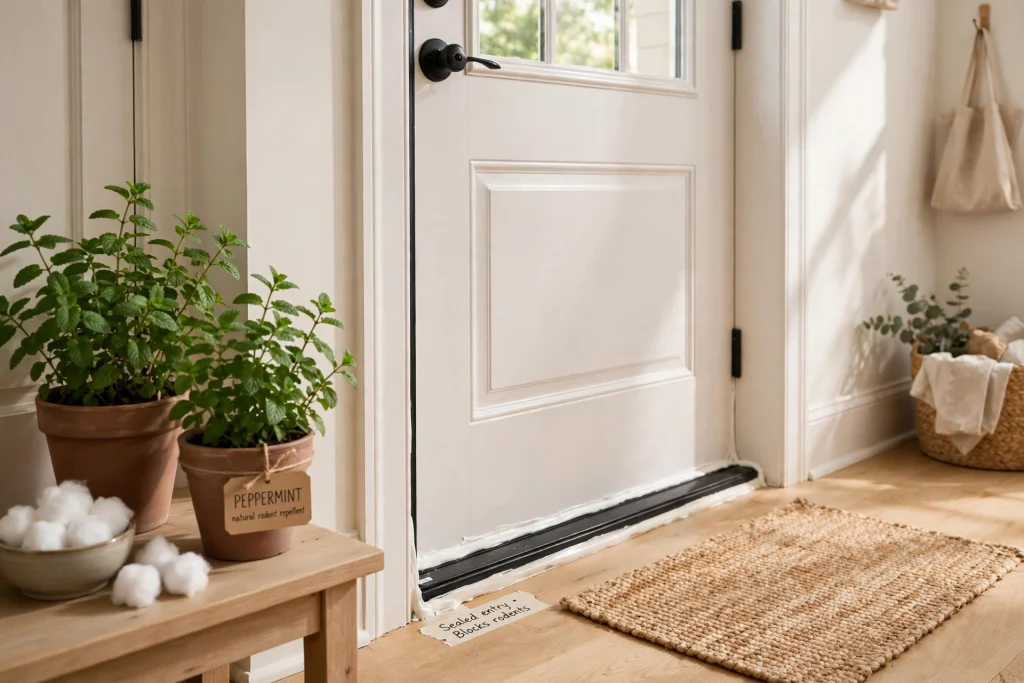

Few things unsettle a homeowner faster than the sound of scratching inside a wall at night. Rats and mice chew wiring, contaminate food, spread disease and damage insulation, and once they settle in, they are hard to evict. Rat and rodent repellent can help, but only when it is part of a bigger plan. In this guide, you will learn how repellents work, which natural and store-bought options are worth trying, what does not work at all, and how to seal your home so rodents stay out for good.
What Is Rat and Rodent Repellent?
Rat and rodent repellent is any product or method that discourages rats and mice from entering or staying in a space. Unlike traps and poison, which kill rodents that are already inside, repellents aim to make your home unattractive to them in the first place. Most repellents work through smell, taste, sound or physical barriers.
Repellents come in several forms: sprays made with peppermint or other strong-smelling oils, granules scattered around a foundation, scented pouches placed in attics and garages, ultrasonic devices that emit high-frequency sound, and physical products such as steel wool and sealant that block entry points. No single repellent is a complete solution on its own. The most effective approach combines a repellent with good sanitation and sealing, because a hungry rat will push past an unpleasant smell if food and shelter are on the other side.
Signs You Have Rats or Mice
Before you buy any repellent, confirm that you actually have a rodent problem. Rats and mice are nocturnal and secretive, so you will usually see the evidence before you see the animal.
Droppings
Small, dark, pellet-shaped droppings near food, in cupboards, along walls or in the attic are the clearest sign of rodents. Rat droppings are about the size of a raisin, while mouse droppings are closer to a grain of rice. Fresh droppings are dark and soft; older ones turn gray and crumbly.
Noises at night
Scratching, scurrying or gnawing sounds inside walls, ceilings or attics, especially after dark, usually mean rodents are active. Mice make light, quick movements, while rats sound heavier and louder.
Gnaw marks and damage
Rats and mice gnaw constantly to keep their teeth short. Look for chew marks on food packaging, wood, plastic, wiring and insulation. Frayed or chewed electrical wires are a serious fire risk and should be checked by an electrician.
Nests and smells
Shredded paper, fabric, insulation or dried plants gathered in a hidden corner suggest a nest. A stale, musky odor, especially in enclosed spaces such as pantries and attics, is another warning sign, as is the ammonia smell of rodent urine.
How Rat and Rodent Repellents Work
Repellents work in different ways, and understanding the mechanism helps you set realistic expectations.
Scent-based repellents
Rats and mice have a very strong sense of smell, and certain scents overwhelm or irritate them. Peppermint oil is the best known example, but clove oil, cayenne pepper and vinegar also fall into this group. Scent repellents work best in small, enclosed spaces such as cupboards, pantries and car engines, and they need to be refreshed regularly because the smell fades.
Ultrasonic repellents
These plug-in devices emit high-frequency sound that humans cannot hear. The idea is that the sound annoys rodents enough to leave. In practice, results are mixed: some studies show a short-term effect, but rodents often get used to the sound, and walls and furniture block it. Ultrasonic devices can help as a supplement, but they should never be your only defense.
Taste-based repellents
Some products coat surfaces with a bitter or spicy taste so rodents stop chewing. These are useful for protecting specific items, such as wiring, garden plants or stored goods, but they do not keep rodents out of a house.
Physical barriers
The most reliable form of repellent is not a smell at all. Steel wool, copper mesh, caulk and metal flashing physically block the holes rodents use to enter. A mouse can squeeze through a gap the size of a pencil, and a rat through a gap the size of a quarter, so sealing matters more than any spray.
Natural Rat and Rodent Repellents That Actually Help
Natural repellents are popular because they are cheap, easy to use and safer around children and pets than poison. They work best for prevention and for light problems, rather than for a large, established infestation.
Peppermint oil. Soak cotton balls in pure peppermint oil and place them near entry points, in cupboards, in the attic and around the garage. Replace them every few days, since the scent fades quickly. Peppermint spray, made by mixing 20 to 30 drops of oil with water in a spray bottle, works for treating baseboards and shelves.
Cloves and cayenne pepper. Whole cloves placed in small sachets, and cayenne pepper sprinkled around entry points and garden beds, both irritate rodents. These are best used outdoors or in areas where the mess does not matter.
Vinegar. White vinegar wiped along baseboards and around trash areas can discourage rodents, thanks to its sharp smell. It evaporates quickly, so it needs frequent reapplication.
Rodent-repelling plants. Mint, lavender, rosemary and daffodils are all said to deter rodents, and planting mint around a foundation can help, though no plant will stop a determined rat. Keep mint in pots, since it spreads aggressively in garden beds.
Predator scent. Products that mimic the scent of fox or coyote urine are sold as granules for gardens and yards. They can help outdoors, but they smell unpleasant to people too, so they are not a good choice inside a home.
Be honest with yourself about what natural repellents can do. They can push rodents away from a specific shelf or discourage a first visit, but they will not clear out a family of rats living in your attic. For that, you need trapping and sealing as well.
Store-Bought Rodent Repellents Worth Trying
If you prefer a ready-made product, these are the main categories you will find in hardware stores and online.
- Repellent sprays: usually peppermint or clove based. Good for cupboards, pantries, RVs and car engines. Reapply weekly.
- Granules: scented pellets scattered around a foundation, in garden beds or along fences. They last longer outdoors than sprays and are useful for yards and sheds.
- Pouches and sachets: small scented bags placed in attics, garages, storage boxes and vehicles. They are tidy, easy to place and last several weeks.
- Ultrasonic plug-ins: worth trying as a supplement in a single room, but do not rely on them alone. Keep expectations low and combine them with sealing.
- Sealants and steel wool: the most effective purchase you can make. Copper mesh and steel wool stuffed into gaps, sealed with caulk or foam, physically stop rodents from entering.
When choosing a product, read the label and look for clear instructions, a realistic coverage area and safety information for pets and children. Avoid products that make absolute promises such as guaranteed to work forever, since no repellent can promise that.
What Does Not Work
Some popular rodent remedies are ineffective or even dangerous.
Mothballs. Mothballs are often suggested as a rodent repellent, but they are a registered pesticide, and using them against rodents is illegal in many places. They release toxic fumes that are harmful to people and pets, and there is little evidence they repel rats. Do not use them.
Cheese as bait. The cartoon image of mice loving cheese is misleading. Rats and mice actually prefer peanut butter, nuts, seeds and grains. This matters when you set traps, not when you repel, but it is a useful reminder that rodent folklore is not a reliable guide.
Dryer sheets and soap. Dryer sheets, bars of soap and similar household items are sometimes claimed to repel rodents, but there is no reliable evidence for them. Rodents will happily nest next to a dryer sheet.
A single ultrasonic device for a whole house. High-frequency sound does not pass through walls, so one device in the living room does nothing for the attic or basement. Any ultrasonic approach needs one device per room, and even then results are uncertain.
How to Rodent-Proof Your Home
Repellents push rodents away, but sealing keeps them out. This is the part of the job that makes the biggest difference, and it is the step most people skip.
Seal every gap
Walk around your home, inside and out, and look for gaps around pipes, vents, doors, windows and where the foundation meets the walls. Fill small holes with steel wool or copper mesh and seal them with caulk or expanding foam. Cover larger vents with metal mesh. Check the garage door seal and the gap under exterior doors, since rodents often enter there first.
Store food properly
Keep dry food, pet food, birdseed and grains in sealed glass, metal or thick plastic containers. Clean up crumbs, wipe counters and never leave pet food out overnight. Rodents are drawn to easy meals, and a clean kitchen is far less inviting than one with open cereal boxes.
Tidy the yard
Trim back bushes and tree branches that touch the house, since rats use them as bridges to the roof. Remove piles of wood, debris and dense ground cover near the foundation, keep trash cans sealed and clean up fallen fruit. A tidy yard gives rodents fewer places to hide.
Deal with other pests too
Sealing gaps and cleaning up does more than stop rats. The same gaps let in insects and other pests, so a good sealing job protects your home on several fronts. If you find other uninvited guests while you inspect, our guide to spider crickets explains what they are and how to get rid of them.
A Simple Plan to Get Rid of Rats and Keep Them Out
Follow these steps in order, and do not skip the sealing step.
- Confirm the problem and find the entry points by looking for droppings, gnaw marks and gaps.
- Clean up food sources and remove clutter where rodents can nest.
- Set snap traps along walls where you have seen activity, using peanut butter as bait.
- Seal every gap you find with steel wool, copper mesh and caulk.
- Place repellent pouches or peppermint oil in the areas where rodents were active.
- Check traps daily, dispose of any rodents safely with gloves, and keep monitoring for two weeks.
After cleaning up droppings, vacuum the area with a vacuum fitted with a HEPA filter, which traps fine particles instead of blowing them back into the air. If you are choosing a vacuum for this kind of cleanup, read our guide to the best HEPA filter vacuum for dust mites and allergy relief. Keep your traps, steel wool, caulk and gloves together in one place so the next inspection is quick; a tidy tool storage setup makes this much easier.
Safety Around Pets and Children
Never use poison baits in a home with children or pets unless a professional handles them. Rodent poison can harm pets that eat a poisoned rodent, and it can be fatal to children who find it. Snap traps should be placed where children and pets cannot reach them, such as inside locked bait stations or behind appliances. Peppermint oil and other scent repellents are generally safer, but keep concentrated essential oils away from cats, since many essential oils are toxic to them. When in doubt, choose physical sealing and trapping over chemicals.
Frequently Asked Questions About Rat and Rodent Repellent
Does peppermint oil really repel rats?
Peppermint oil can discourage rats in small, enclosed spaces because its strong smell irritates them. It works best as a preventive measure or for light activity, and it needs to be refreshed every few days. It will not clear out a large infestation on its own.
Do ultrasonic rodent repellents work?
Ultrasonic devices sometimes show a short-term effect, but rodents often get used to the sound, and the sound does not travel through walls. They can be a useful extra step in one room, but they should never replace trapping and sealing.
What is the best natural rodent repellent?
Peppermint oil is the most popular and best supported natural option, followed by clove oil and cayenne pepper. The best natural approach combines scent repellents with sealing gaps and removing food sources, since no scent alone will keep a hungry rat away.
How do I keep rats out of my house permanently?
Permanent protection comes from sealing every entry point, storing food in sealed containers, keeping the yard tidy and checking your home twice a year for new gaps. Repellents help, but sealing is what keeps rats out for good.
When should I call a professional?
Call a pest control professional if you hear rodents in the walls, find large amounts of droppings, see rats during the day, or if traps and sealing have not solved the problem after two weeks. Daytime rat sightings usually mean a large population, and professionals have tools and experience that home methods cannot match.
Conclusion
Rat and rodent repellent works best as one part of a complete plan. Scent repellents such as peppermint oil and store-bought pouches can discourage rodents, but the real protection comes from sealing gaps, removing food and keeping your home clean. Start with an inspection, seal what you find, trap what is already inside, and use repellents to make your home unwelcoming to the next visitor. Done in that order, you can keep rats and mice out for good.