

Acne treatments recommended by dermatologists work because they target the real causes of breakouts: excess oil, clogged pores, bacteria and inflammation. The best choice is not the strongest product on the shelf. It is the treatment that matches your type of acne, your skin type and how your skin reacts over the first eight to twelve weeks. This guide explains the treatments dermatologists actually recommend, how they work, what results to expect and when to ask for in-person help.
Most acne improves with a consistent, gentle routine and one or two well-chosen active treatments. Harsh scrubbing, drying products and frequent switching usually make acne worse. Dermatologists therefore start with the simplest effective plan, then add or change one treatment at a time so it is clear what is helping and what is irritating the skin.
What Causes Acne in the First Place
Acne begins inside the pore. Oil glands produce sebum, skin cells shed, and when oil and dead cells stick together, a pore becomes blocked. A type of bacteria that normally lives on skin, Cutibacterium acnes, can then grow in that blocked pore and trigger inflammation. Hormones, especially during puberty, periods, pregnancy and times of stress, increase oil production and make breakouts more likely.
That is why treatments fall into a few clear groups. Some reduce oil or slow skin-cell build-up. Some kill acne bacteria. Others calm inflammation. A few do more than one of these jobs at once. Knowing the group a product belongs to helps you avoid using three products that all do the same thing while missing the cause of your own breakouts.
Blackheads and whiteheads are non-inflammatory acne. Red, tender pimples, pustules and painful lumps under the skin are inflammatory acne. Cystic acne, which causes large, deep and painful bumps, is more likely to leave scars and usually needs prescription treatment rather than a shop-bought wash alone.
Acne Treatments at a Glance
| Treatment | Best for | How it works | When results usually appear |
|---|---|---|---|
| Topical retinoid | Blackheads, whiteheads, early pimples | Speeds cell turnover and keeps pores clear | 8 to 12 weeks |
| Benzoyl peroxide | Red and inflamed pimples | Kills acne bacteria and reduces inflammation | 4 to 8 weeks |
| Salicylic acid | Blackheads and oily skin | Dissolves oil and dead cells inside pores | 4 to 8 weeks |
| Azelaic acid | Redness, marks and sensitive skin | Calms inflammation and fades dark marks | 8 to 12 weeks |
| Topical antibiotic | Inflammatory acne | Reduces bacteria and inflammation | 4 to 8 weeks |
| Oral antibiotics | Widespread or stubborn inflammatory acne | Reduces bacteria and inflammation throughout the body | 6 to 12 weeks |
| Hormonal treatment | Adult and hormonal acne in women | Lowers oil production driven by hormones | 3 to 6 months |
| Isotretinoin | Severe or scarring acne | Shrinks oil glands and clears acne at its source | 4 to 6 months |
Topical Treatments Dermatologists Recommend Most
Topical retinoids
Topical retinoids are often the first prescription dermatologists recommend, and one lower-strength retinoid, adapalene, is also available without a prescription in many countries. Retinoids are vitamin A derivatives. They help skin cells shed normally instead of sticking together and blocking pores. They are useful for blackheads and whiteheads, and they also help prevent new pimples from forming.
Retinoids can cause dryness, redness and peeling during the first few weeks. Dermatologists usually advise starting with a pea-sized amount for the whole face, every second or third night, then increasing slowly as the skin adjusts. A gentle moisturiser and daily sunscreen make this adjustment much easier. Retinoids should not be used during pregnancy, so tell your doctor if you are pregnant or planning a pregnancy.
Benzoyl peroxide
Benzoyl peroxide is one of the most effective over-the-counter acne treatments. It kills acne bacteria, reduces inflammation and helps clear blocked pores. Unlike antibiotics, bacteria do not become resistant to it, which is why dermatologists often pair it with a topical antibiotic. It is available as a wash, gel or cream in strengths from 2.5 percent to 10 percent, and the lower strengths are often just as effective with less irritation.
The main drawbacks are dryness and bleaching. Benzoyl peroxide can bleach towels, pillowcases and coloured clothing, so use white towels while it is on your skin and wash your hands after applying it. If your skin is very dry, a benzoyl peroxide wash that is rinsed off can be gentler than a leave-on cream.
Salicylic acid
Salicylic acid is a beta hydroxy acid that dissolves in oil, so it can work inside the pore rather than only on the surface. It is a good choice for blackheads, oily skin and mild breakouts. You will find it in cleansers, toners, spot treatments and pads. A cleanser containing salicylic acid is often enough for mild acne, while a leave-on product may be needed for stubborn blackheads.
Salicylic acid is usually well tolerated, but it can dry the skin if it is used too often or combined with several other strong actives. Use it once a day at first, protect your skin with sunscreen, and avoid layering it with a retinoid on the same night until you know how your skin reacts.
Azelaic acid
Azelaic acid is a gentler option that dermatologists often recommend for sensitive skin, rosacea-prone skin and people left with red or dark marks after acne. It reduces inflammation, kills acne bacteria and helps fade post-acne marks. It is available over the counter at lower strengths and by prescription at higher strengths. It rarely causes the peeling seen with retinoids, which makes it a useful choice when other treatments feel too harsh.
Prescription Treatments for Moderate and Severe Acne
Topical and oral antibiotics
When acne is widespread, red and inflamed, a dermatologist may prescribe a topical antibiotic such as clindamycin, usually combined with benzoyl peroxide. For more severe cases, an oral antibiotic such as doxycycline or minocycline may be used for a limited period. Oral antibiotics are not a long-term solution on their own. Dermatologists prescribe them for a few months while a topical retinoid or another maintenance treatment takes effect, then stop them to reduce the risk of antibiotic resistance.
Hormonal treatments
Some acne in adult women is driven by hormones. Breakouts along the jawline and chin, flares before a period and acne that has not responded to topical treatment can all point in this direction. Combined oral contraceptives and the medicine spironolactone can reduce oil production and improve hormonal acne, but they are prescription treatments that need a medical assessment, because they are not suitable for everyone.
Isotretinoin
Isotretinoin is the strongest acne treatment and is reserved for severe, scarring or treatment-resistant acne. It shrinks the oil glands, reduces bacteria and inflammation, and can produce long-lasting remission. It also has important side effects, including dry skin and lips, and it must never be taken during pregnancy. People taking it need regular blood tests and close medical supervision. Dermatologists consider it only when other treatments have not worked, but for the right patient it can be life-changing.
In-Office Treatments That Can Help
Some people benefit from treatments carried out in a clinic alongside their daily skincare. Chemical peels using salicylic acid or glycolic acid can help clear pores and improve marks. Light and laser treatments can reduce inflammation and bacteria, and they may also help with scarring. A dermatologist can also drain a large, painful cyst safely, which is far safer than squeezing it at home. If acne scars are your main concern, laser resurfacing can help reduce fine lines, acne scars and sun damage, but it is a treatment for scars, not a replacement for daily acne care.
In-office treatments work best as an addition to a consistent home routine, not as a one-off fix. A single peel or laser session will not stop new acne from forming if the underlying causes are not treated.
How to Build a Dermatologist-Approved Routine
A good routine is simple. Wash your face twice a day with a gentle, non-comedogenic cleanser, apply your acne treatment, moisturise, and use sunscreen in the morning. Non-comedogenic means the product is formulated not to block pores. Choose fragrance-free products if your skin is sensitive, and give any new treatment at least eight weeks before judging it.
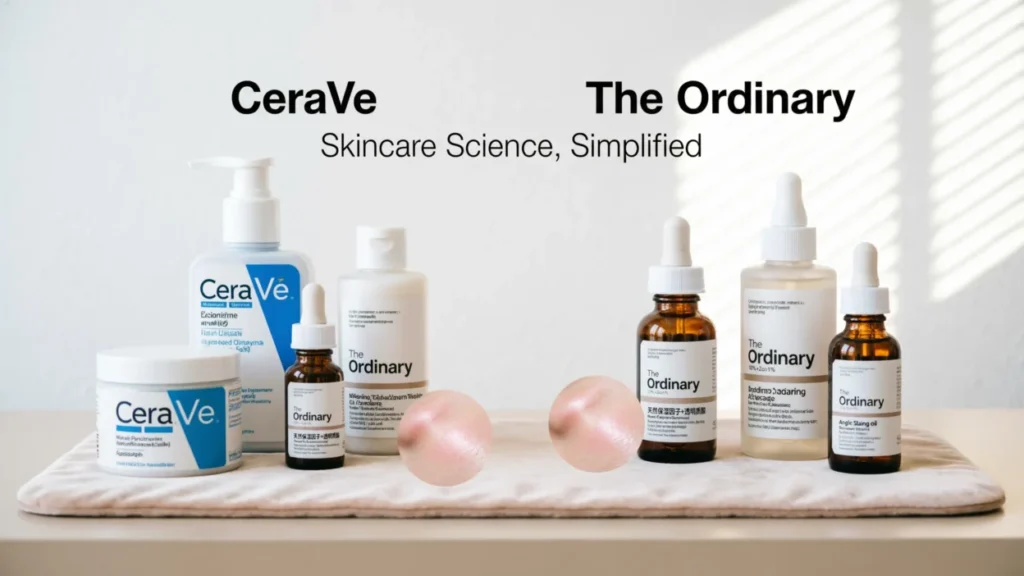
Start with one active treatment rather than three at once. A common dermatologist-recommended starting plan is a retinoid at night and benzoyl peroxide in the morning, with a gentle moisturiser to protect the skin barrier. If your skin becomes sore, red or very flaky, reduce how often you use the active treatment rather than stopping everything and starting again. When you are comparing products, a clear guide to CeraVe vs The Ordinary skincare can help you see how two popular ranges differ in ingredients, price and gentleness.
For a calm, simple base routine, building a vegan skin care routine shows how to choose gentle cleansers and moisturisers that support the skin barrier while your acne treatment does the active work. Keep the routine steady, avoid heavy oils and thick make-up that can block pores, and clean pillowcases and phone screens regularly.
What to Avoid When Treating Acne
- Do not squeeze or pick pimples. It pushes bacteria deeper, increases inflammation and raises the risk of scars.
- Do not scrub the skin harshly. Scrubbing does not unblock pores and can irritate acne.
- Do not use many strong actives at once. Retinoids, benzoyl peroxide, salicylic acid and vitamin C can all irritate skin when combined too quickly.
- Do not skip moisturiser. Dry, irritated skin often produces more oil and becomes more sensitive to treatment.
- Do not stop treatment as soon as the skin clears. Acne often returns without maintenance treatment.
- Do not expect overnight results. Most treatments need two to three months to show their full effect.
When to See a Dermatologist
See a dermatologist if acne is painful, deep or cystic, if it is leaving scars or dark marks, if over-the-counter treatments have not helped after twelve weeks, or if acne is affecting your confidence or mood. You should also seek help sooner if you notice sudden severe acne, acne with hair loss or irregular periods, or a rash that looks infected. A dermatologist can confirm the diagnosis, rule out other skin conditions that look like acne, and prescribe a treatment plan suited to your skin.
Bring a list of the products you already use, including make-up and hair products, because some of them can contribute to breakouts. Tell the dermatologist about any medicines you take and whether you are pregnant or planning a pregnancy, as this affects which treatments are safe for you.
Frequently Asked Questions
What is the best acne treatment recommended by dermatologists?
There is no single best treatment for everyone. For most people, dermatologists recommend a topical retinoid as the foundation, often combined with benzoyl peroxide. Salicylic acid suits blackheads and oily skin, while azelaic acid suits sensitive skin. Moderate or severe acne usually needs prescription treatment as well.
How long do dermatologist-recommended acne treatments take to work?
Most treatments take eight to twelve weeks to show a clear improvement, and some people notice a temporary worsening in the first few weeks. This early flare, sometimes called purging, is common with retinoids. If acne is much worse after six weeks, or the skin is very sore, ask your dermatologist for advice.
Can acne be cured permanently?
Acne can often be controlled very well, and some people stay clear after a course of isotretinoin. For most people, however, acne is a long-term tendency rather than a one-off problem. A simple maintenance routine, usually a retinoid and gentle skincare, helps keep it under control after the active breakouts have cleared.
Is benzoyl peroxide or salicylic acid better for acne?
Benzoyl peroxide is usually better for red, inflamed pimples because it kills acne bacteria. Salicylic acid is usually better for blackheads and oily skin because it works inside the pore. Many people use a benzoyl peroxide treatment for pimples and a salicylic acid cleanser for blackheads, but not both as strong leave-on products on the same day at first.
Should I see a dermatologist for mild acne?
Mild acne can often be treated with over-the-counter products, but a dermatologist visit is worthwhile if it does not improve in twelve weeks, if it keeps returning, or if it is leaving marks or scars. Early treatment of moderate acne can prevent scarring and is often simpler than treating scars later.
Acne treatments recommended by dermatologists are not about buying the most products. They are about choosing the right active ingredients for your type of acne, using them consistently, protecting the skin barrier, and giving the treatment enough time to work. Start simply, be patient for eight to twelve weeks, and ask a dermatologist for help when acne is painful, scarring or not improving. That steady approach gives most people clearer skin with far less irritation than a drawer full of harsh products ever will.