
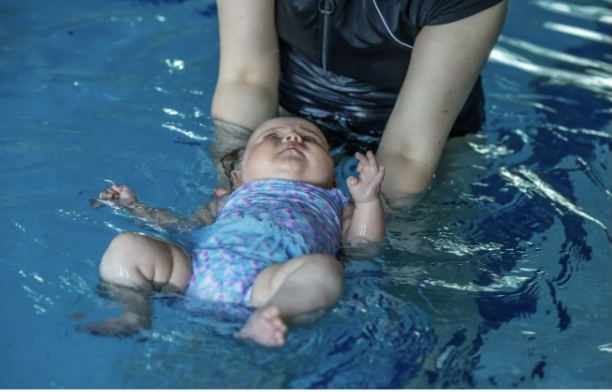

TLDR: Infant swim classes teach breath control, water entry adjustment, floating, and parent-assisted survival positioning. They do not make infants drown-proof, but research shows children who begin water exposure before age four are 88% less likely to drown. The cost ranges from $15 to $50 per session.
Infant swim classes teach breath control responses, water confidence, and survival positioning. They do not produce independent swimmers. What they produce is a child who responds to water entry with trained instincts rather than panic. A difference that the American Academy of Pediatrics considers significant for drowning prevention.
Drowning is the leading cause of accidental death in children ages one to four in the United States. For parents in Boulder deciding whether infant swim instruction is worth the investment, Infant Swim Classes Boulder CO programs provide structured water exposure from age six months through the toddler years, covering the developmental window where early water familiarity produces the most durable safety benefit.
What Age Can Babies Start Swim Classes?
Babies can begin parent-child aquatic programs at six months. The American Academy of Pediatrics updated its guidance in 2023 to recommend swim lessons for most children beginning at age one. They also note that programs beginning at six months produce measurable benefits in water comfort and breath control response.
Before six months, an infant’s immune system and thermoregulation are not developed enough for pool environments. Between six months and one year, the focus is on breath holding, submersion comfort, and back float introduction in a parent-assisted format.
After 12 months, children can begin developing more structured skill responses including roll-to-back technique, where the child learns to turn face-up after water entry without assistance.
What Skills Do Infants Actually Learn in These Classes?
Breath Control
The most foundational skill taught in infant aquatics is the breath-holding response. Instructors cue the baby with a verbal signal before submersion, training a consistent connection between the cue and breath-holding. This response becomes reflexive over weeks of consistent practice.
Without this training, accidental water entry triggers gasping rather than breath-holding, which leads to aspiration.
Back Float
Back float is the survival skill with the most documented life-saving value. A child who can roll to their back and float face-up has time for rescue to occur. Research from the University of Pittsburgh Medical Center found that children who develop a reliable back float by age two have significantly higher survival rates in unattended water entry events.
Infant classes introduce back float with parental support. Independent back float typically develops between 18 and 36 months, depending on the child’s development and consistency of practice.
Water Entry Response
Instructors teach controlled water entry from pool edges and steps. Children learn to reach for the wall immediately after entry. A muscle memory response that has direct application in accidental fall scenarios.
Parent Technique
In parent-child classes, a large portion of instruction goes to the parent or caregiver. Holding position, submersion technique, back float support, and how to cue skills consistently at home all form part of what parents learn.
What Does Research Say About Early Swim Instruction?
A study published in the journal Injury Epidemiology found that children who had participated in formal swim lessons were 88% less likely to drown compared to children with no instruction. This was particularly strong for children ages one to four.
The American Red Cross reports that drowning rates in communities with accessible swim instruction programs are 30 to 50% lower than in communities without them. Access and affordability of instruction directly correlate to community drowning rates.
How Much Do Infant Swim Classes Cost?
| Program Format | Cost Per Session |
| Group class (4 to 6 families) | $15 to $25 |
| Semi-private (2 families) | $25 to $40 |
| Private lesson | $40 to $75 |
| Monthly membership programs | $60 to $150 per month |
Most programs run in 8 to 12-week sessions. The total investment for a full session of group classes runs $120 to $300. Private instruction runs $320 to $900 per session cycle.
The cost comparison that matters: pediatric emergency care for a near-drowning event averages $30,000 to $100,000 in hospital costs alone, according to the CDC.
What Should Parents Look for in an Infant Swim Program?
Water temperature: Pools for infant classes should be maintained at 88 to 92°F. Lower temperatures cause stress responses that interfere with skill development.
Instructor certification: Look for Water Safety Instructor (WSI) certification from the American Red Cross or equivalent. Infant-specific aquatic training is separate from general swim instruction credentials.
Class ratio: No more than six parent-child pairs per instructor for infant classes. Higher ratios reduce the individual attention that infant skill development requires.
Curriculum structure: Programs with defined skill progressions tied to session goals produce better outcomes than open-format water play classes.
Trial class policy: Programs that allow a trial session before enrollment commitment demonstrate confidence in their instruction quality.
What Happens Between Classes?
Bath time is a direct extension of swim class. Pouring water over the baby’s face during bathing reinforces the breath-holding response. Parents can practice submersion cues during baths to maintain the neural connection between the cue and the response.
Avoid expressing anxiety about water around the child. Infants read caregiver emotional responses. A parent who tenses at the pool edge communicates that water is a threat rather than an environment to navigate with skill.
Key Takeaways
- Infants can begin parent-child swim programs at six months, with the American Academy of Pediatrics supporting formal lessons from age one
- Children who receive formal swim instruction before age four are 88% less likely to drown than those with no instruction
- Back float is the single highest-value survival skill in infant aquatics: a child who can float face-up survives long enough for rescue
- Pool water temperature must be 88 to 92°F for infant classes; lower temperatures trigger stress responses that block skill development
- Group class cost runs $120 to $300 per session cycle; the average cost of a near-drowning hospital event runs $30,000 to $100,000
- Instructor certification in infant-specific aquatics is separate from general swim instruction credentials, verify both before enrolling
The data on early swim instruction is clear: it reduces drowning risk for the age group most vulnerable to it. Whether you start at six months or at one year, consistent instruction during the early developmental window builds the skills and responses that matter most.