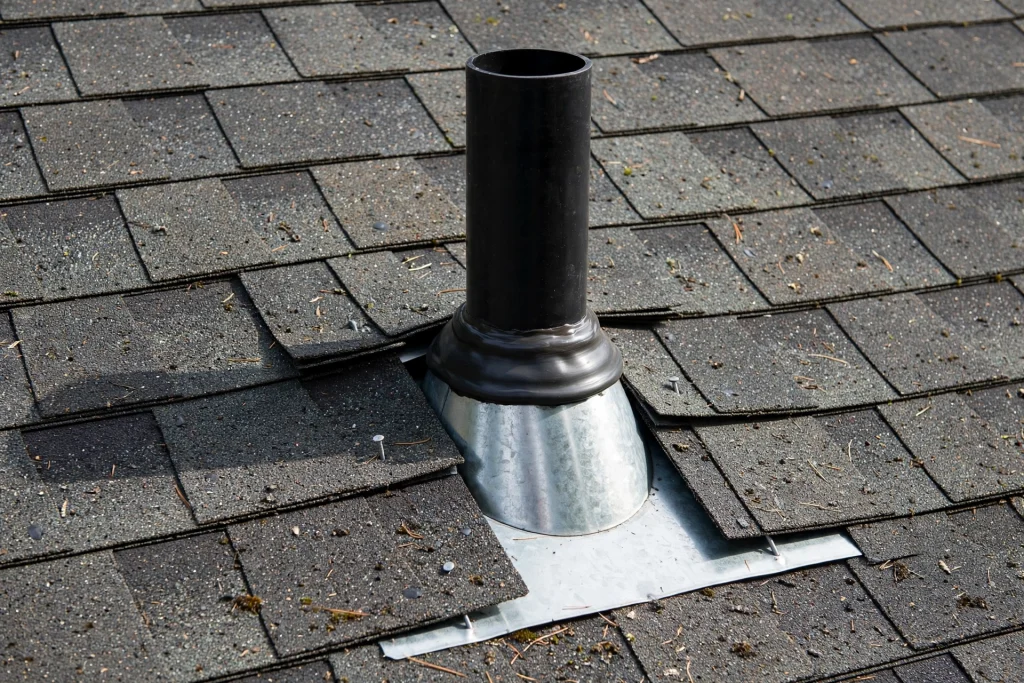

A roof jack is a flashing that seals the spot where a pipe, vent, or other object passes through your roof, and it is also the name for a bracket that roofers use as a temporary platform on a steep roof. In most homes, when someone says roof jack, they mean the pipe boot: a metal or rubber flashing that keeps rain from leaking in around a vent pipe. It is a small, inexpensive part, but when it fails, it can cause a serious leak, stained ceilings, and rot in the roof deck.
This guide explains both meanings, so you will know which one a roofer is talking about, and it focuses mainly on the pipe flashing, because that is the part most homeowners need to understand. You will learn how a roof jack works, the main types and materials, how to tell when one is failing, what replacement costs, how installation works, and whether you can replace one yourself. You will also find a comparison table, buying tips, and answers to the questions homeowners ask most often.
What Is a Roof Jack?
A roof jack, also called a pipe boot, vent pipe flashing, or roof pipe flashing, is a fitting that fits over a pipe sticking out of a roof and seals the gap between the pipe and the roofing. The most common example is the vent pipe for a bathroom or kitchen, which carries air and sewer gases out of the house. Without a roof jack, rain would run down the pipe and into the hole in the roof, straight into your attic.
A typical roof jack has two parts. The base is a flat flange, usually made of metal, that slides under the shingles above the pipe and sits over the shingles below it, so water runs over it and off the roof. The top is a collar or boot, usually made of rubber, silicone, or metal, that fits tightly around the pipe and flexes as the pipe expands and contracts with heat and cold. Together, the flange and the collar form a watertight seal.
The second meaning of roof jack is different, and it causes a lot of confusion. A roof bracket, also called a roof jack, is a metal bracket that a roofer nails to the roof deck and uses to hold a plank, creating a flat platform to stand on while working on a steep roof. Roofers use several brackets in a row to make a safe working surface. These brackets are temporary, they are removed when the job is done, and the nail holes are sealed. If a contractor talks about setting roof jacks before tearing off shingles, they mean brackets, not pipe flashing.
How Does a Roof Jack Work?
A roof jack works by using gravity and overlap, the same idea as shingles themselves. Rain falls on the roof and runs downhill. The top half of the jack’s flange sits under the shingles above the pipe, so water running down the roof passes over the flange instead of under it. The bottom half sits on top of the shingles below the pipe, so water runs off the flange and onto the shingles. The rubber collar grips the pipe, so water cannot run down the side of the pipe and under the flange. The collar also stretches as the pipe expands and shrinks with heat and cold, which is why rubber collars eventually crack in strong sun.
Types of Roof Jacks
Roof jacks come in several types, and the right one depends on the pipe size, the roof material, and the climate. The most common types are listed below.
1. Rubber Boot Roof Jack
This is the most common type on asphalt shingle roofs. It has a galvanised steel or aluminium base and a black rubber boot. It is inexpensive, easy to install, and fits pipes from about 1.5 to 4 inches in diameter. Its main weakness is the rubber, which usually lasts 10 to 20 years before it cracks in strong sun.
2. Silicone Boot Roof Jack
A silicone boot looks similar to a rubber boot, but the collar is made of silicone, which resists heat and ultraviolet light better than rubber. Silicone boots often last 20 to 30 years or more, and they are a good choice in hot, sunny climates. They cost more than rubber boots, but the longer life often makes them worth it.
3. All-Metal Roof Jack
An all-metal jack is made entirely of lead, copper, aluminium, or galvanised steel, with a metal collar that is shaped around the pipe. Lead jacks are very long-lasting and can be bent to fit, which is why they were common on older homes. Copper jacks are durable and attractive, but they are expensive. Metal jacks are a good choice for metal roofs and for pipes that get very hot.
4. Adjustable and Multi-Size Roof Jack
Some jacks have a flexible boot that can be cut to fit several pipe sizes, or a base that can be bent to match the roof slope. These are useful for a roofer who carries one type for many jobs, and for a homeowner who is not sure of the exact pipe size. Always cut the boot to the marked size, not larger, or the seal will be loose.
5. Roof Bracket, or Staging Roof Jack
This is the temporary platform bracket described above. It is not a flashing and does not seal a pipe. It is made of steel, it is nailed through the shingles into the roof deck, and it holds a 2-by-6 or 2-by-10 plank. Roofers use it for safety on roofs steeper than about 7 in 12 pitch, and they remove it after the work is done.
| Type | Material | Typical life | Best for | Cost |
|---|---|---|---|---|
| Rubber boot | Steel base, rubber collar | 10-20 years | Shingle roofs, standard pipes | $10-$30 |
| Silicone boot | Steel base, silicone collar | 20-30 years | Hot, sunny climates | $20-$50 |
| All-metal, lead | Lead or copper | 30-50 years | Metal roofs, hot pipes | $30-$80 |
| Adjustable multi-size | Steel, rubber or silicone | 10-25 years | Mixed pipe sizes | $15-$40 |
| Roof bracket | Steel | Reusable | Temporary work platform | $10-$25 each |
When Do You Need a Roof Jack?
You need a roof jack whenever a pipe or vent goes through the roof, and you need a new one whenever the old one fails or a new pipe is added. The most common cases are a new bathroom or kitchen vent, a new water heater or furnace vent, a roof replacement, and a repair after a leak is found around a pipe. If you are having a new roof installed, ask the roofer to fit new pipe jacks as part of the job, because reusing an old rubber boot on a new roof is a false saving: the new shingles may last 25 years, but the old boot may fail in five.
You also need a roof jack when a pipe is added for a remodel, such as a new bathroom in an attic or a new range hood vent. The roofer or plumber will cut a hole in the roof deck, fit the pipe, and flash it with a jack that matches the pipe size and the roof slope. For a skylight, which also passes through the roof, the flashing is different, but the idea is the same: water must be kept out where the roof is cut. Our guide to what is a skylight explains the types and flashing used for roof windows.
Signs Your Roof Jack Is Failing
A failing roof jack often shows up inside the house before you see it on the roof. The most common sign is a water stain on the ceiling or wall near a bathroom or kitchen, especially after rain. The stain may be brown or yellow, and it may grow slowly. You may also see damp insulation or wood in the attic around the vent pipe, a musty smell, or mould on the underside of the roof deck.
From outside, look for a rubber collar that is cracked, split, or pulled away from the pipe, a metal flange that is bent, rusted, or lifted, and shingles around the pipe that are loose or missing. In cold weather, a failed jack can also let warm, moist air from the house escape into the attic, which can cause frost on the underside of the roof. If you see any of these signs, have the jack checked soon. A small leak can rot the roof deck and the framing around it, and the repair then costs far more than a new jack. A professional roof inspection is a good way to check all the flashing, including pipe jacks, before a small problem becomes a large one.
How Much Does a Roof Jack Cost?
The part itself is cheap. A standard rubber boot roof jack usually costs $10 to $30, a silicone boot $20 to $50, and an all-metal lead or copper jack $30 to $80. The main cost is labour, because the roofer has to get on the roof, lift the shingles around the pipe, remove the old jack, fit the new one, and reseal the shingles. If the roof deck is damaged, that adds to the cost.
As a rough guide, replacing one pipe jack on a shingle roof often costs $150 to $400 in total, including the part and labour, depending on the roof height, slope, and location. Replacing several jacks at once during a roof replacement is much cheaper per jack, because the roofer is already on the roof and the shingles are already off. If you are quoted much more than this for a single jack, ask what is included, and whether the roof deck needs repair. Always get the price in writing before the work starts.
How Is a Roof Jack Installed?
Installing a pipe jack is a straightforward job for a roofer, but it must be done in the right order or it will leak. First, the roofer measures the pipe and chooses a jack with the right size collar and a base that suits the roof slope. The shingles above the pipe are lifted, the old jack is removed if there is one, and the new jack is slid over the pipe so its flange sits flat on the roof deck.
Next, the top half of the flange is slid under the shingles above the pipe, and the bottom half is left on top of the shingles below the pipe. The flange is nailed in place, usually with roofing nails through the top edge, where the shingles above will cover them, and a small amount of roofing sealant is used around the nails. The collar is then checked to make sure it grips the pipe all the way around, with no gaps. Finally, the shingles are pressed back down, and the roofer checks the work from the attic and from outside for any gaps. Never use a pipe jack as a step, and never stand on a pipe jack, because you will bend the flange and break the seal.
Can You Replace a Roof Jack Yourself?
You can replace a rubber boot roof jack yourself if you are comfortable working on a roof, you have a safe ladder, and the roof is not steep. You will need a pry bar to lift the shingles, a hammer, roofing nails, roofing sealant, and the new jack. The job usually takes less than an hour for one pipe. Work on a dry, calm day, wear shoes with good grip, and never work on a wet or icy roof.
However, many homeowners are better off hiring a roofer. A roofer can check the roof deck for rot, choose the right jack for the pipe and roof, and guarantee the work. Hire a professional if the roof is steep, high, or in poor condition, if the leak has already caused damage inside, if the pipe is a gas or furnace vent, or if you are not confident on a roof. A fall from a roof can cause serious injury, and a badly fitted jack can cause a leak that costs far more than the labour you saved. If the leak is around a window rather than a pipe, our guide on how to reseal windows may help you tell the two problems apart.
Frequently Asked Questions About Roof Jacks
What is a roof jack used for?
A roof jack seals the gap where a pipe or vent passes through a roof, so rain cannot leak into the attic. Roofers also use the term for a temporary bracket that holds a plank on a steep roof.
How long does a roof jack last?
A rubber boot usually lasts 10 to 20 years, a silicone boot 20 to 30 years, and a lead or copper jack 30 to 50 years. Sun, heat, and cold wear rubber out fastest.
How do I know if my roof jack is leaking?
Look for a brown stain on the ceiling near a bathroom or kitchen, damp insulation in the attic, or a cracked rubber collar around the pipe. Any of these signs means the jack should be checked soon.
Can I replace a roof jack myself?
Yes, if the roof is low and not steep and you are comfortable working at height. Hire a roofer if the roof is steep or high, the deck is damaged, or the pipe is a gas or furnace vent.
How much does it cost to replace a roof jack?
The part costs $10 to $80, and a professional replacement usually costs $150 to $400 in total. Replacing jacks during a full re-roof is cheaper per jack.