
Laser eye surgery has changed how Australians see the world. More than 30 million LASIK procedures have been done globally, and Melbourne is one of the best cities in the world to get it done. Clinics here use FDA-cleared, TGA-approved technology with strong track records. But walking into a surgery without knowing what to expect? That’s where things go wrong. If you’re looking for the best laser eye surgery in Melbourne, knowing the preparation steps will make your outcome far better than going in blind.
Are You Actually a Good Candidate for Laser Eye Surgery?
Not everyone qualifies. Surgeons will check your corneal thickness first. You need at least 500 microns to be safe. If yours is thinner, procedures like LASEK or PRK become better options than LASIK. Your prescription also matters. Most surgeons won’t operate beyond -10 diopters for myopia without a thorough risk discussion. Age plays a role too. The eye needs to be stable for at least 12 months before surgery. If your prescription keeps changing, you wait. No reputable surgeon will rush that part.
What Tests Happen Before the Procedure?
Expect a full diagnostic workup. Corneal topography maps the surface of your eye in 3D. Wavefront analysis measures how light travels through your eye and catches distortions that basic glasses tests miss. Pupil size gets measured under dim light because large pupils can cause glare and halos post-op. Tear film testing matters too. Dry eye is the most common complication after LASIK, affecting up to 95% of patients in the short term. A good clinic catches this before surgery, not after. That pre-op session usually takes 90 minutes to two hours.
How Do You Prepare in the Days Before Surgery?
Stop wearing contact lenses. Soft lenses alter the shape of your cornea. You need to stop 1 to 2 weeks before the assessment, not just before the surgery. Hard lenses require even longer, sometimes 4 to 6 weeks. The day before, skip eye makeup, creams, and perfumes. They interfere with the laser and increase infection risk. You won’t be able to drive after the procedure, so sort transport in advance. Most patients feel comfortable within 24 hours, but vision can fluctuate for the first few days.
What Actually Happens on Surgery Day?
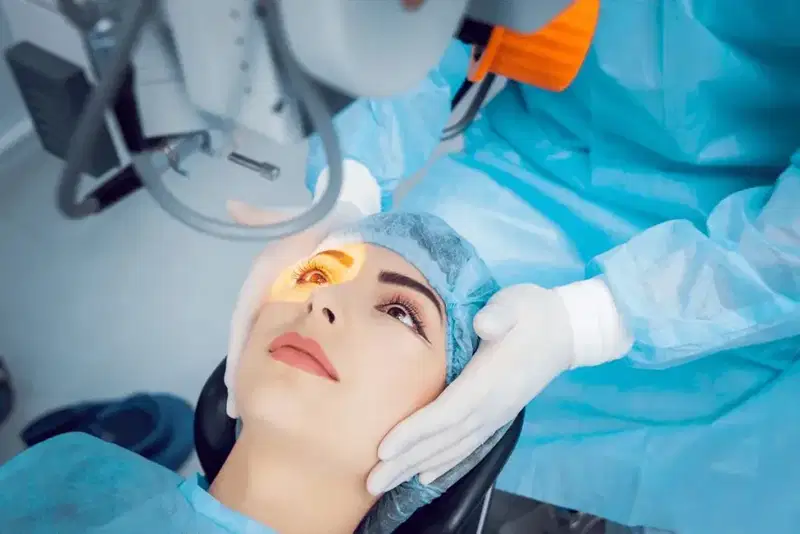
The procedure itself is fast. LASIK takes about 10 minutes per eye. You’ll get numbing drops, not injections. A microkeratome or femtosecond laser cuts a thin flap in the cornea. The excimer laser then reshapes the tissue underneath. You’re awake the whole time. Most people feel pressure, not pain. The laser phase lasts under 60 seconds per eye. The flap is repositioned and bonds on its own. You’ll get protective goggles and a list of aftercare rules you must follow exactly. Rubbing your eyes is the biggest risk in the first week.
What Does Recovery Actually Look Like?
Vision improves within hours for most patients. 96% of LASIK patients achieve 20/20 vision or better according to the American Refractive Surgery Council. But the eye heals over months, not days. Night vision issues like starbursts and halos are common in the first 3 months. Dry eye symptoms peak around the 1-month mark and usually resolve by 6 months with prescribed drops. You’ll have check-ups at 24 hours, 1 week, 1 month, and 3 months. Missing those appointments is a mistake. Problems caught early are fixable. Caught late, less so.
How Do You Pick the Right Melbourne Clinic?
Look at surgeon experience first, not price. The best Melbourne clinics use platforms like the Alcon WaveLight EX500, one of the fastest and most accurate excimer lasers available. Ask how many procedures the surgeon has performed personally. Under 1,000 is too few. Ask about their enhancement rate. A rate above 5% signals something worth questioning. Patient reviews tell you about communication and aftercare, not surgical skill. Check if the clinic offers lifetime retreatment guarantees. Reputable places do. If a clinic pushes you into a decision quickly, that’s a reason to walk out.