
A squeaky door is one of the most annoying small problems in a home — and one of the easiest to fix. That high-pitched creak every time someone opens a bedroom, bathroom or kitchen door usually comes from dry, dirty or slightly loose hinges, not from a broken door. The good news is that learning how to fix a squeaky door takes about ten minutes, a little lubricant and, in stubborn cases, a screwdriver. This guide shows you how to find the exact cause, fix it step by step, and stop the squeak coming back.
Short answer: spray or apply a lubricant such as white lithium grease, silicone spray or petroleum jelly to the hinge pins, move the door back and forth to work it in, and tighten any loose screws. If the squeak remains, remove the hinge pins one at a time, clean them, lubricate them properly, and put them back. Most squeaks disappear with lubrication alone. If the door is also sticking or rubbing, you will need to adjust the hinges or trim the door slightly — also covered below.
Why Do Doors Squeak?
A door squeaks when metal rubs on metal without enough lubrication. Hinge pins sit inside hinge knuckles, and over time the original grease dries out, dust gets in, and the pin starts to grind. Humidity, temperature changes and heavy use make it worse. A door that is slightly out of alignment puts extra pressure on one hinge, which can also cause a squeak, a sticking door or both.
Other causes are less common but worth checking. A loose hinge screw lets the hinge move slightly every time the door opens. A bent hinge pin, a rusty hinge, or a door that rubs against its frame can all make noise. A squeak that comes from the floor near the door, rather than the hinges, is a different problem — usually a loose floorboard — and needs a different fix.
What You Will Need
- Lubricant: White lithium grease, silicone spray or petroleum jelly work best. WD-40 can help for a quick fix, but it is a solvent, not a long-lasting lubricant, so the squeak often returns.
- A cloth or paper towels: To wipe away old grease and drips.
- A hammer and a nail or pin punch: To tap hinge pins out gently.
- A screwdriver: To tighten loose screws, and to remove a hinge if needed.
- Steel wool or fine sandpaper: To clean rusty or dirty hinge pins.
- Wood glue and matchsticks or toothpicks: To fix screw holes that have become too loose to hold a screw.
- A helper, if you can: Holding a heavy door steady makes hinge work much easier.
If you do not have a full DIY toolkit yet, start with the basics. Our guide to essential tools for DIY lists the tools that cover most small home repairs, including this one.
How to Fix a Squeaky Door in 5 Steps
Step 1: Find which hinge is squeaking
Open and close the door slowly, and listen. Put your hand on each hinge in turn — you can often feel the vibration in the hinge that is making the noise. Most doors have three hinges: top, middle and bottom. The top hinge carries the most weight and is the most common culprit, but check all three. If you cannot tell, lubricate them one at a time and test the door after each one.
Step 2: Lubricate the hinge pins without removing them
For a quick fix, spray lubricant into the top of each hinge, where the pin meets the knuckle, and into the small gap between the knuckles. Open and close the door ten to fifteen times to work the lubricant down the pin. Wipe away any drips. In many cases, this is enough, and the squeak stops straight away. Use white lithium grease or silicone spray for a longer-lasting result than a general-purpose penetrating oil.
Step 3: Remove, clean and lubricate the hinge pins
If the quick spray does not work, remove the pins properly. Close the door, then tap the bottom of one hinge pin upwards with a hammer and a nail, working from underneath. Pull the pin out with your fingers or pliers. Do one hinge at a time, so the door stays supported by the other hinges. Clean the pin with a cloth, and use steel wool if it is rusty or covered in old, dried grease. Coat the pin generously with white lithium grease or petroleum jelly, slide it back in, and tap it gently into place with the hammer. Repeat for the other hinges, and open and close the door to spread the grease.
Never remove all the hinge pins at once unless you have someone holding the door. A heavy solid door can fall, damage the frame, or injure you. If a pin is bent, replace it — a bent pin will keep squeaking and will wear the hinge out.
Step 4: Tighten loose screws
Check every screw in every hinge, on both the door and the frame side. Tighten any that are loose, but do not over-tighten them, or you can strip the wood. If a screw spins and will not tighten, the hole is stripped. Remove the screw, push a few wooden matchsticks or toothpicks coated in wood glue into the hole, let the glue dry, trim them flush, and then drive the screw back in. It will grip like new.
Step 5: Check the door alignment
Close the door slowly and look at the gap around it. The gap should be even — about 2–3 mm all the way round. If the door rubs at the top or bottom, or the gap is wider on one side, the door is out of alignment. A small adjustment often helps: tightening the top hinge screws can pull a sagging door up, while shimming a hinge with a thin piece of cardboard behind it can change the angle. If the door still rubs after hinge adjustments, you may need to plane a small amount off the edge that rubs, and then repaint or seal it. That is a bigger job, so try the hinge fixes first.
Which Lubricant Is Best for a Squeaky Door?
| Lubricant | Best for | How long it lasts | Notes |
|---|---|---|---|
| White lithium grease | Most squeaky hinges | Months to a year | Thick, stays in place, best all-round choice |
| Silicone spray | Interior and exterior doors | Several months | Clean, does not attract dust, good for painted hinges |
| Petroleum jelly | Quick home fix | Several months | Easy to apply to a removed pin, cheap and effective |
| WD-40 or penetrating oil | Freeing a stuck or rusty pin | Days to weeks | Good for cleaning, but not a long-term lubricant |
| Graphite powder | Very dirty hinges | Several months | Dry, does not attract dust, can be messy |
| Cooking oil or olive oil | Emergency only | Days | Goes sticky and rancid — avoid if you can |
For a lasting fix, use white lithium grease or silicone spray. Use WD-40 first only if a pin is stuck with rust, then follow it with a proper grease. Put a cloth under the hinge when you spray, to protect the floor and the door paint.
How to Fix a Squeaky Door Without Removing the Pins
If you cannot remove a pin, or you do not want to, try this no-removal method. Spray silicone lubricant into the hinge from the top, then lift the door slightly by the handle while you open and close it. The lifting takes weight off the hinge and lets the lubricant work down the pin. Repeat the spray and the movement a few times. You can also use a thin nozzle or straw to direct the spray into the hinge knuckle. This method fixes most mild squeaks, although a full pin clean is better for a stubborn one.
Fixing Other Door Problems
Door sticking and rubbing
A sticking door is often caused by humidity, which makes wood swell, or by a sagging hinge. Check the hinges first, tighten them, and see if the door moves freely. If it still sticks, mark the spot where it rubs with a pencil, remove the door, and plane or sand a small amount off that edge. Seal the bare wood with paint or varnish afterwards, or it will absorb moisture and swell again.
Door sill problems
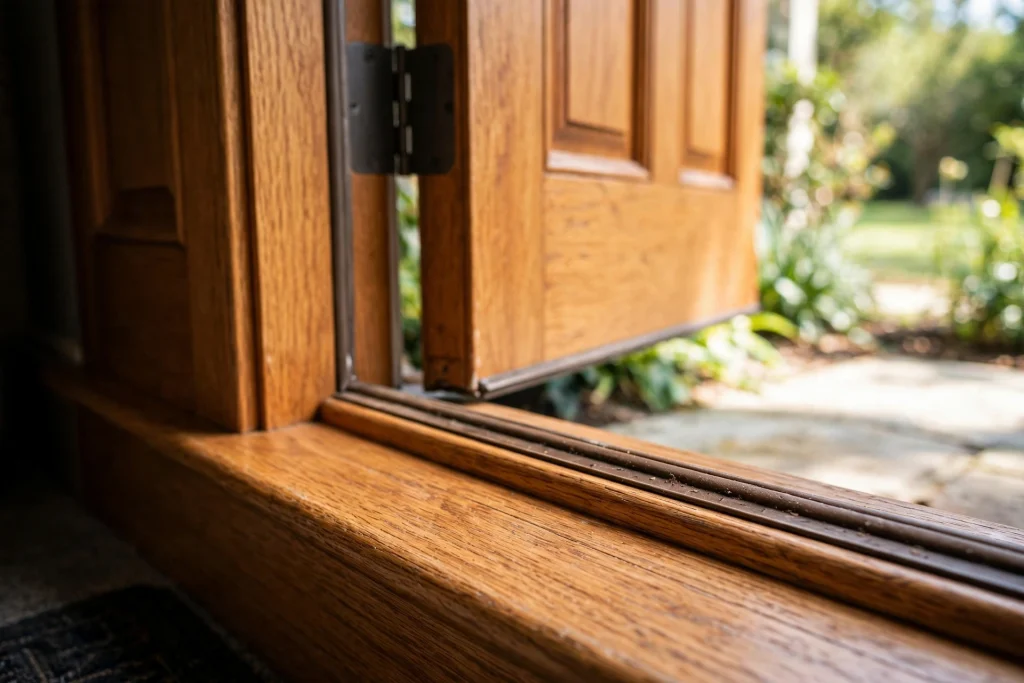
If the bottom of the door drags or lets in a draught, the sill may be worn, loose or badly fitted. A door sill that is damaged can make a door hard to close and let in cold air and rain. Check the sill for rot, gaps and loose screws, and replace or reseal it if needed.
Squeaky garage door
A garage door squeaks for similar reasons — dry rollers, hinges and tracks — but the parts are bigger and under spring tension. Lubricate the rollers and hinges with silicone spray, and keep the tracks clean. Do not adjust the springs yourself, because they are under high tension and can be dangerous. If your garage door also needs reprogramming, our guide on how to program a garage door opener covers the remote and opener settings.
Squeaky floor near the door
If the noise comes from the floor when you walk near the door, not from the hinges, the problem is a loose floorboard or a gap between the board and the joist. Try sprinkling talcum powder into the joints, or screwing the board down if you can reach the joist. Do not confuse a floor squeak with a hinge squeak — listen carefully with the door still, and move the door without walking on the floor.
How to Stop a Squeaky Door Coming Back
- Lubricate once or twice a year, especially before winter, when dry air and heating make hinges noisier.
- Use a proper grease, not just a quick spray of penetrating oil, so the fix lasts.
- Keep hinges clean — wipe dust and old grease away when you clean the room.
- Tighten screws when you notice movement, before the holes become stripped.
- Fix alignment early — a sagging door puts extra strain on hinges and makes them wear out faster.
- Replace worn hinges if they are bent, rusty or loose even after cleaning and tightening. New hinges are cheap and easy to fit in the same holes.
Common Mistakes to Avoid
- Using only WD-40 and expecting a permanent fix — it evaporates and the squeak returns.
- Removing all hinge pins at once and letting the door fall.
- Over-tightening screws and stripping the wood.
- Spraying lubricant everywhere, including on painted surfaces and floors, without wiping it up.
- Ignoring a sticking door — a squeak plus rubbing usually means the door is out of alignment, not just dry.
- Using cooking oil, which goes sticky and attracts dust.
Frequently Asked Questions About How to Fix a Squeaky Door
What is the best lubricant for a squeaky door hinge?
White lithium grease is the best all-round choice, followed by silicone spray. Both last for months, stay in place and do not attract much dust. Petroleum jelly is a good home alternative if you remove the pin.
Can I fix a squeaky door without removing the hinge pins?
Yes. Spray lubricant into the top of the hinge, open and close the door many times, and lift the door slightly while you move it. This fixes most mild squeaks. For a stubborn squeak, removing and cleaning the pins works better.
Why does my door squeak even after lubricating it?
The pin may be bent, rusty or dirty, the screws may be loose, or the door may be out of alignment and rubbing on the frame. Clean the pins, tighten the screws, check the gap around the door, and replace a bent pin or worn hinge if needed.
How long does it take to fix a squeaky door?
A spray fix takes two to five minutes. Removing, cleaning and greasing the pins takes ten to twenty minutes. Fixing a stripped screw hole or adjusting alignment can take thirty minutes or more, mainly while glue dries.
Should I use WD-40 on a squeaky door?
WD-40 can free a stuck pin and give a quick, temporary fix, but it is not a long-lasting lubricant. Follow it with white lithium grease or silicone spray for a fix that lasts.
The Bottom Line
Learning how to fix a squeaky door is a simple, satisfying home repair. Start with the easiest fix — spray lubricant into the hinges and work the door back and forth. If that does not work, remove the pins one at a time, clean them, coat them with white lithium grease, and tighten any loose screws. Check the door alignment if it also sticks or rubs. With a proper grease and a quick check once or twice a year, your doors should stay quiet for a long time.