
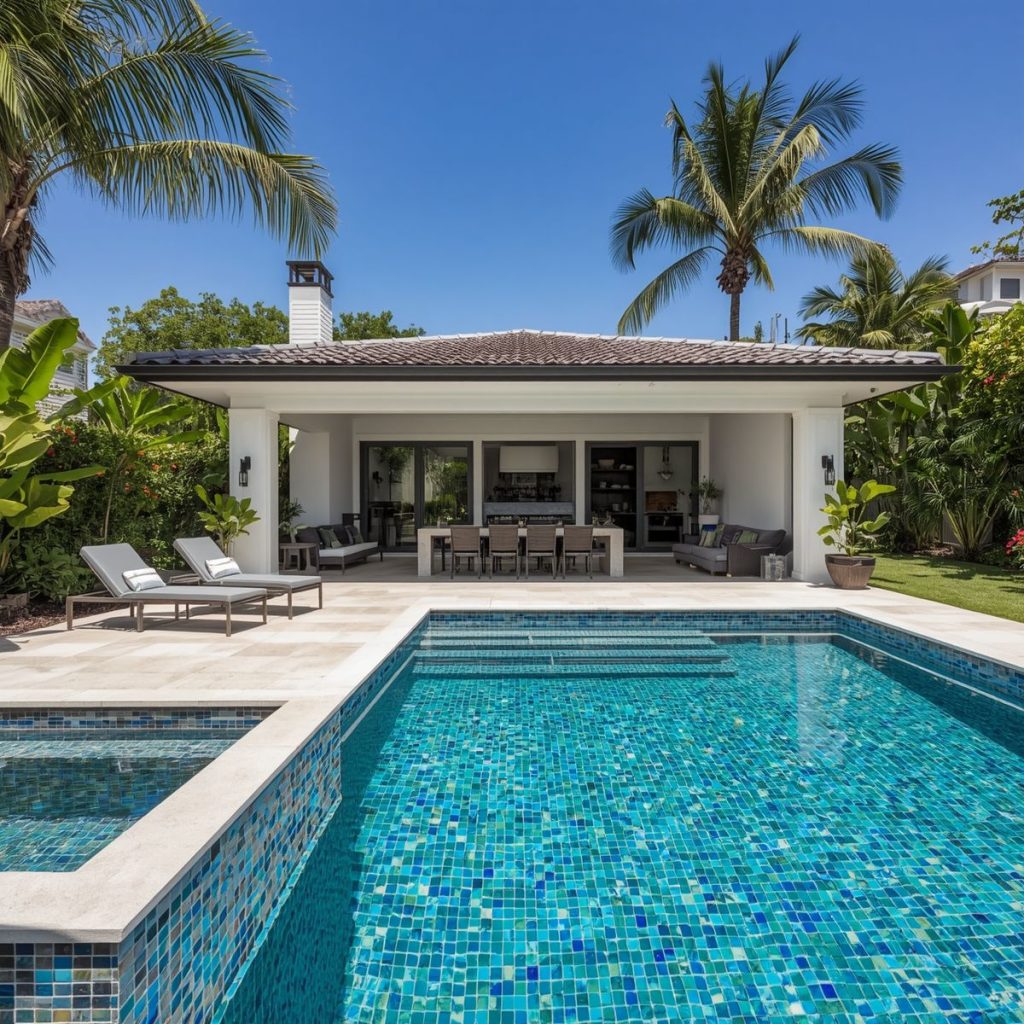

The pool tile is the single most visible design decision in any outdoor entertaining space. It sets the colour of the water. It determines how the space reads from the house, from the terrace, and from inside looking out. The Australian pool industry installs around 17,000 new pools per year, according to the Swimming Pool and Spa Association. Most of those decisions on swimming pool tiles get made quickly. Too quickly. The right tile choice fundamentally changes the whole backyard.
How Do Pool Tiles Affect the Colour of the Water?
This surprises people every time. The tile colour you see dry is not the colour you see underwater. Water depth, sunlight angle, and tile tone all interact. A pale blue tile in a shallow area looks completely different to the same tile at 1.8 metres.
Dark tiles, charcoal or black, produce deep blue to almost green water. They absorb more solar heat, which extends your swimming season in cooler climates. Light tiles produce turquoise to pale aqua. They make water feel more tropical and bright.
The most popular choice in Australia right now is a mid-toned glass mosaic in teal or ocean blue. It hits the sweet spot between the deep dramatic look and the resort-style aqua that most families want.
What Tile Materials Are Best for Australian Pools?
Ceramic pool tiles are the entry-level choice. Durable and affordable. But the glaze quality varies significantly between manufacturers. Cheap ceramic chips at pool edges and fades within 5 years under UV exposure.
Porcelain outperforms ceramic in almost every way. It is denser, less porous, and holds colour longer. Slip resistance ratings matter here. R10 is the minimum for wet pool surrounds. R11 or R12 is safer, especially if kids are using the area.
Glass mosaic tiles are the premium choice. Light refracts through them differently at every angle. They cost 3 to 5 times more than ceramic but they look noticeably better and last longer when properly installed. Grout selection is critical with glass tiles. Use epoxy grout. Standard cement grout stains and discolours within 2 years in pool environments.
How Do Pool Tiles Change the Feel of an Outdoor Entertaining Space?
Continuity is the key word. When your pool coping tiles match or complement your terrace paving, the whole outdoor area reads as one designed space rather than separate disconnected zones.
Extending the same tile from the pool waterline up the feature wall behind the pool creates a visual anchor. It makes the pool feel like a designed feature rather than a hole in the ground. This is what separates a good outdoor space from a great one.
Lighting amplifies everything tile-related at night. LED pool lighting bounces off the tile surface differently depending on texture and tone. A textured mosaic tile creates more visual movement and shimmer. A flat polished tile creates a mirror-like reflection. Both are valid. But decide early because changing tiles later is a major renovation.
What Are the Most Common Tile Mistakes Pool Owners Make?
Choosing tile based on the showroom sample alone is the biggest mistake. Look at large-format samples, ideally wet. Ask for a sample to take home and view in your actual outdoor light conditions at different times of day.
Underestimating the waterline tile is another one. The waterline tile takes the most punishment. It sits at the constant fill level where water minerals, sunscreen, and body oils concentrate. This tile needs to be hard, non-porous, and easy to clean. Do not use the cheapest option here.
Ignoring grout colour is also common. Grout covers roughly 15% of the total tile surface in a mosaic layout. A white grout on a dark tile will stain and look terrible within a season. Match the grout closely to the tile and use epoxy every time.
When Should You Retile a Pool?
Most pool tiles last 15 to 25 years when properly installed and maintained. Signs that it is time to retile include widespread grout cracking, tiles debonding from the shell, consistent efflorescence staining that does not respond to acid washing, or significant colour fade.
Retiling a full pool costs between $8,000 and $25,000 depending on pool size, tile selection, and access. Getting it right the first time is considerably cheaper than doing it twice.
Plan your tile selection at the same time as your coping, decking, and landscaping decisions. They all affect each other. Separated decisions create visual disconnects that are expensive to fix later.