
Does sunblock stop tanning? No, sunblock does not completely stop tanning. It slows tanning down and greatly reduces sunburn, but it cannot block every ultraviolet ray. Even with a high SPF, some UV light still reaches your skin, and that light triggers melanin, the pigment that makes skin darker. So you can still get a tan while wearing sunblock, just more slowly and with far less burning and damage than without it.
If you want to avoid tanning altogether, sunblock alone is not enough. You also need shade, clothing, a hat and sunglasses, and you need to stay out of the strongest midday sun. In this guide, we explain how sunblock and SPF really work, why you still tan with sunblock on, which SPF to choose, and how to protect your skin properly on holiday, at the beach and in everyday life.
How Sunblock Works
Sunblock, also called sunscreen, works by filtering or blocking ultraviolet (UV) radiation from the sun. There are two main types of UV rays that affect your skin. UVA rays go deeper into the skin and are the main cause of ageing, wrinkles and long-term damage. UVB rays are the main cause of sunburn and play a key role in skin cancer. A good broad-spectrum sunblock protects against both.
Chemical sunscreens absorb UV rays and turn them into heat, while mineral sunscreens, usually made with zinc oxide or titanium dioxide, sit on the skin and reflect UV rays away. Both types work if you use enough of them and reapply them often enough. The problem is that most people use too little, apply it unevenly, or forget to reapply after swimming or sweating, which leaves gaps in the protection.
Why You Still Tan With Sunblock On
Tanning is your skin’s defence against UV damage. When UV light reaches the skin, it triggers cells called melanocytes to make more melanin, the brown pigment that darkens the skin. Melanin absorbs some UV light and helps protect the deeper layers of the skin, but it is a sign that damage has already happened, not a sign that your skin is safe.
Sunblock reduces the amount of UV that reaches your skin, but it does not reduce it to zero. SPF 30, for example, filters out about 97 percent of UVB rays when used correctly, which means about 3 percent still get through. SPF 50 filters out about 98 percent. That small percentage is enough to trigger melanin over time, especially if you spend hours in the sun, swim, sweat or miss a spot when you apply it. That is why a slow, gradual tan can still appear, even when you are careful.
Does a Higher SPF Stop Tanning Completely?
No. A higher SPF gives you more protection and more time before you burn, but it does not create a total barrier. SPF 100 does not block 100 percent of UV rays, and the difference between SPF 30 and SPF 50 is small in terms of the percentage of rays blocked. What matters more than the number on the bottle is how much you apply, how evenly you apply it, and how often you reapply it.
Think of SPF as a delay, not a shield. SPF 30 means you can stay in the sun about 30 times longer before burning than you could with no protection, if you apply it correctly. It does not mean you can stay out all day without reapplying, and it does not mean you will not tan. If your goal is to avoid tanning, a high SPF helps, but shade and clothing help far more.
SPF Levels Compared
SPF stands for Sun Protection Factor, and it measures protection against UVB rays, the rays that cause sunburn. The table below shows what different SPF levels actually block, so you can choose sensibly instead of chasing the highest number on the shelf.
| SPF | UVB blocked | Best for |
|---|---|---|
| SPF 15 | About 93 percent | Short, everyday exposure |
| SPF 30 | About 97 percent | Everyday use and most holidays |
| SPF 50 | About 98 percent | Fair skin, children and strong sun |
| SPF 50+ | About 98 to 99 percent | Very fair skin and intense sun |
SPF does not measure UVA protection directly, so always choose a product labelled broad-spectrum, which protects against both UVA and UVB. Also check the UVA rating or the PA rating on the bottle, especially if you buy sunscreen abroad. A high SPF with poor UVA protection is not a good choice, because UVA damage does not always show as a burn.
How to Use Sunblock So It Actually Works
Most sunblock fails because it is used badly, not because the product is bad. Use these steps every time you go out in strong sun.
- Use enough: Adults need about two tablespoons, or a shot glass full, for the whole body. A pea-sized amount for the face is not enough.
- Apply early: Put sunblock on 15 to 30 minutes before you go outside, so it can form an even layer.
- Cover everything: Do not forget ears, neck, feet, hands and the back of the knees. These are the spots people miss most.
- Reapply: Reapply every two hours, and straight after swimming, sweating or towelling off, even if the bottle says water resistant.
- Use it every day: UV rays pass through cloud and glass, so use sunblock on cloudy days and when you drive, not only on the beach.
Moisturiser does not replace sunblock, and sunblock does not replace moisturiser. If your skin is dry, apply moisturiser first, let it sink in, and then apply sunblock on top. Our guide to moisturizers for dry skin explains how to choose a moisturiser that suits your skin type, and how to layer it with other products without making your skin feel heavy or greasy.
How to Avoid Tanning If That Is Your Goal
If you want to avoid tanning, sunblock is only one part of the answer. Shade is far more effective than any lotion. Sit under a tree, a parasol or a canopy during the middle of the day, when the sun is strongest, usually between 11am and 3pm. Wear clothing that covers your arms and legs, a wide-brimmed hat and sunglasses, and choose fabrics with a tight weave or a UPF rating, which means the fabric itself blocks UV.
Reapply sunblock often, and do not rely on a single morning application to last all day. Stay out of the water during the hottest hours if you can, because water reflects UV and wet skin burns more easily. And remember that a tan is not a healthy glow. It is a sign that your skin has been damaged, even if it looks attractive. There is no such thing as a safe tan from the sun, only a tan with more or less damage.
Can You Still Get Vitamin D With Sunblock?
Yes. Sunblock reduces vitamin D production, but it does not stop it completely. Most people still make enough vitamin D from short, everyday exposure, such as walking to the shops or sitting outside for a few minutes. If you are worried about vitamin D, talk to your doctor about a supplement, rather than skipping sunblock. A supplement is a far safer way to get vitamin D than a sunburn.
Sunblock Myths to Stop Believing
Several myths about sunblock and tanning lead people to take risks they would not take if they knew the facts. The first myth is that a base tan protects you. It does not. A tan gives you the equivalent of about SPF 3, which is almost no protection, and it means your skin has already been damaged. The second myth is that you do not need sunblock on cloudy days. Up to 80 percent of UV rays pass through cloud, so you can burn on a grey day. The third myth is that dark skin does not need sunblock. Dark skin burns less easily, but it can still burn, age and develop skin cancer, so sunblock matters for every skin tone.
Another common myth is that one application in the morning is enough. It is not. Sunblock wears off with sweat, water, rubbing and time, and it needs to be reapplied every two hours in strong sun. Finally, many people believe that makeup with SPF is enough protection. It is not, unless you apply far more makeup than anyone normally wears. Use a proper sunblock under your makeup, and reapply it during the day.
Travelling With Sunblock
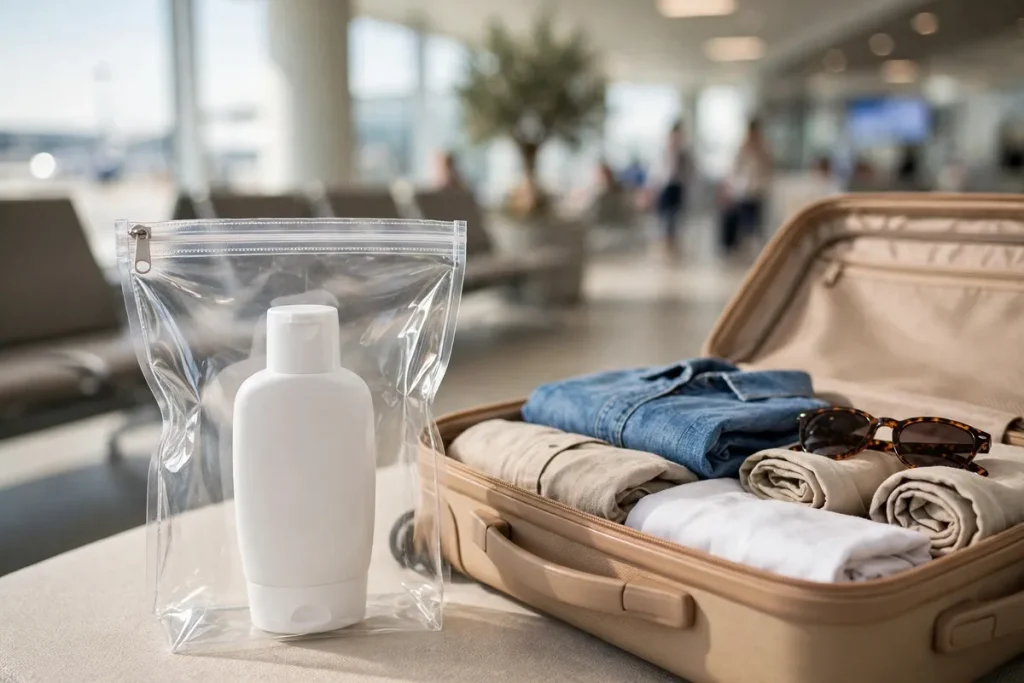
If you travel by plane, remember that sunblock counts as a liquid in hand luggage, so check the size limits before you pack. Our guide to can you bring sunscreen on a plane explains the rules for hand luggage and checked bags, and how to pack sunblock without leaks. Buy sunblock at your destination if you need a larger bottle, and check the expiry date on any bottle you have had for a while, because old sunblock is less effective.
Frequently Asked Questions
Does sunblock stop tanning completely?
No. Sunblock slows tanning and prevents burning, but it cannot block every UV ray. Some UV still reaches your skin and triggers melanin, so a gradual tan can still appear, especially after long hours in the sun.
What SPF should I use to avoid tanning?
Use at least SPF 30, and SPF 50 if you have fair skin or you will be in strong sun. Apply enough, reapply every two hours, and combine sunblock with shade, clothing and a hat. SPF alone will not stop tanning completely.
Can I still tan with SPF 50 on?
Yes, you can still tan with SPF 50, just more slowly. SPF 50 blocks about 98 percent of UVB rays, which means about 2 percent still get through. Over several hours, that is enough to cause some tanning, especially if you swim, sweat or miss a spot.
Does sunblock prevent vitamin D?
Sunblock reduces vitamin D production but does not stop it completely. Most people still make enough vitamin D from short everyday exposure. If you are concerned, ask your doctor about a supplement rather than skipping sun protection.
Is a tan a sign of healthy skin?
No. A tan is a sign that your skin has been damaged by UV light. There is no safe tan from the sun. If you like the look of tanned skin, a fake tan or gradual tanning lotion is a safer way to get it.
Bottom line: Sunblock does not stop tanning completely, but it slows it down and greatly reduces burning and long-term damage. For the best protection, use a broad-spectrum SPF 30 or higher, apply enough, reapply often, and combine it with shade, clothing and a hat.