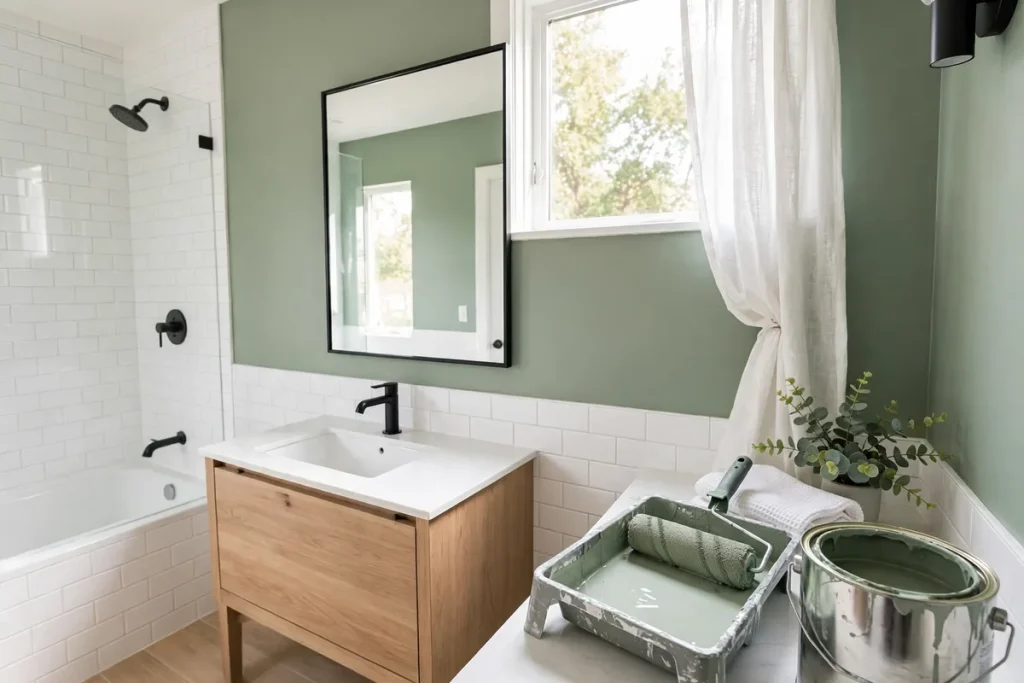

Bathrooms are the wettest rooms in the house, so choosing the best paint for bathrooms is about more than color. Steam from showers, splashes around the sink and constant humidity all test a paint finish every day. The right paint resists moisture, stands up to cleaning and helps keep mold at bay.
This guide explains which finishes work best in bathrooms, when mold-resistant paint is worth it, how to prep properly, and how ceilings differ from walls.
What Makes a Paint Good for Bathrooms?
A good bathroom paint forms a tough, slightly water-resistant film once cured. It should handle repeated wiping, resist steam and condensation, and bond well to properly prepared walls. Paints labeled for kitchens and bathrooms, or with mildew-resistant additives, are made for exactly these conditions.
The Best Finishes for Bathrooms
Satin finish
Satin is the most popular bathroom finish for good reason. It has a soft sheen, resists moisture well, and wipes clean without showing every brush mark. It suits walls in most family bathrooms.
Semi-gloss finish
Semi-gloss is shinier and even tougher. It is the best choice for trim, doors, and walls that get splashed often, such as around the tub or behind the sink. Its shine does highlight wall flaws, so prep matters.
Flat and matte finishes
Flat and matte paints look soft and hide imperfections, but they absorb moisture and are hard to clean. They are a poor choice for most bathrooms, except perhaps a rarely used guest powder room with good ventilation.
Mold-Resistant Paints
Mold-resistant paints contain additives that slow mold and mildew growth on the painted surface. They are worth considering for bathrooms with poor ventilation, no window, or a history of mildew. Remember that paint alone cannot fix a leak or a fan that never runs: fix moisture sources first, then paint.
Prep Steps That Make Paint Last
- Clean walls with a bathroom cleaner and let them dry fully.
- Remove any mold with a suitable cleaner and rinse well.
- Fill cracks and holes, sand smooth, and wipe away dust.
- Prime bare drywall, patched areas and stained spots with a quality primer.
- Caulk gaps around tubs, sinks and trim before the final coat.
Good prep is what separates a bathroom paint job that lasts years from one that peels in months. If painting is part of a bigger project, plan it alongside the rest of your home renovation so plumbing and tiling are finished first.
Ceiling vs Walls
Steam rises, so bathroom ceilings take the worst of the moisture. Use a ceiling paint made to resist moisture, or the same satin or semi-gloss finish as the walls. Flat ceiling paint is common elsewhere in the house, but in a bathroom it can absorb steam and stain. Keep the fan running during and after showers to protect both ceilings and walls.
Mistakes to Avoid
- Painting over damp or moldy walls without cleaning first.
- Skipping primer on new drywall or patched areas.
- Using flat paint in a steamy shower room.
- Showering before the paint has cured, which can leave marks.
- Ignoring ventilation: even the best paint needs airflow.
Once painted, keep walls clean with gentle, non-abrasive cleaners. Simple natural cleaning products are a good option for routine wipe-downs, since harsh scrubbing can dull the finish over time.
Frequently Asked Questions
What is the best paint finish for bathrooms?
Satin or semi-gloss. Both resist moisture, wipe clean, and hold up to steam far better than flat paint.
Do I need mold-resistant paint in a bathroom?
It helps in damp or poorly ventilated bathrooms, but good ventilation and proper prep matter just as much.
Can I use regular interior paint in a bathroom?
You can, but standard flat paint absorbs moisture and may peel or grow mold sooner than a bathroom-suitable finish.
Should bathroom ceilings get a different paint?
Yes, use a moisture-resistant ceiling paint or the same satin or semi-gloss finish as the walls, since steam collects there.
How long should bathroom paint dry before a shower?
Wait at least 24 hours before heavy steam exposure, and follow the recoat and cure times printed on the can.