
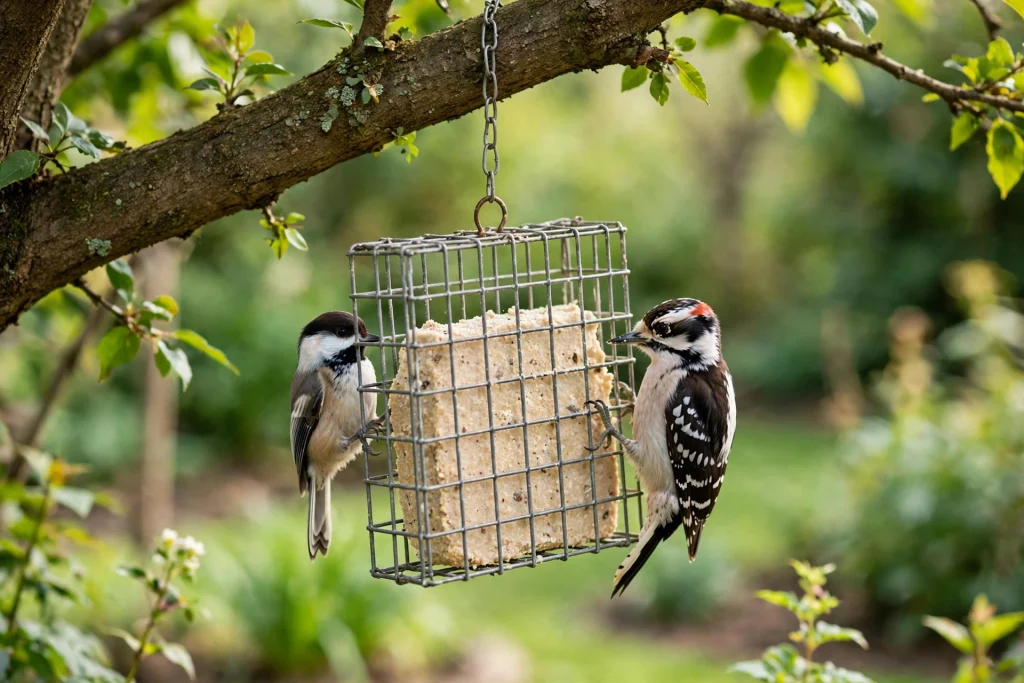

Suet for birds is a high-energy food made from animal fat, usually beef fat, mixed with seeds, nuts, dried fruit, or mealworms. It is one of the best foods you can offer garden birds, especially in autumn and winter, when insects are scarce and birds need extra energy to stay warm. In short, suet gives birds the fat and calories they need in cold weather, and it attracts woodpeckers, nuthatches, chickadees, and other birds that rarely visit seed feeders.
This guide explains what suet is, which birds eat it, how to choose and offer it, how to make your own suet cakes, and how to keep your feeders clean and safe. Whether you are new to bird feeding or you want to attract more species to your garden, suet is a simple and rewarding place to start.
What Is Suet for Birds?
Suet is the hard fat from around the kidneys and loins of cattle and sheep. In bird feeding, that fat is rendered, or melted and strained, then mixed with other ingredients and allowed to set into a solid block or cake. Birds eat the fat for energy, and they eat the seeds, nuts, and fruit mixed into it for extra nutrition.
Suet is different from seed, because it is mostly fat rather than carbohydrate. That makes it especially valuable in winter, when birds burn more energy just to keep warm. A small piece of suet can provide as much energy as a much larger amount of seed, which is why birds that eat suet can survive cold nights that would otherwise be very hard for them.
You can buy suet in several forms: as ready-made cakes that fit into a suet feeder, as balls or pellets, as loose pieces to put in a mesh feeder, or as raw suet from a butcher that you can render yourself. Ready-made cakes are the easiest option for most people, because they are clean, convenient, and available in many flavors.
Which Birds Eat Suet?
Suet attracts a different group of birds than seed feeders do. Woodpeckers are the most famous suet eaters, and they will often visit a suet feeder every day once they find it. Nuthatches, chickadees, titmice, wrens, and jays also eat suet regularly, and in some areas you may also see bluebirds, warblers, and even robins trying it.
Not every bird eats suet. Finches, sparrows, and doves prefer seed, and they may ignore a suet feeder altogether. That is normal, and it is one reason to offer both seed and suet in your garden: together, they will attract a much wider range of species than either one alone.
| Bird | How Often It Visits Suet | What It Likes |
|---|---|---|
| Downy woodpecker | Daily, in all seasons | Plain suet, suet with peanuts |
| Hairy woodpecker | Daily in winter | Plain suet, suet with insects |
| White-breasted nuthatch | Regular | Suet with seeds and nuts |
| Black-capped chickadee | Regular | Suet with seeds, berries, and nuts |
| Carolina wren | Occasional | Suet with mealworms or fruit |
| Blue jay | Occasional | Suet with peanuts |
Birds that eat suet often eat it in a different way than they eat seed. Woodpeckers cling to the feeder and peck at the suet, while nuthatches take a small piece and fly away to eat it elsewhere. Watching those different feeding styles is part of the fun of offering suet.
Types of Suet for Birds
Plain Suet Cakes
Plain suet cakes are made from rendered fat with very little added. They are the simplest option, and they are a good choice if you want to attract woodpeckers. Plain suet is also the least likely to attract unwanted visitors, because it has no sweet ingredients that draw in starlings or other birds that can crowd a feeder.
Suet With Seeds and Nuts
Suet cakes mixed with sunflower seeds, peanuts, and millet attract a wider range of birds, including chickadees and nuthatches. Peanut suet is especially popular, because many birds love peanuts, and the extra protein helps them through the winter. If you buy a mixed suet cake, check that the seeds are whole and not mostly filler, such as cracked corn, which many suet-eating birds will ignore.
Suet With Fruit and Berries
Suet with dried fruit, such as raisins, cranberries, or blueberries, can attract birds that eat fruit, including bluebirds and warblers. Birds also eat fresh berries in the garden when they are in season, and you can learn more about that in our guide to blueberry season. Fruit suet is a good choice in late winter and early spring, when natural fruit is scarce.
Suet With Insects
Suet with mealworms or other insects is a good choice for insect-eating birds, such as wrens and bluebirds. It is more expensive than plain suet, but it can attract species that would otherwise ignore your feeders. Insect suet is especially useful in spring, when birds are feeding their young and need extra protein.
How to Offer Suet for Birds
Offer suet in a feeder designed for it, rather than putting it loose on the ground. A suet cage feeder is a wire cage that holds a standard suet cake and lets birds cling to it while they feed. A suet log feeder is a log with holes filled with suet, which woodpeckers love. A mesh bag feeder is a cheaper option, but it can be harder for birds to use, and it can be messy.
Hang the feeder in a place that is easy for birds to reach but hard for squirrels and raccoons to reach. A pole with a baffle, or a feeder hung from a thin wire away from trees and fences, works well. Place the feeder near cover, such as a bush or a tree, so birds can retreat quickly if a hawk appears, but not so close that a cat can hide and pounce.
In warm weather, suet can melt and go rancid, so offer smaller amounts in summer, or use a no-melt suet cake that is made with a higher melting point. In winter, suet will stay solid for longer, and you can offer it freely. Check the feeder every few days, and remove any suet that looks mouldy, smells bad, or has been sitting out for a long time.
How to Make Your Own Suet Cakes
Making your own suet cakes is easy, and it lets you control the ingredients. You will need beef suet from a butcher, or a ready-made suet base, plus seeds, nuts, dried fruit, or mealworms.
Step 1: Render the Fat
Cut the suet into small pieces and melt it slowly in a pan over low heat. Do not let it boil. When it is fully melted, strain it through a fine sieve or cheesecloth to remove any solid bits. Let it cool for a few minutes, but do not let it set.
Step 2: Add the Dry Ingredients
Stir in your dry ingredients while the fat is still liquid. A good basic mix is one part fat to one part dry ingredients, by volume. Use sunflower seeds, chopped peanuts, millet, and dried fruit, and avoid bread, which has little nutrition for birds and can go mouldy quickly.
Step 3: Set and Store
Pour the mixture into a mould, such as a small plastic container or a muffin tray lined with cling film. Let it set in the refrigerator for a few hours, then remove it from the mould and store it in the refrigerator or freezer. Homemade suet will keep for a week in the refrigerator and for several months in the freezer.
When to Offer Suet
Suet is most useful in autumn and winter, when natural food is scarce and birds need extra energy. Start offering suet in late autumn, and keep it out through winter and into early spring. In summer, birds have plenty of insects and other natural food, so suet is less important, but you can still offer a small amount if you want to keep woodpeckers visiting your garden.
Be patient if birds do not find your suet feeder right away. It can take a few days, or even a few weeks, for birds to discover a new feeder, especially if they are not used to suet. Once one bird finds it, others will usually follow quickly. Keep the feeder full and clean, and the birds will come back.
Keeping Suet Feeders Safe and Clean
Clean your suet feeder every two weeks, or more often in warm weather, with hot water and a brush. Remove any old, mouldy suet, and let the feeder dry completely before you refill it. Dirty feeders can spread disease between birds, so cleaning is not just about appearance: it is about keeping the birds healthy.
Spilled suet on the ground can attract rats and mice, especially at night. To avoid that, use a feeder that catches crumbs, clean up spilled suet regularly, and do not put suet on the ground. If rats are a problem in your area, read our guide to rat and rodent repellent for ways to keep them away from your home and garden without harming the birds.
Also watch for squirrels, which love suet and can empty a feeder in a day. A squirrel baffle on the pole, or a suet feeder with a cage that lets small birds in but keeps squirrels out, can help. Do not use grease or oil on a pole to stop squirrels, because it can harm birds’ feathers if they touch it.
Frequently Asked Questions
What is suet for birds made of?
Suet for birds is made from rendered animal fat, usually beef fat, mixed with seeds, nuts, dried fruit, or insects. It is sold as solid cakes, balls, or pellets, and it can also be made at home from raw suet bought from a butcher.
Which birds eat suet?
Woodpeckers, nuthatches, chickadees, titmice, wrens, jays, and bluebirds are the birds most likely to eat suet. Finches, sparrows, and doves prefer seed and rarely visit suet feeders. Offering both seed and suet will attract the widest range of birds.
Can I offer suet in summer?
Yes, but offer smaller amounts and use a no-melt suet cake, because regular suet can melt and go rancid in warm weather. Suet is most useful in autumn and winter, when birds need extra energy and natural food is scarce.
How long does suet last outside?
A suet cake can last a few days to a few weeks, depending on the weather and how many birds visit it. In cold weather it will last longer. Remove any suet that looks mouldy, smells bad, or has been out for a long time, and clean the feeder before you refill it.
Is suet safe for birds?
Yes, suet is safe for birds when it is fresh and offered in a clean feeder. Use plain suet or suet made for birds, and avoid suet with added salt, sugar, or bread, which are not good for birds. Keep the feeder clean to reduce the risk of disease.
Suet for birds is a simple, inexpensive way to help garden birds through the cold months and to attract woodpeckers and other birds that rarely visit seed feeders. Choose a good suet cake, hang it in a safe, sheltered spot, keep it clean, and be patient while the birds find it. Once they do, you will have regular visitors all winter long.