
The best kids sewing kits turn a rainy afternoon into a real skill. Instead of a toy that is forgotten in a day, a good kit gives a child thread, felt, safe needles and a project they can actually finish — a small purse, a stuffed animal, a bookmark or a first cushion. If you are buying for a birthday, a classroom or your own child, the right kit matters far more than the prettiest box. In this guide, you will learn what to look for at each age, which types of kits are worth the money, how to keep sewing safe, and which first projects build confidence instead of frustration.
Short answer: for most children aged 5–8, choose a pre-cut felt kit with blunt plastic or metal needles, large holes and a simple project with clear picture instructions. For ages 9–12, choose a kit with real fabric, a small sewing machine option or hand-sewing projects that teach running stitch, backstitch and buttons. Avoid kits with tiny sharp needles for under-fives, kits with no instructions, and kits where the fabric is so thin it tears on the first stitch.
What Is a Kids Sewing Kit?
A kids sewing kit is a set of child-sized sewing supplies built around one or more beginner projects. A typical kit includes pre-cut fabric or felt shapes, thread in several colours, needles, stuffing, buttons, ribbons and step-by-step instructions. Some kits are hand-sewing only. Others include a small battery-powered sewing machine, a hoop, or a loom. The best kits are designed so a child can complete the first project in 30–60 minutes with a little help, and then use the leftover supplies for their own ideas.
Sewing is more than a craft. It builds fine motor skills, patience, planning and maths — measuring, counting stitches and following a sequence. It also gives children something screen-free to be proud of. A child who sews a small animal or a bag they can actually use learns that they can make useful things, not just buy them. That confidence is why teachers and parents keep coming back to sewing, even in a world full of digital toys.
Why Kids Sewing Kits Are Worth It
- Fine motor skills: Threading a needle, tying a knot and making even stitches strengthen the small muscles used for writing and drawing.
- Focus and patience: Sewing is slow by nature. Children learn to follow steps, fix a mistake and keep going.
- Creativity: Choosing colours, fabrics and decorations lets children make something that is truly theirs.
- Confidence: A finished project is proof of a new skill. Children wear, gift or display what they make.
- Screen-free time: Sewing is hands-on, calm and easy to do together at the kitchen table.
- Practical life skills: A child who can sew on a button or repair a seam has a skill they will use for life.
If your child also enjoys other hands-on learning, sewing pairs well with reading and play. For ideas on choosing learning toys that last, see our guide to the best educational toys for 3 year olds, and for older children, our tips on how to improve reading comprehension for kids — following written sewing instructions is itself great reading practice.
Kids Sewing Kits by Age: What to Choose
Age is the most important factor. A kit that is too hard will end in tears. A kit that is too easy will be boring. Use this table as a starting point, and adjust for your child — some five-year-olds are ready for real needles, while some eight-year-olds need a gentler start.
| Age | Best kit type | Needles and tools | Good first projects |
|---|---|---|---|
| 3–4 | Lacing cards and felt threading kits | Blunt plastic needles, thick yarn, large holes | Lacing animals, threading a felt shape |
| 5–6 | Pre-cut felt hand-sewing kits | Large blunt metal or plastic needles, pre-punched holes | Small stuffed animal, felt mask, bookmark |
| 7–8 | Felt and fabric hand-sewing kits | Child-size sharp needles with supervision, safety scissors | Purse, pencil case, simple doll clothes |
| 9–10 | Hand-sewing and beginner machine kits | Real hand needles, pins, small sewing machine | Cushion cover, tote bag, apron |
| 11–12+ | Beginner machine and pattern kits | Full beginner sewing tools, patterns | Skirt, shorts, quilt square, plush toy from a pattern |
Always check the age recommendation on the box, and supervise the first few sessions. Even a confident nine-year-old should learn needle safety, how to store pins, and what to do if they prick a finger before they sew alone.
Types of Kids Sewing Kits
Felt hand-sewing kits
These are the best starting point for most children. Felt does not fray, it is easy to cut, and pre-cut shapes mean a child can start sewing in minutes. Look for kits with thick felt, holes already punched, and enough stuffing to make the animal or object feel full. Felt kits are cheap, forgiving and ideal for ages 5–8.
Fabric hand-sewing kits
These kits use real cotton or other fabric, often with a pattern to cut out. They teach more realistic sewing, including pinning, cutting and turning a seam. They suit ages 8 and up, or younger children who have already finished a few felt projects. Check that the fabric is not too slippery — cotton is easier than satin or silk for a beginner.
Sewing machine kits for kids
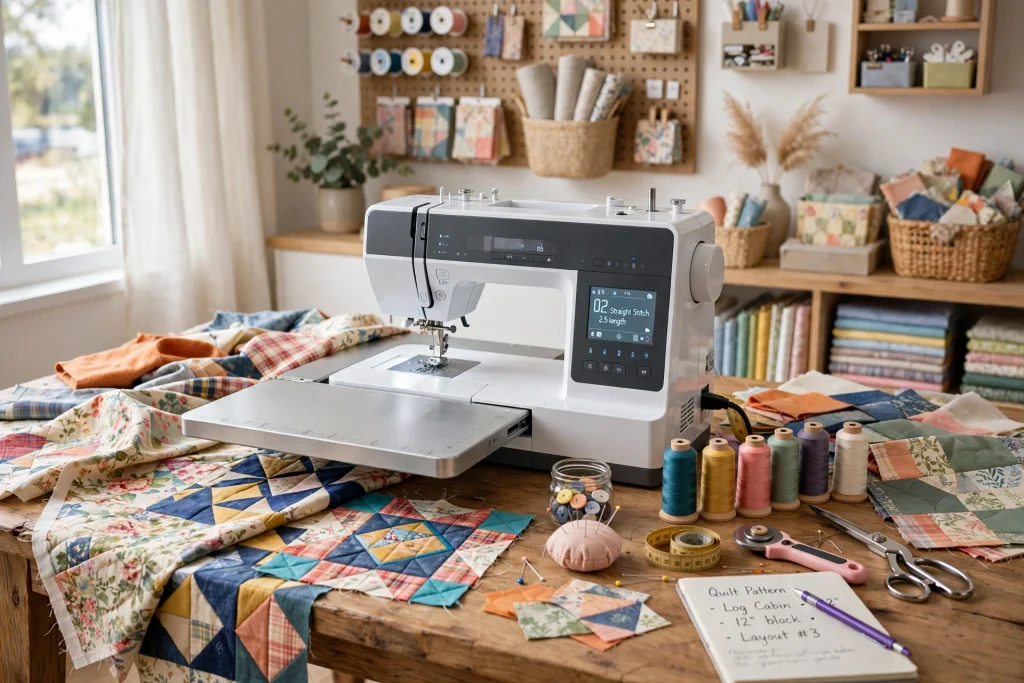
A child-size sewing machine can be a wonderful next step, but only if it is a real machine with a working needle, not a toy that only makes a chain stitch. Look for a machine with a finger guard, slow speed, simple threading and a foot pedal or button control. Start with straight lines on scrap fabric before any project. If you are considering a full-size machine later, our guide to quilting sewing machines explains the features that matter in a proper machine.
Embroidery and cross-stitch kits
Embroidery kits use a hoop, aida cloth and coloured thread to make a picture with cross-stitches. They are excellent for patience and counting, and they suit children aged 7 and up who like detail. Choose a kit with a large, simple pattern and a printed guide, not a tiny, complex design.
Doll clothes and plush toy kits
These kits let children make clothes for a doll or a soft toy of their own. They are motivating because the result is something to play with, but they can be fiddly. They work best for ages 8 and up, or as a second or third kit after a simpler felt project.
What to Look for When Buying a Kids Sewing Kit
- Clear picture instructions: Step-by-step photos or diagrams matter more than words for young children. Avoid kits with only a small block of text.
- Pre-cut pieces: For a first kit, pre-cut felt or fabric saves time and avoids a difficult cutting step.
- Enough thread and stuffing: Check reviews — many cheap kits include too little thread or stuffing to finish the project.
- Safe, child-size tools: Blunt needles for under-sevens, safety scissors, and a needle case or pincushion.
- Good quality felt or fabric: Thick felt and real cotton are easier to sew and look better when finished.
- A project that can be finished: A small animal, purse or cushion is better than a large quilt for a first attempt.
- Extra supplies: The best kits leave thread, buttons and fabric for free sewing after the main project.
- Age and safety labels: Check for choking-hazard warnings, and avoid small buttons for children under three.
Safety Tips for Sewing With Kids
Sewing is safe for children when a few simple rules are followed. Teach these before the first stitch, and repeat them until they become habits.
- Always sew sitting down, in good light, with a clean table.
- Keep needles in a pincushion or needle case, never loose on the table or in a pocket.
- Count needles and pins in and out. If one goes missing, stop and find it.
- Use safety scissors for younger children, and teach them to carry scissors point-down.
- Never run with a needle or scissors, and never sew while walking around.
- Keep small buttons, beads and pins away from babies and toddlers.
- Supervise the use of a sewing machine, and keep fingers away from the needle.
- Take breaks. Tired hands make mistakes, and sewing should be fun, not a test of endurance.
Easy First Sewing Projects for Kids
Start with projects that use only a running stitch and take less than an hour. Success early on is the key to a child wanting to sew again.
- Felt bookmark: Two rectangles, a running stitch around the edge, a ribbon at the top. Simple, useful and quick.
- Small stuffed animal: A pre-cut felt cat, fox or owl, stuffed and stitched closed. A classic first kit project.
- Drawstring bag: A rectangle of fabric, a simple seam and a ribbon drawstring. Useful for toys or treasures.
- Pillow or cushion: Two squares sewn together, stuffed, and closed. A child can use it every day.
- Simple purse: Felt, a button and a strap. Children love making something they can carry.
- Hand puppet: A felt puppet with button eyes. It combines sewing with storytelling and play.
Let the child choose colours and decorations, even if the result is not what you would pick. Ownership matters. A purple cat with green buttons is a triumph, not a mistake.
How to Teach a Child to Sew: A Simple First Session
- Start with threading: Show how to thread a needle, tie a knot, and pull the thread through without tangling it.
- Practise on scrap fabric: Let the child make a few running stitches on a piece of scrap before starting the real project.
- Demonstrate, then let them try: Show one stitch slowly, then hand the work to the child. Resist the urge to take over.
- Use a hoop or frame: A hoop holds fabric tight and makes stitching much easier for small hands.
- Keep sessions short: Twenty to thirty minutes is enough for a first session. Stop while it is still fun.
- Praise the effort, not just the result: Uneven stitches are normal. Celebrate that the child finished, and that the stitches hold.
Common Mistakes to Avoid
- Buying a kit that is too advanced, with tiny pieces and no clear instructions.
- Choosing a sewing machine that is really a toy and cannot sew real seams.
- Expecting a perfect result on the first try — sewing takes practice.
- Doing the hard parts for the child, so they do not learn the skill.
- Forgetting to buy extra thread, needles and stuffing for free projects after the kit is finished.
Frequently Asked Questions About Kids Sewing Kits
What age is best to start sewing?
Most children can start simple lacing and threading at age 3–4, and real hand-sewing with a blunt needle at age 5–6. By age 7–8, many children can sew a simple project with supervision. The right age depends on the child’s patience and fine motor skills, not just their birthday.
Are kids sewing kits safe?
Yes, when you choose an age-appropriate kit and supervise the first sessions. Use blunt needles for younger children, keep pins and small parts away from toddlers, and teach needle safety from the start. Always check the age label and safety warnings on the box.
What should be in a good kids sewing kit?
A good kit includes pre-cut fabric or felt, thread, needles, stuffing, buttons and clear picture instructions — plus enough supplies to actually finish the project. Extra thread, fabric and a needle case are a bonus.
Should I buy a hand-sewing kit or a sewing machine kit?
Start with hand-sewing for ages 5–8. It teaches the basic stitches and is cheaper and safer. Move to a real child-size sewing machine at age 9 or 10, once the child understands stitching and can follow safety rules.
What is the easiest first sewing project for a child?
A felt bookmark or a small stuffed animal is the easiest first project. Both use a simple running stitch, take less than an hour, and give the child something they can use or display straight away.
The Bottom Line
The best kids sewing kits are the ones a child can actually finish — pre-cut felt, clear picture instructions, safe needles and a project that takes less than an hour. Start simple, supervise the first sessions, praise the effort, and let the child choose colours and decorations. Sewing builds patience, fine motor skills and confidence, and it gives children a useful skill they can keep for life. Buy one good kit, not three cheap ones, and keep the leftover thread and fabric for the free projects that always follow a first success.