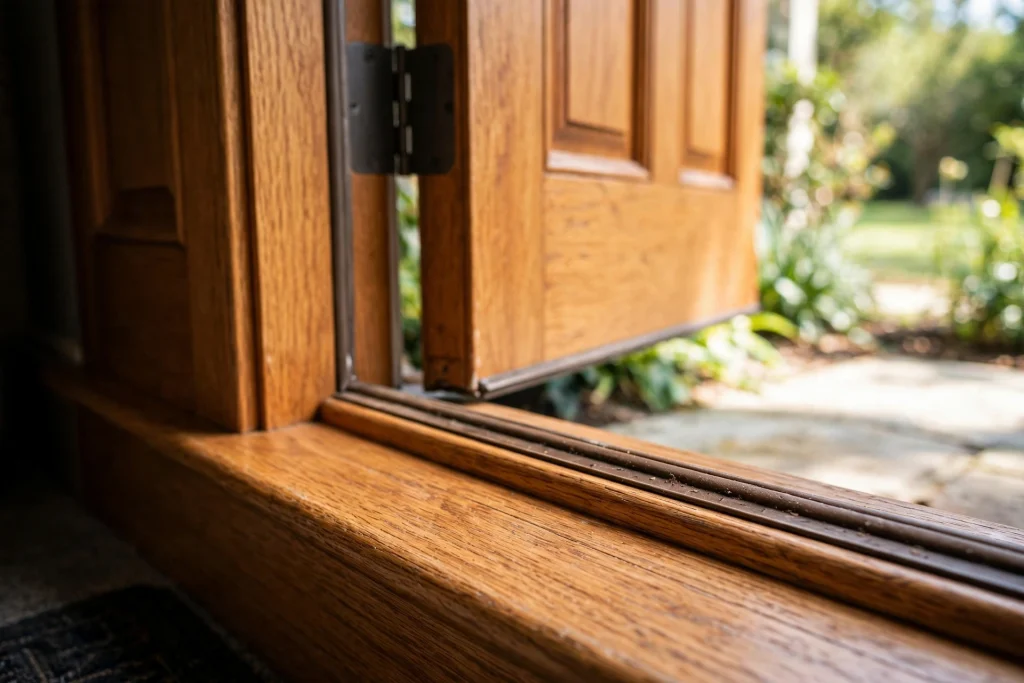

A door sill is the horizontal piece at the bottom of a door frame, also called a threshold, that covers the gap between the door and the floor. It keeps out rain, wind, dust, and insects, it helps the door close properly, and it protects the floor and the frame from wear. It is a small part of a door, but when it is worn, cracked, or fitted badly, you will notice draughts, water leaks, and a door that sticks or lets in cold air.
This guide explains what a door sill is, how it differs from a threshold, the main types and materials, how to measure one, what it costs, and how to replace it step by step. You will also find a comparison table, buying tips, care advice, and answers to the questions homeowners ask most often. Whether your sill is rotten, split, too high, or simply letting in a draught, this article will help you fix it with confidence.
What Is a Door Sill?
A door sill is the bottom part of a door frame, the piece you step over when you go through a doorway. On an exterior door, it is usually a raised strip made of wood, aluminium, stone, or composite material, with a slight slope so rain runs away from the house. On an interior door, it is often a flat strip, sometimes called a threshold, that covers the joint between two floors, for example between a hallway and a bathroom.
The words door sill and threshold are often used to mean the same thing, and in most homes they do. Strictly, the sill is the part of the frame that sits on the floor and forms the bottom of the doorway, while the threshold is the strip that covers the joint and that the door closes against. In practice, suppliers sell them as one part, and this guide uses door sill for both, except where the difference matters for buying or fitting.
A good door sill does three jobs. First, it seals the gap under the door, so wind and rain cannot get in. Second, it supports the door frame and keeps it square, so the door closes evenly. Third, it protects the edge of the floor, especially where two different floors meet, and it gives you a clean, finished look as you step through the doorway.
Types of Door Sills
Door sills come in several types, and the right one depends on whether the door is inside or outside, what the floor is made of, and how much traffic the doorway gets.
1. Exterior Door Sill
An exterior sill is fitted at the bottom of a front door, back door, or patio door. It is usually raised, sloped, and weatherproof, with a seal or a draught excluder that the door closes against. It is made to keep rain out, so it is often aluminium, hardwood, or stone, and it may have a drainage channel.
2. Interior Door Sill, or Threshold
An interior sill is a flat or low strip between two rooms, often where the floor changes from wood to tile or carpet to wood. It covers the join, protects the floor edge, and stops the door from catching on the floor. It is usually wood, laminate, or metal, and it is lower than an exterior sill so you do not trip over it.
3. Adjustable Door Sill
An adjustable sill has a movable top that can be raised or lowered with screws, so you can set the exact gap under the door. It is useful when a floor is uneven or when you have fitted a new carpet and the door now catches. Adjustable sills are common on exterior doors with a built-in draught seal.
4. Ramp and Accessible Door Sill
A ramp sill is low and gently sloped, so a wheelchair, a pram, or a trolley can pass over it easily. It is required in many accessible homes and public buildings, and it is a good choice if anyone in the house has limited mobility. It still seals the door, but the slope is much gentler than a standard exterior sill.
5. Stone and Marble Door Sill
A stone sill is made of marble, granite, or limestone, and it is common in bathrooms, kitchens, and entrance halls. It is hard-wearing, water-resistant, and easy to clean, and it looks smart where tile floors meet. Stone sills are heavier and more expensive than wood or metal, and they need to be cut to size.
| Type | Where it is used | Height | Best material | Main benefit |
|---|---|---|---|---|
| Exterior sill | Front, back, patio doors | Raised, sloped | Aluminium, hardwood | Keeps rain and wind out |
| Interior threshold | Between rooms | Low, flat | Wood, laminate | Covers floor joins |
| Adjustable sill | Exterior doors | Adjustable | Aluminium, composite | Sets exact door gap |
| Ramp sill | Accessible entrances | Very low | Aluminium, wood | Easy wheelchair access |
| Stone sill | Bathrooms, halls | Low to medium | Marble, granite | Hard-wearing, waterproof |
Door Sill Materials Compared
Wood is the traditional material for a door sill. Hardwood, such as oak, is strong and looks warm, but it can rot if it stays wet, so it needs paint or varnish and regular care. Softwood is cheaper but less durable, and it is best used indoors or under cover.
Aluminium is the most common material for a modern exterior sill. It does not rot, it is light, it is easy to cut, and it often comes with a built-in draught seal and a slope for rain. It can feel cold underfoot and it can dent, but it lasts a long time with little care. Composite sills, made of wood fibre and plastic, combine the look of wood with the weather resistance of plastic, and they are a good choice for a busy entrance.
Stone, marble, and granite sills are the most durable and the easiest to clean, which is why they are popular in bathrooms and entrance halls. They are cold underfoot, heavy, and more expensive, and they need a professional to cut and fit them. PVC sills are cheap and waterproof, but they can look plain and they may not suit a traditional house. When you choose a material, think about the weather, the floor, the look of the house, and how much care you are willing to give it. Sintered stone is another hard-wearing surface worth comparing if you are choosing a stone-like sill or worktop.
How to Measure a Door Sill
Measure the width of the doorway, from one side of the frame to the other, at the floor. Measure in three places, at the front, middle, and back of the sill, because old frames are rarely perfectly square. Use the largest measurement, and add a small amount for cutting, usually 5 to 10 millimetres. Next, measure the depth, from the inside edge to the outside edge, and measure the height, from the floor to the top of the sill. If the sill is sloped, note which way it slopes, so rain runs away from the house.
Also note the thickness of the door and the gap under it. The sill must be low enough for the door to close over it, but high enough to seal the gap. A gap of 3 to 5 millimetres under an interior door is normal, while an exterior door should close against a draught seal with almost no gap. Take a photo of the old sill, and take the measurements with you when you buy a new one. If you are replacing a sill in an entryway, our guide to choosing a mudroom bench can help you plan the whole entrance, including storage and seating.
Common Door Sill Problems
The most common problem is a draught under the door. This usually means the sill is worn, the draught seal is flat, or the door has dropped on its hinges. You can often fix a draught by fitting a new draught seal or adjusting the sill, without replacing the whole sill. A second problem is water coming in under an exterior door, especially in heavy rain. This can mean the sill is not sloped enough, the seal is damaged, or the drainage channel is blocked.
Wood sills can rot, especially at the ends where water sits, and they can split if they are nailed too close to the edge. Metal sills can dent and bend, and their screws can rust. Stone sills can crack if something heavy is dropped on them, and they can become slippery when wet. If the sill is rotten, split, or bent out of shape, it is usually better to replace it than to repair it, because a repair will not last and the draught or leak will return.
How to Replace a Door Sill
Replacing a door sill is a job most confident DIYers can do in a few hours, although a stone sill is best left to a professional. Start by removing the old sill: take off any screws or nails, use a pry bar to lift it gently, and check the floor and frame underneath for rot or damage. Repair any damaged wood before you fit the new sill, and clean the area so the new sill sits flat.
Next, cut the new sill to size, using your measurements, and test-fit it before you fix it in place. Check that the door closes over it without catching, and that the slope, if any, runs away from the house. Fix the sill with screws or adhesive, as the maker recommends, and seal the joints with a flexible sealant so water cannot get under it. Finally, paint or varnish a wood sill, fit a new draught seal if needed, and check the door closes evenly along its full length. If the gap under the door is still too large, an adjustable sill or a new draught excluder may solve it.
How Much Does a Door Sill Cost?
A door sill is inexpensive compared with a new door. A standard wood or PVC threshold usually costs $10 to $40, an aluminium exterior sill $30 to $100, and a stone or marble sill $80 to $250 or more, depending on size and stone. Labour, if you hire a joiner or a handyman, usually costs $100 to $300 for a standard replacement, depending on the door, the material, and whether the frame needs repair.
As a rough guide, a DIY replacement of a wood or aluminium sill often costs $30 to $100 in total, while a professional replacement, including the sill and labour, usually costs $150 to $400. A stone sill fitted by a professional can cost $300 to $600 or more. Always get a written quote, and ask whether the price includes the draught seal, the sealant, and painting or varnishing. Sealing gaps around windows and doors is a similar job, and our guide on how to reseal windows explains the sealants and techniques that work for sills too.
How to Care for a Door Sill
Keep a door sill clean and dry, and check it at least once a year. Sweep away dirt and leaves from an exterior sill, because they hold moisture against the wood or metal. Check the draught seal for wear, and replace it if it is flat or torn. Repaint or revarnish a wood sill every two to three years, or sooner if the finish is worn, because bare wood will rot quickly in rain.
For a stone sill, wipe it with a damp cloth and a mild cleaner, and avoid strong acids that can etch marble or limestone. For an aluminium sill, wash it with warm soapy water and check the screws for rust. Do not drag heavy furniture over a sill, and do not let water stand on it. With a little care, a good door sill can last 20 years or more, and an aluminium or stone sill can last even longer.
Frequently Asked Questions About Door Sills
What is the difference between a door sill and a threshold?
They are often used to mean the same thing. Strictly, the sill is the bottom part of the door frame, while the threshold is the strip the door closes against. Most suppliers sell them as one part.
How high should a door sill be?
An interior threshold should be low and flat, so you do not trip over it. An exterior sill is raised and sloped so rain runs away from the house, and the door should close against its draught seal with almost no gap.
Can I replace a door sill myself?
Yes, if you are comfortable with basic DIY. Remove the old sill, check for rot, cut the new sill to size, test-fit it, and fix and seal it. Leave stone sills to a professional, because they are heavy and need cutting.
Why is water coming in under my door?
The sill may not be sloped enough, the draught seal may be worn, or the drainage channel may be blocked. Check the seal and the slope first, and replace the sill if it is bent, split, or rotten.
How long does a door sill last?
A wood sill can last 10 to 20 years with regular paint or varnish, an aluminium sill 20 to 30 years, and a stone sill 30 years or more. Check the seal and finish once a year to keep it lasting longer.