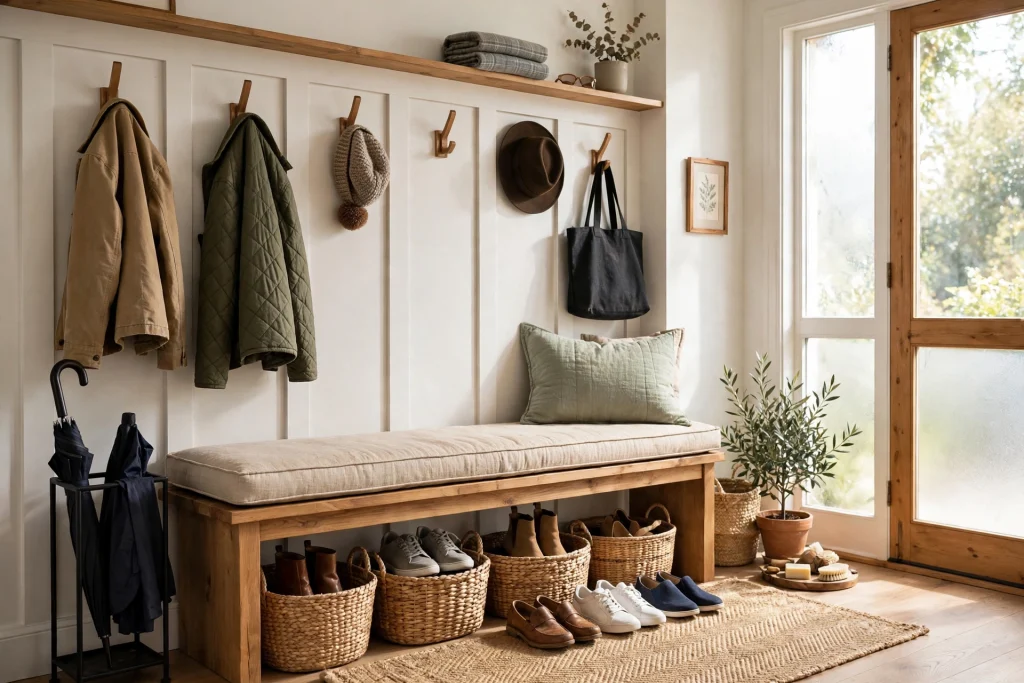

A mudroom bench is one of those pieces of furniture that quietly changes how a home works. It gives everyone a place to sit while putting on shoes, a spot for bags and coats, and a home for the clutter that usually ends up on the floor by the front door. Whether you have a dedicated mudroom or just a small entryway, the right mudroom bench can make the busiest part of your day feel calmer and more organized. In this guide, you will learn the types of mudroom benches, how to choose the right size and material, which storage features are worth paying for, and how to style it so it looks as good as it works.
What Is a Mudroom Bench?
A mudroom bench is a low seat, usually placed in an entryway or mudroom, designed for sitting while you put on or take off shoes. Most mudroom benches also include storage: open cubbies, baskets, drawers or a shelf underneath for shoes, and often hooks or a tall back panel above for coats, hats and bags. The idea is simple. Instead of shoes piling up by the door and coats draped over chairs, everything has a place, and the entryway stays tidy.
Mudroom benches come in many forms, from a simple wooden bench with a shelf below to a full built-in wall unit with lockers for each family member. Some are freestanding pieces you can buy and place in an afternoon. Others are custom built-ins that become part of the house. The best choice depends on your space, your budget and how much storage your household actually needs.
Types of Mudroom Benches
Freestanding bench
A freestanding mudroom bench is a standalone piece of furniture, usually a simple bench with a lower shelf or a couple of cubbies. It is the easiest option: you buy it, put it against the wall, and you are done. Freestanding benches work well in rentals and small entryways, and you can take them with you if you move. Their downside is that they offer less storage than built-ins and can look less finished in a large mudroom.
Built-in bench
A built-in mudroom bench is constructed into the wall, often as part of a larger unit with cubbies above and below. Built-ins use space efficiently, look custom and polished, and can be sized exactly to your wall. They are the most expensive option and the least flexible, since they cannot move with you, but for a forever home they are usually worth it.
Bench with cubbies
A bench with open cubbies underneath is the classic mudroom design. Each cubby holds a pair of shoes or a basket, so everything stays visible and easy to grab. Cubbies work best when they are sized to real shoes: about 12 to 14 inches wide and tall enough for boots. Add baskets inside the cubbies to hide clutter and keep the bench looking neat.
Hall tree bench
A hall tree combines a bench with a tall back panel that holds coat hooks, a shelf and sometimes a mirror. It is a good all-in-one solution for a small entryway, because it gives you seating, hanging space and storage in one footprint. Hall trees are usually freestanding, and they come in styles from farmhouse to modern.
Storage bench
A storage bench has a hinged or lift-up seat that opens to reveal a deep compartment inside. It is ideal for hiding bulky items such as winter gear, sports equipment and umbrellas. The trade-off is that you have to clear the seat to open it, so it works best for things you do not need every day.
How to Choose the Right Size
Size is the most common mistake people make with a mudroom bench, so measure before you shop. Start with the wall where the bench will go, and measure its width, then leave at least a few inches of clearance on each side so the bench does not crowd the door trim or block a walkway.
For seating, allow about 18 to 24 inches of bench width per person, so a family of four needs a bench roughly 6 to 8 feet wide, or two smaller benches. The seat height should be 17 to 19 inches, which is standard chair height and comfortable for putting on shoes. The seat depth should be 15 to 18 inches: deep enough to sit on comfortably, but shallow enough to leave walking space in front of it.
In a small entryway, a narrow bench is better than no bench at all. Look for benches that are 12 to 14 inches deep, and consider a wall-mounted folding bench or a slim bench with shoe storage underneath. In a large mudroom, you can go bigger, but leave at least 36 inches of clear floor space in front of the bench so people can stand, sit and move past each other without bumping into things.
Best Materials for a Mudroom Bench
A mudroom bench takes a beating: wet shoes, muddy boots, heavy bags and daily use. Choose a material that can handle it.
Solid wood. Oak, maple and pine are the most common choices. Wood is sturdy, easy to repair and looks better with age. It is also the easiest material to paint or stain to match your home. If you are choosing a wood finish, our guide to wood colors explains how undertones and stains change the way a piece looks in a room.
Painted MDF or plywood. Painted benches are popular because they are affordable, easy to clean and can match any wall color. Look for a durable, moisture-resistant paint finish, since a mudroom bench gets wet. A semi-gloss or satin finish wipes clean more easily than flat paint.
Metal. Metal benches are tough and modern, and they suit industrial and contemporary entryways. They can feel cold and hard, so they usually need a cushion on top. Metal frames also pair well with wood seats for a mixed-material look.
Upholstered seat. A padded seat cushion makes a bench far more comfortable, especially if you sit on it every day. Choose a performance fabric that resists stains and moisture, and pick a cushion with a removable, washable cover. Darker colors and patterns hide dirt better than light solids.
Storage Features Worth Having
The best mudroom bench is the one that stores what your family actually owns. Before you buy, think about what ends up by your door every day.
- Shoe cubbies or a lower shelf: the single most useful feature. Each person gets a cubby or a section of shelf for their everyday shoes.
- Baskets and bins: labeled baskets for gloves, hats, scarves and sports gear keep small items from scattering. Woven baskets look warm; plastic bins are easier to clean.
- Coat hooks: sturdy hooks at adult and child height mean coats actually get hung up. Use double hooks so each person has room for a coat and a bag.
- A top shelf: a shelf above the hooks holds baskets for out-of-season items and gives you a place for decor.
- Drawers: a drawer or two is useful for keys, dog leashes, sunscreen and other small items that otherwise end up on the bench itself.
- A boot tray: a tray under or beside the bench catches mud and water from wet boots and protects your floor.
Think of your mudroom as part of your home’s overall organization system, not as a separate problem. The same habits that keep a garage tidy apply here: give everything a labeled home and keep the tools for the job close at hand. If your entryway gear keeps spilling into other rooms, our guide to tool storage has ideas for keeping supplies organized that work just as well for mudroom baskets and bins.
Built-In vs Freestanding: Which Is Better?
Built-in mudroom benches look better and store more, but they cost more and cannot move. A custom built-in usually costs between $1,500 and $5,000 or more, depending on size, materials and whether you add lockers, drawers and a beadboard back. A freestanding bench costs anywhere from $100 to $1,500, and you can set it up in an afternoon.
Choose a built-in if you own your home, have a dedicated mudroom and want the most polished result. Choose freestanding if you rent, if your entryway is small or awkwardly shaped, or if you want the flexibility to rearrange. There is also a middle path: a freestanding bench with a wall-mounted hook rail and shelf above it gives you much of the built-in look for a fraction of the cost, and you can take it all with you when you move.
How to Style a Mudroom Bench
A mudroom bench should look like part of your home, not like a storage unit. Start with a cushion in a durable fabric, then add a couple of throw pillows in colors that match the rest of your entryway. Hooks should be practical first and decorative second, but there is no reason they cannot be both: black, brass or wood hooks all look good against a painted back panel.
Color matters more than people expect. A bench painted the same color as the trim looks built-in and tidy, while a bench painted a contrasting color becomes a feature. If you want a deep, modern look, consider painting the bench or the wall behind it in a rich shade such as the Benjamin Moore Color of the Year 2026, Silhouette AF-655, a warm espresso-charcoal that makes white trim and wood baskets stand out. Keep the walls light if the bench is dark, and vice versa, so the entryway does not feel heavy.
Finish with practical decor: a small mirror above the bench, a rug or runner that can handle dirt, a basket for umbrellas and a wall-mounted organizer for mail and keys. Keep the top of the bench clear enough to sit on. A styled mudroom is a used mudroom, and a bench buried under decor is not doing its job.
How Much Does a Mudroom Bench Cost?
Prices vary widely. A simple freestanding bench with a shelf costs $100 to $300. A mid-range bench with cubbies, hooks and a cushion costs $300 to $900. A large hall tree or a quality storage bench costs $900 to $1,500. Custom built-ins start around $1,500 and can reach $5,000 or more with lockers, drawers, lighting and high-end materials.
Do not forget the extras: baskets, hooks, cushions, a boot tray and paint can add $100 to $400 to any bench. If you are building your own, budget for lumber, hardware, paint and at least a full weekend of work. A DIY bench is often the best value, and there are many free plans online for simple cubby benches that a beginner can build.
Common Mistakes to Avoid
Buying before measuring. A bench that blocks a door swing or leaves no walking room is worse than no bench. Measure the wall, the door clearance and the walking path first.
Skipping the cushion. A hard wooden bench looks good in photos, but nobody wants to sit on it every morning. A cushion is the difference between a bench that gets used and one that becomes a shelf.
Too little shoe storage. Count the shoes your household actually wears, then add room for guests and seasonal pairs. A bench with two cubbies for a family of five will not stay tidy.
Hooks that are too high or too weak. Hooks should be reachable by the shortest person who uses them, and strong enough for a heavy winter coat and a full school bag. Cheap hooks pull out of the wall, so use proper anchors.
Ignoring the floor. A mudroom bench sits where wet shoes land. Make sure the floor underneath is waterproof or protected by a tray or rug, or the bench will be sitting in a puddle every rainy day.
Frequently Asked Questions About Mudroom Benches
How deep should a mudroom bench be?
A mudroom bench should be 15 to 18 inches deep for comfortable seating. In a very small entryway, a bench 12 to 14 inches deep can still work, especially if it has shoe storage underneath. Anything deeper than 20 inches will eat into your walking space.
How high should a mudroom bench seat be?
The seat should be 17 to 19 inches high, which is standard chair height. This is comfortable for sitting to put on shoes, and it leaves enough room underneath for cubbies or a shoe shelf. If you add a thick cushion, the bench frame itself can be an inch or two lower.
What is the best material for a mudroom bench?
Solid wood or painted plywood are the best all-round choices: sturdy, easy to clean and easy to repaint. Add a cushion with a washable, stain-resistant cover for comfort. Metal frames work well in modern homes, but they need a cushion to be comfortable.
Can I put a mudroom bench in a small entryway?
Yes. Choose a slim bench 12 to 14 inches deep, or a wall-mounted folding bench, and pair it with a few wall hooks and a small shoe tray. Even a narrow bench with one cubby per person makes a small entryway far more functional.
Should a mudroom bench be built-in or freestanding?
Built-ins look better and store more, but they cost more and cannot move. Freestanding benches are cheaper, flexible and good for rentals. For most homes, a freestanding bench with a wall-mounted hook rail gives you most of the built-in look for much less money.
Conclusion
A mudroom bench is a small investment that pays off every single day. It gives your family a place to sit, your shoes and coats a place to live, and your entryway a chance to stay tidy. Measure your space, choose a size and material that can handle daily use, add the storage your household actually needs, and style it so it feels like part of your home. Done well, a mudroom bench turns the busiest corner of the house into one of the calmest.