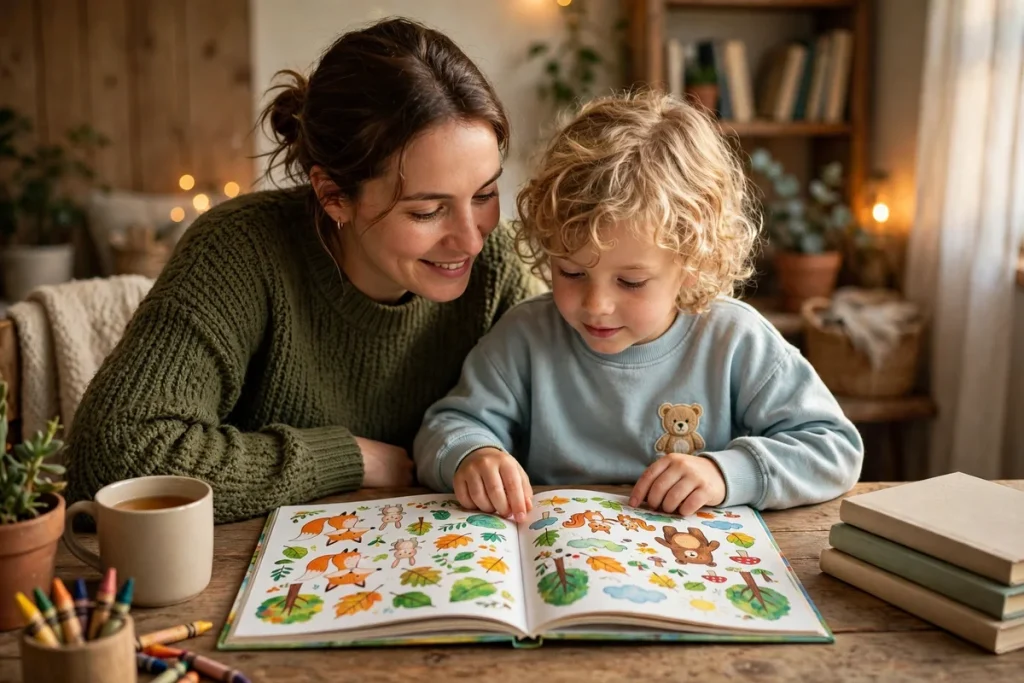

Three is a wonderful age for learning. At three, children are curious, talkative, and busy: they ask questions all day, they pretend, they build, they sort, and they love to show you what they can do. The best educational toys for 3 year olds support that natural curiosity, without turning play into a lesson or a test.
This guide explains what to look for in a toy for a three-year-old, which skills different toys develop, and the pros and cons of the most popular types. It covers building toys, puzzles, pretend play, art, music, and early maths and language toys, so you can choose toys that your child will actually enjoy and learn from.
What Makes a Toy Educational for a 3 Year Old?
An educational toy for a three-year-old should be open-ended, safe, and matched to what a child at this age can do. At three, most children can build a tower of nine or ten blocks, complete a simple puzzle, draw a circle, copy a line, and follow two-step instructions. They are learning colours, shapes, numbers, and letters, but they learn best by handling, sorting, and talking, not by sitting still and being taught.
Look for toys that can be used in more than one way, that encourage talking and pretend play, and that grow with your child. A set of blocks, for example, can be a tower today, a house tomorrow, and a road next week. A toy that only does one thing, with lights and sounds, is often less educational than a simple toy that leaves room for imagination.
How to Choose Educational Toys for 3 Year Olds
Safety First
Check the age recommendation on the box, and avoid small parts that could be a choking hazard. Choose toys made from non-toxic materials, with no sharp edges, and check that batteries are in a compartment that needs a screwdriver to open. If a toy is second-hand, check it carefully for damage, missing parts, and old batteries.
Match the Toy to Your Child
Every three-year-old is different. Some love building, some love drawing, some love pretending to be a doctor or a shopkeeper, and some love music and movement. Choose toys that match your child’s interests, as well as toys that gently stretch them in new directions. If your child is learning to talk, choose toys that encourage conversation, such as a play kitchen or a farm set. If your child loves numbers, choose a counting toy or a simple board game.
Less Is More
Children do not need a room full of toys to learn. A smaller number of good, open-ended toys, rotated every few weeks, is often better than a large number of toys that are all out at once. Put some toys away, and bring them back later: they will feel new again, and your child will play with them in new ways.
Best Educational Toys for 3 Year Olds by Type
Building Blocks and Construction Toys
Wooden blocks, large interlocking bricks, and magnetic tiles are among the best educational toys for three-year-olds. They develop fine motor skills, spatial awareness, problem-solving, and early maths, as children count blocks, sort them by size and colour, and learn about balance and stability.
Pros: open-ended, durable, and good for many ages.
Cons: they need space to store, and small sets can be frustrating if there are not enough pieces to build with.
Puzzles
Simple wooden puzzles with knobs, jigsaw puzzles with 12 to 24 large pieces, and shape sorters help children learn shapes, colours, and problem-solving. Puzzles also build patience and concentration, and they give a clear sense of achievement when the last piece goes in.
Pros: inexpensive, quiet, and good for focused play.
Cons: pieces can be lost, and a puzzle that is too hard can be frustrating.
Pretend Play Toys
Play kitchens, doctor’s kits, farm sets, dolls, and dressing-up clothes help children develop language, social skills, and imagination. Pretend play is how three-year-olds practise real life: they cook, they care for a baby, they shop, and they talk through what they are doing. For ideas on supporting reading through play and stories, see our guide on how to improve reading comprehension for kids.
Pros: excellent for language and social development, and children can play for a long time.
Cons: play sets can take up a lot of space, and small accessories can be lost.
Art and Craft Toys
Crayons, washable felt-tip pens, watercolours, play dough, and simple craft kits help children develop fine motor skills, creativity, and colour recognition. Play dough is especially good for strengthening little hands, which helps with later writing. Keep art supplies washable at this age, and supervise messy activities.
Pros: creative, calming, and good for fine motor skills.
Cons: messy, and supplies need regular replacing.
Music Toys
Simple instruments such as a xylophone, a drum, a tambourine, or a recorder introduce rhythm, listening, and coordination. Music also helps with language, because songs teach new words and the rhythm of speech. Choose instruments that are sturdy and not too loud for you.
Pros: fun, social, and good for listening and rhythm.
Cons: noisy, and cheap instruments can sound bad and put children off music.
Early Maths and Counting Toys
Counting bears, number puzzles, abacuses, and simple board games with a dice help children learn numbers, counting, and taking turns. At three, the aim is to count to ten, recognise a few numbers, and understand simple ideas such as more and less, not to do sums. Keep it playful, and praise effort rather than the right answer.
Pros: build early maths confidence and turn-taking.
Cons: toys that are too advanced can make maths feel hard.
Books and Story Toys
Picture books are still one of the best educational toys for a three-year-old. Books with lift-the-flap pages, rhymes, and repetitive stories help children learn language, listening, and the habit of reading. Read together every day, talk about the pictures, and let your child tell the story in their own words. Good note-taking and learning habits start early, and the same principles that help older children learn apply here: for older learners, see our guide to note-taking methods.
Toys to Be Careful With
Be careful with screen-based toys that claim to teach a lot but mainly keep a child quiet. A little screen time is fine for most families, but it should not replace hands-on play, talking, and outdoor time. Also be careful with toys that do all the playing for the child, with lights and sounds at the press of a button. The best toys are the ones where the child does the thinking, not the toy.
Check the batteries in electronic toys regularly, and turn off the sound if it is too loud. If a toy is very noisy, it can be tiring for a child as well as for you, and it can make it harder to hear and talk.
How to Play and Learn Together
You do not need to teach a lesson every time your child plays. Sit with them, talk about what they are doing, ask questions, and follow their lead. If they are building a tower, count the blocks together. If they are playing shop, help them count out pretend money. If they are drawing, talk about the colours and shapes. Short, relaxed play together is more useful than a long, structured activity that your child does not enjoy. Remember that memory and learning grow through repetition and through talking about what happened, and these are skills you can build at any age.
Frequently Asked Questions About Educational Toys for 3 Year Olds
What is the best educational toy for a 3 year old?
There is no single best toy, but building blocks, simple puzzles, and pretend play sets are strong choices for most three-year-olds. They are open-ended, they develop several skills at once, and children can use them in many different ways.
How many educational toys does a 3 year old need?
Less than you might think. A few good, open-ended toys, rotated regularly, are better than a large number of toys that are all out at once. Aim for a mix of building, pretend play, art, and books, rather than a room full of electronic toys.
Are electronic learning toys good for 3 year olds?
They can be useful in moderation, but they should not replace hands-on play, talking, and reading together. Choose electronic toys that ask your child to do something, such as answer a question or solve a simple problem, rather than toys that just play sounds and lights.
What toys help a 3 year old learn to talk?
Pretend play toys, such as a play kitchen, a farm set, or dolls, are good for talking, because they give children something to talk about. Picture books, songs, and rhymes also help, and the most important thing is to talk with your child during play, not just to them.
How do I know if a toy is safe for a 3 year old?
Check the age recommendation, avoid small parts and sharp edges, and choose non-toxic materials. If a toy has batteries, make sure the compartment is secured with a screw. Check second-hand toys carefully for damage and missing parts.
Conclusion
The best educational toys for 3 year olds are simple, open-ended, and fun: blocks to build with, puzzles to solve, pretend play to talk through, and art and music to explore. Choose toys that match your child’s interests, keep safety in mind, and play together when you can. At three, learning happens through play, conversation, and repetition, and the right toys give your child plenty of chances to do all three.