
If every drawer sticks, every closet is full, and every flat surface seems to collect things, you do not need a bigger home. You need a decluttering checklist that tells you exactly where to start, what to check, and when to stop. This guide walks you through your home room by room, so you can make steady progress without emptying the whole house at once.
A good decluttering checklist is not a list of things to throw away for the sake of it. It is a decision tool. For each item, you decide whether it earns its space, whether someone else could use it, or whether it is simply taking up room. Work in short, focused sessions, keep a bag for donations and a bag for trash nearby, and finish one area before you start the next.
Before You Start: Set Up for Success
Preparation makes decluttering faster and far less stressful. Gather three bags or boxes and label them Keep, Donate, and Toss. Add a fourth box for items that belong in another room. Put on music or a podcast, set a timer, and give yourself permission to stop when the timer ends. Progress matters more than perfection.
- Choose one room, or even one drawer, as your starting point.
- Take a quick “before” photo so you can see your progress.
- Keep cleaning supplies nearby, but do not turn decluttering into a deep clean.
- Handle each item once when you can, and make a decision right away.
- Move donations and trash out of the room before you start the next area.
The Keep, Donate, Toss Decision Rule
When you hesitate over an item, ask three questions in order. Have I used it in the past year? Does it work, fit, and suit my life now? Would I buy it again today? If the answer to the first two questions is no, it is a strong candidate for donation or disposal. If it is broken, stained, incomplete, or unsafe, toss or recycle it rather than passing the problem to someone else. Items in good condition that you no longer use are ideal donations.
Sentimental items deserve a different rule. Keep a small, defined keepsake box for each person, and choose the best example rather than keeping everything. Photograph bulky keepsakes, such as children’s artwork or old trophies, before letting them go. The memory is not in the object alone, and a photo is much easier to store.
Room-by-Room Decluttering Checklist: Times and Decision Rules
Use this table to plan your week. The times below are realistic for an average room that has not been decluttered recently. Small homes may take less time, while larger or very full rooms may take longer. Split a long session into two shorter ones if needed.
| Room | Realistic time | Start here | Keep / Donate / Toss rule |
|---|---|---|---|
| Entryway | 30 minutes | Hooks, shoe storage, and the front table | Keep one coat and one pair of shoes per person; donate extras; toss broken umbrellas and worn-out bags. |
| Living room | 1 to 2 hours | Surfaces, media storage, and seating | Keep what you use weekly; donate duplicate decor and unread books; toss damaged remotes, cables, and magazines. |
| Kitchen | 2 to 3 hours | Counters, pantry, and one cabinet at a time | Keep tools used monthly; donate duplicates in good condition; toss expired food, chipped dishes, and broken gadgets. |
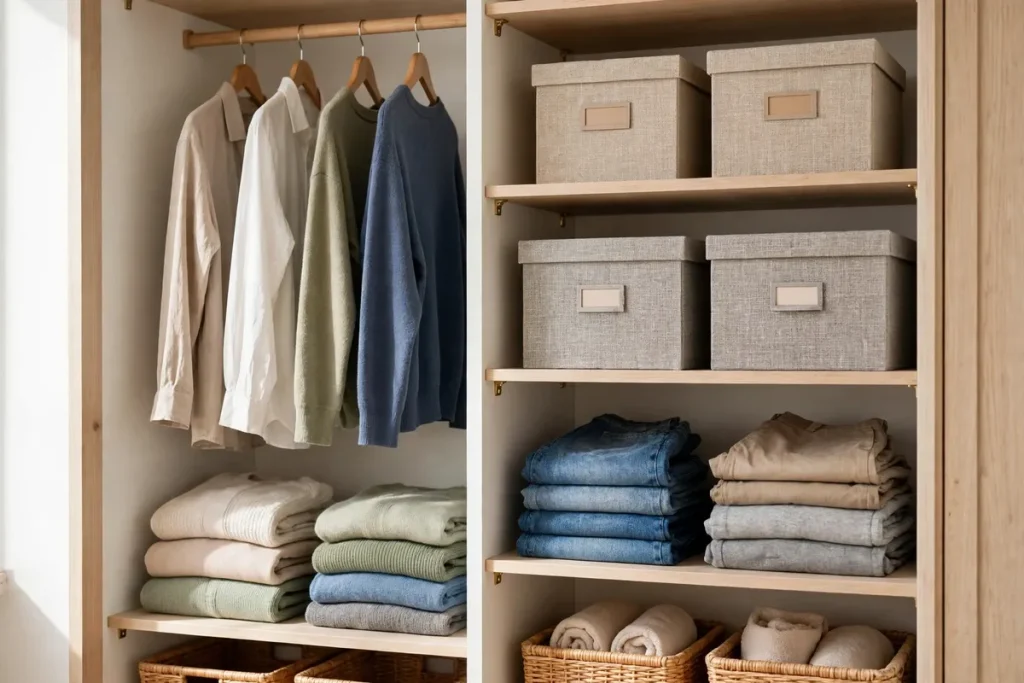
| Bedroom and closet | 2 to 3 hours | Closet, dresser, and under the bed | Keep clothes that fit and suit you now; donate wearable extras; toss stained, stretched, or single socks. |
| Bathroom | 45 minutes to 1 hour | Medicine cabinet, drawers, and under the sink | Keep daily essentials; donate unopened extras; toss expired products and dried-out cosmetics. |
| Home office | 1 to 2 hours | Desk, paper piles, and drawers | Keep active files and working supplies; donate usable extras; shred or recycle outdated paper. |
| Garage and storage | 3 to 4 hours | One wall or one shelf at a time | Keep tools and seasonal items you use; donate working extras; toss broken, rusted, or leaking items. |
Room-by-Room Checklist
Entryway
- Remove coats, shoes, and bags that do not belong by the door.
- Clear the console table, and keep only keys, mail, and one small tray.
- Recycle old mail, flyers, and expired coupons.
- Check umbrellas, hats, and gloves, and discard anything damaged.
- Leave space for guests, and add one hook per family member if needed.
Living Room
- Clear coffee tables, shelves, and side tables of everything that has no home.
- Sort books, games, and media, and donate duplicates or items no one enjoys.
- Untangle cables, label the ones you keep, and recycle broken chargers.
- Remove decor that you no longer like, and keep only pieces that suit the room.
- Return blankets, toys, and hobby supplies to their proper storage spots.
Kitchen
The kitchen is often the hardest room because it holds tools, food, and paper in the same space. Work cabinet by cabinet, and resist the urge to buy new storage until you know what remains. Once the counters are clear, cabinet door storage can help you use the inside of a door for wraps, spices, or cleaning tools without adding clutter to the worktop. If decluttering reveals worn cabinets, poor layout, or a lack of storage, that is also useful information before you consider a larger kitchen remodeling project.
- Clear counters, and keep only daily appliances within reach.
- Check the pantry for expired food, stale snacks, and duplicate staples.
- Match containers with lids, and recycle cracked or lidless pieces.
- Sort utensils, and donate duplicates or tools you never use.
- Clean out the junk drawer, and keep only useful, working items.
- Review mugs, glasses, and baking pans, and keep a realistic number.
Bedroom and Closet
- Try on clothes you are unsure about, and keep only what fits and feels good.
- Donate wearable clothes, shoes, and accessories you have not worn in a year.
- Sort bedding, and keep two sets per bed plus one spare if space allows.
- Clear nightstands, and remove chargers, books, and papers that have piled up.
- Check under the bed, and store only seasonal items or luggage there.
- Organize jewelry and accessories, and discard broken pieces.
Bathroom
- Discard expired medicine, sunscreen, and personal care products.
- Keep one of each daily product, and store backups in a single box.
- Sort makeup and hair tools, and toss anything dried out or broken.
- Review towels, and keep enough for each person plus a few guests.
- Clear the counter, and return only daily essentials to the surface.
Home Office and Paper
- Sort paper into action, file, shred, and recycle piles.
- Scan important documents, then shred or file the originals as needed.
- Test pens, markers, and chargers, and discard anything that does not work.
- Clear the desk surface, and keep only your computer, lamp, and current work.
- Organize cords, and label chargers for phones, laptops, and cameras.
Garage and Storage Areas
- Work one wall at a time so you can still move around safely.
- Group similar items together, such as tools, sports gear, and holiday decor.
- Donate working tools, toys, and equipment you no longer use.
- Dispose of paint, chemicals, and batteries through local hazardous waste programs.
- Label every box clearly, and store the most-used items within easy reach.
After Decluttering: Keep Your Home Tidy
Decluttering is only the first step. Without a simple routine, clutter returns quickly. Give every new item a home as soon as it enters the house, and follow a one-in, one-out rule for clothes, shoes, toys, and kitchen tools. Spend ten minutes each evening returning items to their places, and do a quick monthly check of the entryway, pantry, and bathroom cabinet. These small habits protect the work you have already done.
If you feel stuck, start smaller. One drawer, one shelf, or fifteen minutes is enough. A tidy home is not about owning almost nothing. It is about keeping the things that support your daily life and letting go of the rest, one clear decision at a time.
Frequently Asked Questions
How long does it take to declutter a whole house?
Most homes take several sessions spread over one to two weeks. Using the table above, a focused room takes 30 minutes to four hours, depending on its size and how full it is.
Where should I start decluttering?
Start with a small, visible area, such as the entryway or one bathroom drawer. An early win builds momentum and makes larger rooms feel less overwhelming.
What is the keep, donate, toss rule?
Keep items you use, that work, and that fit your life now. Donate usable items in good condition. Toss or recycle items that are broken, expired, stained, or unsafe.
How do I declutter sentimental items?
Set a small keepsake limit, keep the best example from a collection, and photograph bulky items before letting them go. Decide on sentimental items last, when your decision skills are warmed up.
What should I do with donations after decluttering?
Bag donations immediately, label them, and drop them off within a few days. Leaving bags by the door for weeks often leads to items drifting back into the home.