
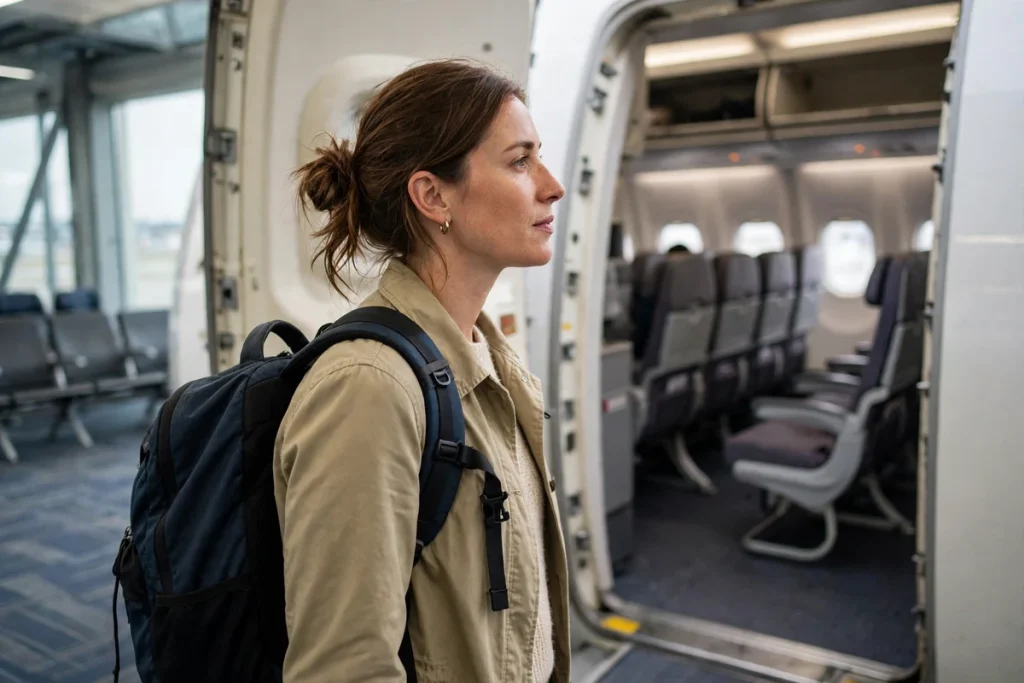

Yes, in most cases a backpack can count as a personal item, but only if it fits the airline’s size limits and fits under the seat in front of you. The short answer to the question is a backpack a personal item is: it depends on the backpack and the airline. A small, soft daypack usually qualifies. A large, overstuffed hiking backpack usually does not, and it may be counted as a carry-on bag instead.
This guide explains the difference between a personal item and a carry-on, typical size limits, how major airlines differ, and how to pack so your backpack passes at the gate without extra fees.
Personal Item vs Carry-On: What Is the Difference?
Most airlines allow one carry-on bag that goes in the overhead bin, plus one smaller personal item that goes under the seat. A personal item is meant for things you need during the flight, such as a laptop, book, phone charger, snacks, and travel documents. It must be smaller than a carry-on, and it must fit completely under the seat.
A backpack is not automatically a personal item just because it is a backpack. Airlines judge by size, not by style. If your backpack is small enough to fit under the seat, it can be your personal item. If it is too tall, too thick, or too rigid to fit, the airline may require you to put it in the overhead bin as your carry-on, or check it at the gate.
Typical Personal Item Size Limits
Size limits vary by airline, but a common personal item limit is around 18 x 14 x 8 inches, or about 45 x 35 x 20 centimetres. Some airlines are more generous, and some budget airlines are stricter. Always check your specific airline and fare type before you fly, because the same backpack can be fine on one airline and too large on another.
Measure your backpack when it is packed, not empty, and include wheels, handles, and outer pockets. A soft backpack that can be squashed slightly has an advantage over a rigid framed pack. If you are close to the limit, remove bulky items or move them to your carry-on before you reach the gate.
How Major Airlines Compare
The table below gives a general guide only. Airline rules change, and basic economy, budget, and international fares can differ from standard fares. Always confirm the limit for your exact booking on the airline’s website before you travel.
| Airline type | Typical personal item size | Notes |
|---|---|---|
| Major US airlines | About 18 x 14 x 8 inches | Must fit under the seat; one carry-on also allowed |
| European full-service | About 40 x 30 x 15 centimetres | Often includes a small bag plus a carry-on |
| Budget airlines | Often 40 x 20 x 25 centimetres | Stricter checks and fees for oversize bags |
| Low-cost long-haul | Varies widely | Personal item may be the only free bag on basic fares |
Note that some airlines count a small backpack as a personal item only if you do not also bring a large handbag or laptop bag. In general, you get one personal item in addition to a carry-on, not two personal items. If you bring a backpack and a purse, the airline may ask you to combine them into one bag.
What Counts as Too Big?
A backpack is likely too big as a personal item if it is taller than about 18 inches when packed, if it cannot be squashed under a seat, if it has a rigid frame that sticks out, or if it is so full that the zips strain. Large school backpacks, hiking packs of 40 litres or more, and camera backpacks with padded dividers often fall into this category.
If your backpack is too big, you have options: use it as your carry-on and bring a smaller personal item, transfer essentials to a small daypack, or check the backpack and keep valuables in a smaller bag. Gate-checking is usually free if the airline requires it, but a forced check at the gate can delay you and separate you from items you wanted during the flight.
How to Pack a Backpack as a Personal Item
Choose a backpack of about 20 to 25 litres with a soft, unstructured shape. Pack heavy items close to your back, keep liquids in a clear bag for security, and put valuables, medication, and documents in easy-to-reach pockets. Wear your bulkiest jacket instead of packing it, and use packing cubes to keep clothes flat and compact.
Before you leave home, test the fit. Put the packed backpack under a chair or in a box of the airline’s size limit. If it fits easily, you are ready. If you have to force it, repack. At the airport, keep your personal item accessible, because you will need it during the flight after your carry-on is stowed overhead.
Packing for a flight also means knowing what you can bring on board. For example, if you are deciding which toiletries and small items to pack, our guide on Can I Bring Nail Polish on a Plane? TSA Rules Explained explains how liquid and toiletry rules apply to items you might carry in a personal item.
What to Do If Your Backpack Is Stopped at the Gate
Stay calm and polite. Ask whether the backpack can go as your carry-on instead, or whether you can move items to a smaller bag. If you must gate-check it, take out valuables, medication, electronics, and documents first. Keep your boarding pass and ID with you, and label the bag clearly. Gate agents are more flexible when you are organised and not blocking the boarding queue.
Frequently Asked Questions
Is a backpack a personal item on most airlines?
Yes, a small backpack that fits under the seat usually counts as a personal item. A large or rigid backpack is more likely to be counted as a carry-on or checked bag.
Can I bring a backpack and a carry-on suitcase?
Yes, on most standard fares you can bring one carry-on for the overhead bin plus one personal item, such as a small backpack, under the seat. Check your fare, because some basic fares allow only a personal item.
What size backpack fits under an airplane seat?
A backpack of about 18 x 14 x 8 inches or smaller usually fits, but under-seat space varies by aircraft. Measure your packed backpack and check your airline’s limit before flying.
Does a laptop backpack count as a personal item?
Often yes, if it is a slim laptop backpack that fits under the seat. A large, padded camera or gaming backpack may be too big, so check its packed dimensions.
Can I bring a backpack and a handbag as well?
Usually no. Airlines normally allow one personal item in addition to a carry-on, so a backpack plus a handbag may be counted as two personal items. Combine them into one bag if possible.
The Bottom Line
A backpack can be a personal item when it is small, soft, and fits under the seat, and when you have not already used your personal item allowance on another bag. Measure your packed backpack, check your airline’s exact limit, and pack with the flight in mind. A little preparation at home is much easier than repacking at the gate, and it helps you start your trip calmly, with everything you need within easy reach.



Pingback: TSA 3-1-1 Rule Explained: Liquids, Quantities and Exceptions
Pingback: Frequent Flyer Programs Explained: How Miles, Points and Status Work