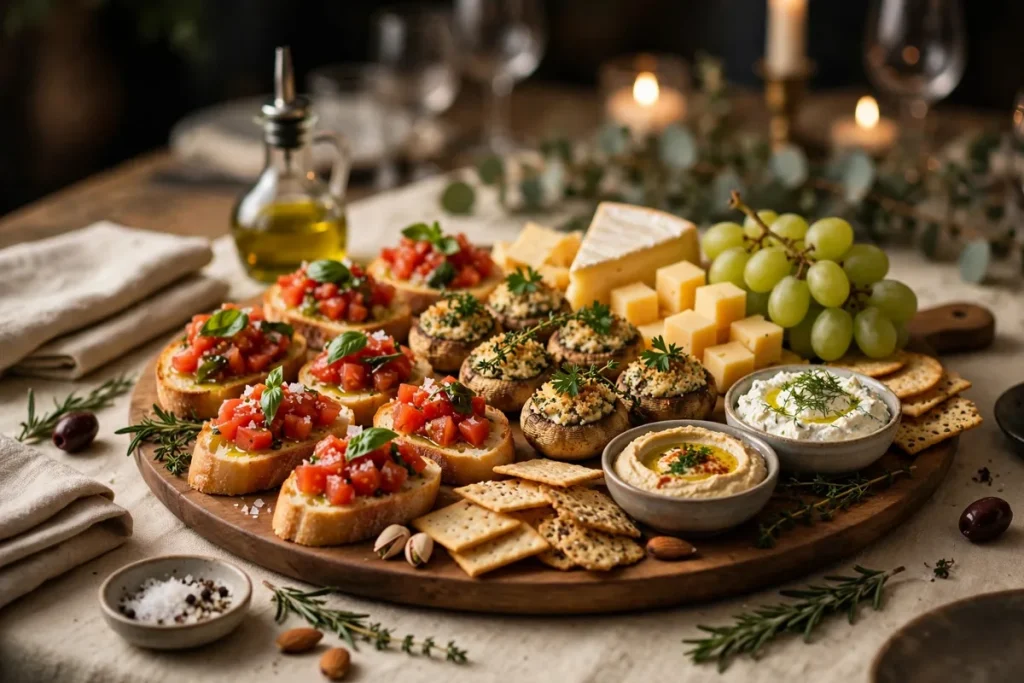

Good appetizers and hors d’oeuvres do one simple job: they welcome guests, give people something to hold while they chat, and set the tone for the meal or party to come. You do not need fancy skills or rare ingredients to do this well. A few fresh, well-seasoned bites, served at the right temperature and in easy portions, will impress far more than a long, complicated menu.
This guide explains the difference between the two terms, the main types of starters, and 12 easy ideas you can make at home. It also covers how much food to plan per guest, simple make-ahead steps, and presentation tips that make a basic spread look generous and inviting.
Appetizers vs Hors d’Oeuvres: What’s the Difference?
In everyday use, the two words often mean the same thing, but there is a small, useful difference. An appetizer is usually the first course of a seated meal. It is served at the table, in a set portion, and it leads into the main dish. Think of a small salad, a cup of soup, or a plate of bruschetta served before dinner.
Hors d’oeuvres, a French term, are smaller bites served before a meal or at a standing party, often without a table or cutlery. They may be passed on trays, set out on a buffet, or arranged on a board. Guests pick them up with their fingers or a small pick, and they can move around while eating. In short, appetizers start a seated meal, while hors d’oeuvres start a gathering.
For home cooks, the distinction matters mainly for planning. For a seated dinner, choose one appetizer per person and plate it neatly. For a party, choose several finger foods, make plenty of small pieces, and keep them easy to eat while standing. Many of the ideas below work for both, so pick the format that fits your event.
The Main Types of Appetizers
Grouping starters by type makes planning much easier. A good spread usually includes a mix of cold and hot items, something creamy to dip, and plenty of finger foods. That balance keeps the table interesting without adding extra work.
Cold Appetizers
Cold appetizers are the easiest place to start because most can be prepared ahead and served straight from the refrigerator. They include cheese boards, cured meats, chilled shrimp, vegetable bites, and salads served in small cups or on spoons. Cold items are especially useful in warm weather or when oven space is limited, and they help you get food on the table the moment guests arrive.
Hot Appetizers
Hot appetizers add warmth and aroma, and they often feel more filling than cold bites. Stuffed mushrooms, meatballs, mini quiches, and bacon-wrapped dates all belong here. The trick is to choose items that hold their heat well and do not need constant attention. Bake in batches, keep finished trays warm in a low oven, and refill the serving plate in small amounts so each round tastes fresh.
Dips and Spreads
Dips and spreads are the workhorses of any party table. One bowl of hummus, spinach dip, or a cheese spread, served with pita, crackers, and cut vegetables, can feed many guests with very little effort. They are easy to scale up, easy to make ahead, and easy to adjust for different tastes. Offer at least two dippers with different textures, such as something crisp and something soft, so guests have a choice.
Finger Foods
Finger foods are small, neat, and made to be eaten in one or two bites. Skewers, cucumber bites, deviled eggs, and mini sandwiches are classic examples. The best finger foods do not drip, crumble too much, or need a knife. If a guest can eat it while holding a drink in the other hand, it is a good finger food. Keep portions small so people can try several different items.
12 Easy Appetizer and Hors d’Oeuvre Ideas
Each idea below is simple enough for a weeknight, yet polished enough for a party. Keep the methods short, season well, and taste as you go.
- Bruschetta: Toast sliced bread, rub it with garlic, and top with diced tomatoes, basil, olive oil, and salt.
- Stuffed mushrooms: Remove the stems, fill the caps with seasoned breadcrumbs, cheese, and herbs, then bake until golden.
- Cheese board: Arrange two or three cheeses with crackers, grapes, nuts, and a small pot of honey for contrast.
- Shrimp cocktail: Chill cooked shrimp and serve with a simple cocktail sauce made from ketchup, horseradish, and lemon juice. For more seafood inspiration at home, see how regional seafood traditions can inspire better home cooking.
- Deviled eggs: Halve hard-boiled eggs, mash the yolks with mayonnaise and mustard, then pipe the filling back into the whites.
- Caprese skewers: Thread cherry tomatoes, small mozzarella balls, and basil leaves onto picks, then drizzle with olive oil and balsamic.
- Spinach dip: Stir cooked spinach with cream cheese, sour cream, garlic, and Parmesan, then warm gently and serve with bread or vegetables.
- Meatballs: Roll seasoned ground meat into small balls, bake until cooked through, and toss in a warm marinara or barbecue sauce.
- Hummus and pita: Blend chickpeas with tahini, lemon juice, garlic, and olive oil until smooth, then serve with warm pita triangles.
- Bacon-wrapped dates: Fill pitted dates with a little cheese, wrap each one in half a slice of bacon, and bake until crisp.
- Cucumber bites: Cut thick cucumber rounds, top with cream cheese and smoked salmon or a slice of tomato, and finish with dill.
- Mini quiches: Press pastry into a mini muffin tin, fill with beaten egg, cheese, and cooked vegetables or ham, then bake until set.
For a larger gathering, pair these cold and hot bites with one warm, hands-off dish that cooks itself while you greet guests. Slow cooker chicken recipes are a good example of food that stays warm, serves a crowd, and frees up your oven for trays of hot appetizers.
How Many Pieces to Plan Per Guest
Running out of food is the most common party mistake, yet it is easy to avoid with a simple plan. Count pieces, not dishes, and remember that guests eat more when appetizers are the main food than when they come before a full dinner. Use the table below as a starting point, then round up if your guests are big eaters or the party will run long.
| Gathering type | Pieces per guest | Simple note |
|---|---|---|
| Before a seated dinner | 3 to 4 | Keep it light so guests stay hungry for dinner. |
| Short drinks-only party, about 1 hour | 4 to 6 | Offer a mix of cold bites and one dip. |
| Cocktail party, about 2 hours | 8 to 10 | Include hot items and a filling dip or cheese board. |
| Long party, about 3 hours or more | 10 to 12 | Add a warm, hands-off dish and refill in small batches. |
For 20 guests at a two-hour cocktail party, that means about 160 to 200 pieces in total. That sounds like a lot, but it is only about 15 pieces each of 12 different items, or larger amounts of fewer items. Choose five or six ideas you can make well, rather than trying to cook everything on the list, and let guests mix and match.
Make-Ahead Tips
A calm host is usually a host who did most of the work the day before. Many appetizers actually taste better after a night in the refrigerator, because the flavors have time to blend. Plan your menu around that fact, and save the last hour before guests arrive for heating, plating, and garnishing only.
- The day before: Make dips, deviled egg filling, and cheese boards, and keep them covered in the refrigerator.
- The morning of the party: Cut vegetables, assemble skewers, and fill mushrooms or dates, then chill until needed.
- One hour before guests arrive: Bake hot items in batches, set out cold items, and put dips in serving bowls.
- Keep food safe: Do not leave perishable items at room temperature for more than two hours, and refill small plates often instead of putting everything out at once.
Presentation Tips
Presentation does not require special equipment. A clean board, a few small bowls, and a little height will make a simple spread look generous. Start with the largest items, such as a cheese board or a bowl of dip, then fill the gaps with smaller bites, fresh herbs, and lemon wedges.
- Use different heights: Place one board on a sturdy box or an upside-down bowl under a cloth to create levels.
- Group by color: Put bright tomatoes, green herbs, and golden baked items near each other for contrast.
- Label anything unusual: A small card helps guests with allergies or food preferences choose with confidence.
- Keep it tidy: Use small plates, provide napkins and picks, and clear empty trays promptly so the table stays inviting.
With a clear plan, a handful of easy recipes, and a table that is easy to graze from, appetizers and hors d’oeuvres can turn any gathering into a relaxed, welcoming event. Start with the ideas you enjoy most, make them ahead where you can, and leave room for guests to linger, taste, and come back for seconds.
What is the difference between appetizers and hors d’oeuvres?
Appetizers usually start a seated meal, while hors d’oeuvres are small bites served at standing gatherings.
How many appetizers do I need per guest?
Plan 3 to 4 pieces per guest before a dinner, or 8 to 10 pieces per guest for a two-hour cocktail party.
Which appetizers can I make ahead?
Dips, deviled egg filling, cheese boards, and skewers can be prepared the day before and kept chilled.
How long can appetizers sit out?
Keep perishable items at room temperature for no more than two hours, and refill small plates often.
What are the easiest appetizers for beginners?
Start with bruschetta, hummus and pita, a cheese board, and caprese skewers. They need little cooking and no special equipment.