
A backyard swimming pool is one of the most rewarding investments a homeowner can make. However, maintaining a comfortable water temperature year-round can be a challenge.
Unheated pools often sit idle for months when the climate cools down, leaving a significant asset unused.
Pool heating systems resolve this issue, and among the various options—gas heaters, electric element heaters, and solar mats—pool heat pumps have emerged as the most efficient and versatile choice.
This article examines how pool heat pumps function, their advantages over conventional systems, and key considerations for selecting the right model for your property.
How Pool Heat Pumps Work
Unlike traditional electric heaters that generate heat through resistance coils, or gas units that burn fossil fuels, a heat pump does not generate heat directly.
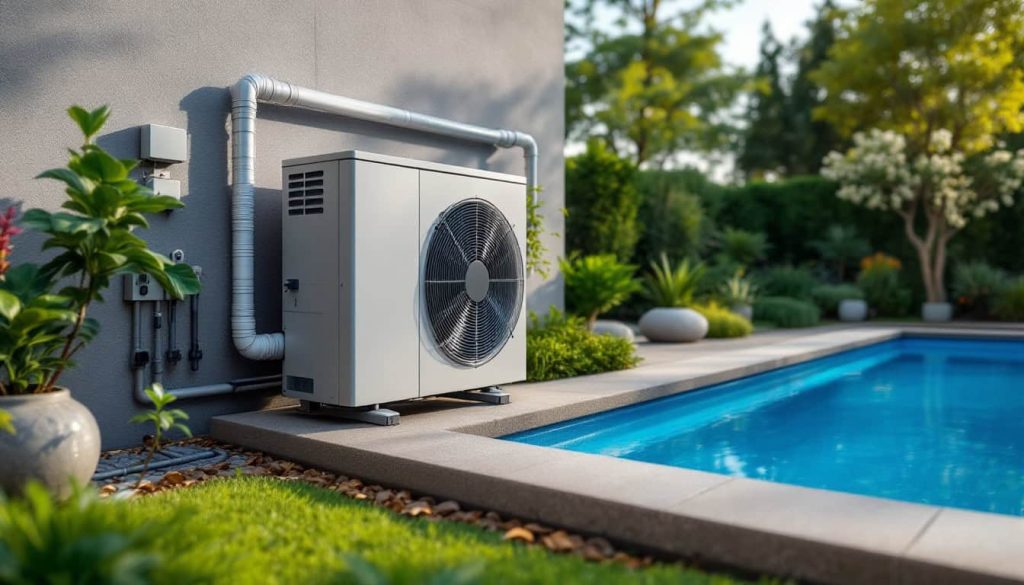
Instead, it extracts heat energy from the surrounding outdoor air and transfers it into the pool water.
The mechanism relies on a refrigeration cycle similar to a household air conditioner or refrigerator, operating in reverse:
- Air Intake: A fan draws ambient outdoor air across an evaporator coil filled with a liquid refrigerant.
- Heat Absorption: The liquid refrigerant absorbs heat from the air and converts it into a low-pressure gas.
- Compression: The compressor compresses this gas, raising its temperature and pressure significantly.
- Heat Exchange: The hot gas passes into the heat exchanger, where thermal energy is transferred to the cooler pool water circulating through the unit.
- Expansion: The refrigerant passes through an expansion valve, cools down, reverts to liquid form, and repeats the cycle.
Because heat pumps merely capture and move thermal energy rather than generating it, they can achieve high operational efficiency, delivering far more heating energy than the electrical power they consume.
Benefits of Installing a Pool Heat Pump
Modern heat pumps offer several operational and long-term financial advantages over traditional heating methods.
1. Superior Energy Efficiency
Heat pump efficiency is measured by the Coefficient of Performance (COP). A standard electric resistance heater has a COP of 1.0, meaning every 1 kW of electricity consumed yields 1 kW of heat. In contrast, a high-efficiency pool heat pump typically achieves a COP between 4.0 and 7.0 under normal operating conditions. This means for every unit of electricity consumed, four to seven units of heat are transferred into your pool.
2. Lower Running Costs
Because heat pumps require minimal power to operate the compressor and fan, operational costs remain significantly lower than standard electric or gas heaters. According to energy guidance from the Australian Government Energy Portal, choosing energy-efficient pool infrastructure is essential for managing overall household power consumption, as pool equipment can account for a substantial portion of an energy bill.
3. Reliable Year-Round Temperature Control
While solar heating relies entirely on direct sunlight and clear skies, heat pumps draw thermal energy from ambient air temperature. Modern inverter heat pumps can operate efficiently even on overcast days or in cooler ambient temperatures down to sub-zero levels, making them a consistent option for extended swimming seasons.
4. Eco-Friendly Operation
Heat pumps release no direct carbon emissions on-site during operation. When paired with a residential solar photovoltaic (PV) system, a heat pump can run largely on self-generated renewable energy, reducing your pool’s carbon footprint to near zero.
Inverter vs. On/Off Pool Heat Pumps
When evaluating models, homeowners will encounter two main technical categories: traditional On/Off models and modern Full-Inverter models.
| Feature | On/Off Heat Pumps | Inverter Heat Pumps |
| Compressor Speed | Fixed at 100% capacity | Variable speed (0% to 100%) |
| Energy Consumption | Higher due to frequent power spikes | Lower; ramps up or down automatically |
| Noise Levels | Constant, moderate operational noise | Very quiet once set temperature is reached |
| Lifespan | Standard wear on mechanical parts | Extended lifecycle due to reduced strain |
| Initial Cost | Lower upfront purchase price | Higher upfront cost, offset by lower running costs |
For homeowners seeking extended swimming seasons in subtropical climates, investing in quality pool heat pumps in brisbane ensures consistent water temperatures during cooler winter periods while minimizing power bills.
Key Factors to Consider Before Buying
Selecting the correct unit size and specification is crucial for performance and system longevity. Undersized units will struggle to reach your target temperature, while oversized units may cause unnecessary upfront expenses.
- Pool Surface Area and Volume: Larger surface areas lose heat quickly through evaporation. The total volume of water determines the overall kilowatt (kW) heating capacity required.
- Desired Temperature and Usage: Aiming for a comfortable 28°C for casual recreation requires less power than maintaining 32°C for therapeutic swimming or spa applications.
- Local Climate Conditions: Ambient air temperatures, humidity levels, and seasonal drops directly affect a heat pump’s heating capacity and COP rating.
- Pool Cover Usage: Evaporation causes up to 75% of a pool’s heat loss. Using a thermal pool blanket alongside a heat pump reduces runtime and dramatically cuts energy bills.
- Heat Exchanger Material: Ensure the unit features a titanium heat exchanger. Titanium resists corrosion caused by pool chemicals, including saltwater chlorination systems and chlorine treatments.
Maintenance Best Practices
To keep a pool heat pump operating at peak performance and ensure a long working life, implement a basic routine maintenance plan:
- Clear Airflow Obstructions: Keep the surrounding area free of leaves, debris, overhanging plants, and garden clutter to ensure unrestricted airflow through the evaporator coils.
- Rinse Evaporator Coils: Gently rinse the outdoor coils with fresh water periodically to prevent salt, dust, or dirt accumulation.
- Maintain Chemical Balance: Ensure pH, total alkalinity, and sanitiser levels remain within recommended ranges to protect the unit’s internal components.
- Professional Servicing: Have a qualified technician inspect the electrical connections, refrigerant pressures, and mechanical components every one to two years.
Conclusion
Pool heat pumps represent an intelligent, energy-efficient, and cost-effective approach to extending your swimming season or enjoying year-round pool usage. By harvesting free heat from the surrounding air, these systems provide reliable warmth without the massive energy bills associated with conventional heating options.
Incorporating a well-sized heat pump, utilizing a pool cover, and maintaining balanced water chemistry will ensure your pool remains warm, inviting, and economical to run for years to come.