
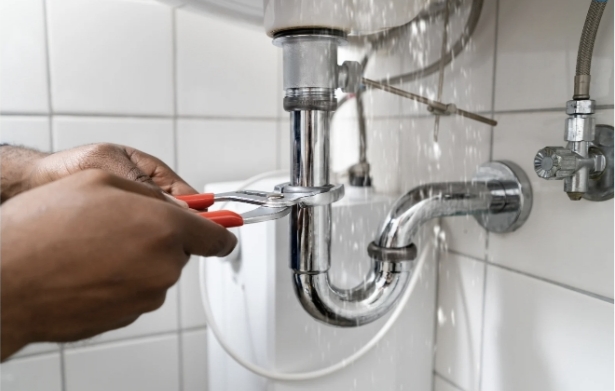

Finding a water leak before it causes serious damage often comes down to recognizing the early warning signs before higher utility bills, mold growth, or structural damage appear.
TLDR: Most water leaks reveal themselves through higher water bills, water stains, musty odors, or the sound of running water when fixtures are off. The water meter test confirms whether a leak is active. Most hidden leaks need professional location and repair to prevent mold and structural damage.
According to the U.S. Environmental Protection Agency (EPA), household leaks waste nearly 1 trillion gallons of water each year nationwide, with the average home losing approximately 10,000 gallons annually. That waste is financial, but the structural consequence is greater: water that leaks inside a wall or under a slab for weeks produces mold, rot, and structural damage that costs far more to repair than the original leak.
Homeowners in Arvada who discover signs of an active leak can reach Leak Repair Arvada CO specialists for professional detection and repair before the damage scope expands. The sooner a leak is located and addressed, the narrower the repair window.
What Are the First Signs of a Hidden Water Leak?
Unexplained Increase in Water Bills
A household water bill that jumps without a corresponding change in usage is the most common early warning of a hidden leak. The EPA notes that a faucet dripping at one drip per second wastes more than 3,000 gallons per year. A toilet with a failed flapper wastes up to 200 gallons per day. These losses appear in billing data before they appear visually.
Compare your current bill to the same month in the prior year. A jump of 20 percent or more with no change in household size or behavior warrants investigation.
Musty Odor in Specific Areas
Mold colonizes wet materials within 24 to 48 hours under typical indoor temperature conditions. The musty odor of mold development appears before visible mold is established, particularly in enclosed spaces like under-sink cabinets, inside wall cavities, and in basement spaces where ventilation is poor.
A musty odor that localizes to a specific room or cabinet and does not respond to cleaning indicates moisture accumulation in a surface you cannot see.
Discoloration or Staining on Walls and Ceilings
Water stains on walls and ceilings appear as yellowed or brown patches, typically with a ring-shaped perimeter where moisture dried. The stain location does not necessarily indicate the leak source: water follows framing and gravity before finding a surface to saturate.
A ceiling stain below a bathroom is the most common and most straightforward leak location. A wall stain may require investigation of plumbing lines on the opposite wall or on the floor above.
Sound of Running Water When Fixtures Are Off
Water moving through pipes produces a distinctive sound that is audible in quiet rooms, particularly near pipe runs. If you hear water movement when every fixture in the home is off, a leak is active somewhere in the system.
How Do You Use the Water Meter to Confirm a Leak?
The water meter test is the most reliable DIY method for confirming whether a leak is active:
- Turn off every water-using fixture and appliance in the home
- Note the current meter reading or the position of the meter’s leak indicator dial
- Wait 30 minutes without using any water
- Return to the meter and check for any change
If the reading has changed or the leak indicator dial has moved, water passed through the supply line while everything was off. A leak is confirmed.
This test does not locate the leak. It confirms its existence, which justifies professional detection equipment.
How Do Professionals Find Hidden Leaks?
Acoustic detection uses listening equipment that amplifies the sound of water escaping from pressurized pipes. A trained technician with acoustic detection equipment can locate a pipe leak to within a few inches through concrete slab, finished flooring, and wall surfaces.
Thermal imaging uses infrared cameras that detect temperature differentials caused by moisture evaporation. Wet areas cool faster than dry areas as moisture evaporates. A thermal camera shows these differentials as color variations that indicate where moisture is accumulating behind surfaces.
Video camera inspection uses a waterproof camera on a flexible cable to inspect drain and sewer lines for cracks, offsets, and blockages that cause wastewater leakage.
What Happens If You Ignore a Leak?
The cost escalation from an ignored leak follows a consistent pattern:
- Week 1: Minor leak. A plumber can repair the source for $150 to $400.
- Month 1: Moisture has saturated the adjacent framing, drywall, and insulation. Repair now includes drywall replacement and potentially framing repair: $1,500 to $5,000.
- Month 3+: Mold has established in the moisture-affected materials. Remediation is required before any structural repair can proceed: $3,000 to $10,000 in addition to structural repair costs.
Insurance covers sudden, accidental water events. Coverage is typically denied for damage resulting from known leaks left unaddressed. The documentation of when a leak was discovered, and what action was taken, matters in the claims process.
Key Takeaways
- The average household loses 10,000 gallons per year to leaks, with the toilet and faucet drips being the most common sources
- A 20 percent or higher water bill increase without a usage change is the most reliable early warning of a hidden leak
- The water meter test confirms an active leak in 30 minutes at no cost: turn everything off and watch the meter
- Mold colonizes wet materials within 24 to 48 hours, making early detection and repair critical to avoiding remediation costs
- Professional acoustic detection and thermal imaging locate hidden leaks without destructive exploration in most cases
- The repair cost of an ignored leak increases by a factor of 10 to 30 between early detection and late discovery involving mold remediation