
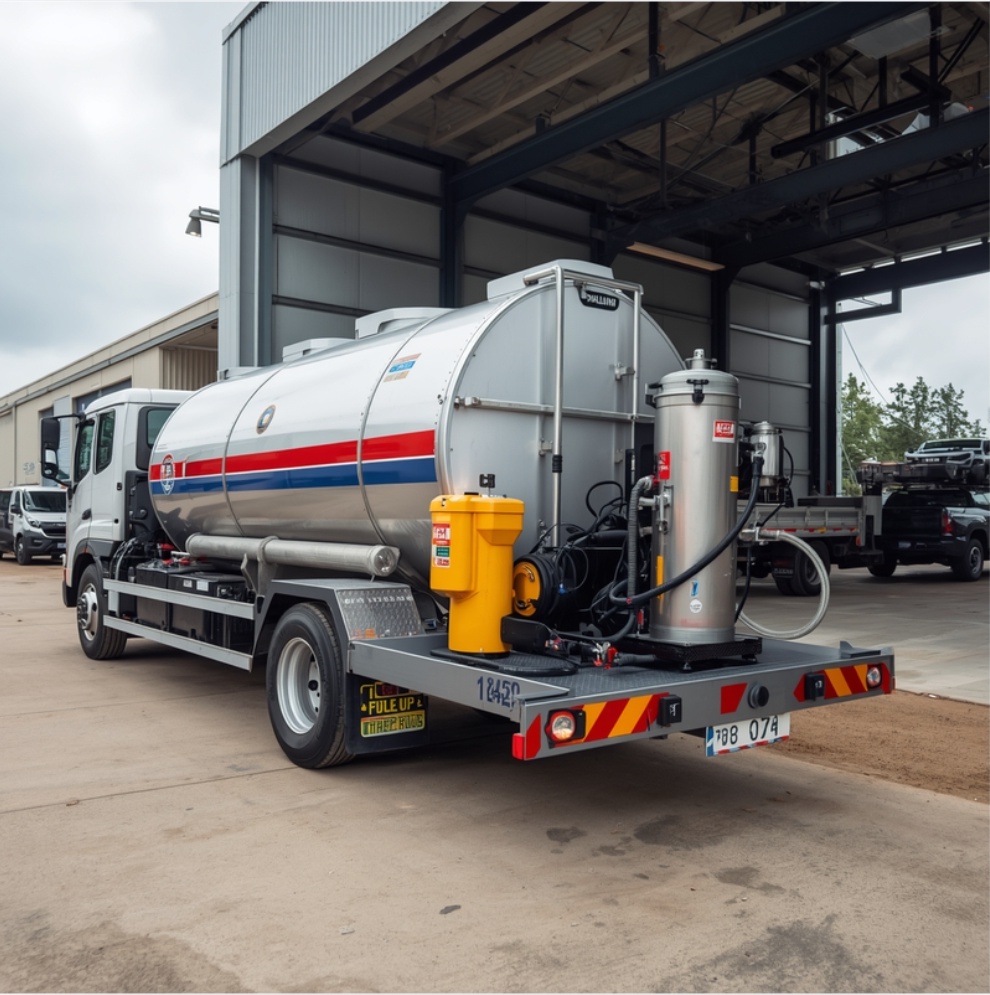

Remote refuelling used to mean expensive fuel trucks, fixed schedules, and long wait times. That model does not work for modern mobile operations covering large distances across multiple sites. A 12V portable diesel tank solves the core problem by delivering self-contained, powered refuelling directly from a ute tray, trailer, or skid mount. The 12V pump draws from the vehicle’s existing battery, making it functional anywhere the ute goes. For mining, agriculture, construction, and emergency services, that independence from fixed fuel infrastructure is worth more than most operators calculate until they actually use it.
How Does a 12V Pump System Work in the Field?
The pump connects directly to the vehicle’s 12-volt battery through a cable and clamp or hardwired connection. When triggered, it draws diesel from the poly tank and delivers it through a metered hose to whatever equipment needs fuel. Most 12V systems include a flow meter so you track exactly how many litres transfer per refuelling event. That data matters for fleet management, cost allocation, and detecting fuel theft. The setup requires no external power source, no generator, and no fixed infrastructure. The vehicle itself is the power supply. TTi fuel pod configurations are built around this principle. Simplicity in the field means fewer failure points. Fewer failure points mean more reliable fuel delivery when it matters most on remote or difficult sites.
What Flow Rates Can a 12V Diesel Transfer Pump Deliver?
Standard 12V diesel pumps typically deliver between 40 and 80 litres per minute depending on pump rating and hose length. A 40 LPM pump fills a 200-litre machine tank in five minutes. An 80 LPM pump cuts that to two and a half. For high-volume refuelling where multiple machines need fuel in sequence, pump flow rate determines how quickly your crew moves on to the next job. Choosing underpowered pump capacity for a high-demand site is one of the most common and most avoidable mistakes operators make when spec’ing mobile diesel transfer equipment. Match pump capacity to your peak daily fuel demand, not your average. Sites have busy days. Your fuel system needs to handle them without creating a bottleneck. Under-speccing the pump is always more expensive than buying the right one initially.
Which Industries Depend on 12V Mobile Refuelling Systems?
Agriculture is at the top. A grain farmer running 10 machines across thousands of hectares cannot rely on a fixed bowser. The 12V tank travels with the support vehicle and refuels each machine in the paddock. The Australian Bureau of Statistics counts approximately 160,000 farm businesses across Australia. A significant share depend on mobile diesel transfer for daily operations. Mining follows closely. Remote exploration sites operate kilometres from the nearest fixed fuel point. Civil construction and road works crews covering linear project corridors also rely on mobile refuelling. Emergency management agencies operating in disaster recovery zones need fuel access where infrastructure is damaged or absent. A 12V poly diesel fuel pod works across all of those use cases without modification. The same unit that refuels a header in a wheat paddock refuels a generator on a flood relief operation.
How Do You Maintain a 12V Diesel Tank for Reliable Long-Term Use?
Check the pump strainer monthly. Debris in diesel, particularly in rural environments, clogs intake screens and reduces flow rate before failure becomes obvious. Inspect all fittings and hose connections quarterly for wear, cracking, or loosening under vibration from vehicle movement. Keep the tank level when parked to avoid uneven load stress on fittings. Flush the system with clean diesel annually to clear sediment buildup. Store the tank under cover when not in use to reduce UV exposure on fittings and hose assemblies. TTi poly fuel tanks require minimal structural maintenance. The tank body itself holds up under Australian conditions with basic care. The pump and transfer components need the consistent attention. That routine is straightforward. Operators who follow it report service lives well beyond ten years on the same unit. Pair the fuel pod with a purpose-built diesel fuel trailer where tow capacity allows, and you have a complete mobile refuelling system that covers any site configuration.