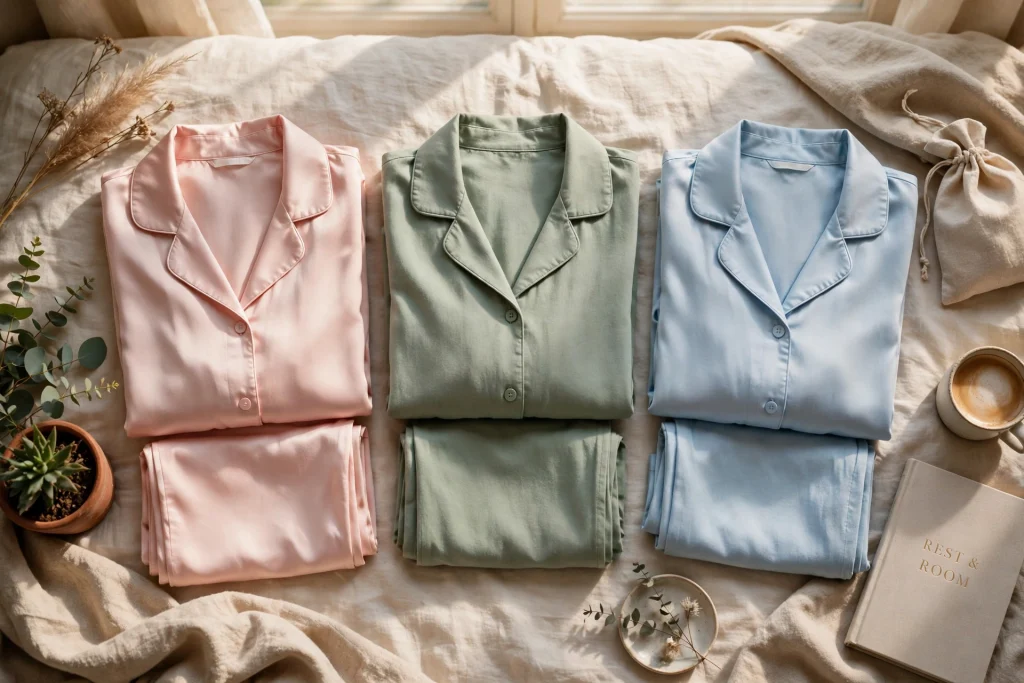

Women’s pajamas are not a small purchase. You wear them for seven or eight hours every night, they touch more of your skin than almost any other garment you own, and the wrong pair can leave you too hot, too cold, itchy, tangled in twisted fabric, or awake at 3 a.m. tugging at a waistband. The right pair, by contrast, disappears. You forget you are wearing it, you fall asleep faster, and you wake up without the creases, sweat, and irritation that cheap sleepwear so often causes.
This guide explains how to choose women’s pajamas properly, rather than by colour or price alone. It covers fabrics in detail, styles, fit and sizing, sleep temperature, care, and the mistakes that waste money. It also includes the comparison tables that most shop listings leave out, so you can judge a pair before you buy it. Whether you sleep hot, cold, or somewhere in between, whether you want a classic button-up set, a soft nightgown, or shorts for summer, the principles below will help you find a pair you will actually reach for every night.
Why the Fabric Matters More Than the Style
Style is what you notice first, but fabric is what you live with. A beautiful set in stiff, non-breathable polyester will feel worse after an hour than a plain cotton set that breathes. Fabric controls four things that decide sleep comfort: airflow, moisture handling, softness against the skin, and how the garment moves when you turn over.
Breathability matters because your body temperature falls as you fall asleep and rises again before waking. A fabric that traps heat will make you sweat, and sweat that cannot escape will chill you later. Moisture handling matters for the same reason: cotton absorbs moisture but dries slowly, while bamboo and modal move moisture away from the skin more quickly. Softness matters because sleepwear sits against sensitive skin for hours, and rough seams or scratchy fibres cause irritation that daytime clothes, worn for shorter periods over other layers, rarely cause. Finally, stretch matters. Sleep is not still. You roll, bend, and stretch, and a fabric with a little give will move with you instead of riding up or binding at the shoulders and hips.
When you shop, read the fabric label before you look at the price. A label that says 100 percent cotton, 95 percent bamboo viscose with 5 percent elastane, or 100 percent silk tells you far more than a product name such as soft-touch or cloud-soft. If the label is vague, or if the fibre content is hidden, treat that as a warning sign.
Women’s Pajamas Fabric Comparison
The table below compares the fabrics most commonly used for women’s pajamas. Use it as a quick reference, then read the notes that follow for the detail that a table cannot show.
| Fabric | Best for | Breathability | Warmth | Care | Typical price |
|---|---|---|---|---|---|
| Cotton | Everyday, all-season wear | High | Medium | Machine wash, easy | Low to medium |
| Bamboo viscose | Hot sleepers, sensitive skin | Very high | Low to medium | Gentle wash, air dry | Medium |
| Silk | Luxury, temperature regulation | High | Medium | Hand wash or delicate | High |
| Modal | Softness, drape, lounging | High | Low to medium | Gentle wash | Medium |
| Flannel | Cold winters | Medium | High | Machine wash | Low to medium |
| Linen | Very hot climates | Very high | Low | Machine wash, wrinkles | Medium to high |
| Polyester | Budget sets, prints | Low | Medium | Machine wash, easy | Low |
| Jersey knit | Stretch, comfort, movement | High | Medium | Machine wash, easy | Low to medium |
Cotton: The Reliable Everyday Choice
Cotton remains the most popular fabric for women’s pajamas for good reasons. It is breathable, soft after a few washes, easy to care for, and widely available at every price. Cotton jersey, which is knitted rather than woven, adds stretch and is the fabric used for most T-shirt style pajama tops and leggings. Cotton poplin, which is woven, is crisper and is used for classic button-up pajama shirts. Cotton lawn is lighter still and suits hot weather.
The main weakness of cotton is that it absorbs moisture and holds it. If you sweat heavily at night, a cotton set can feel damp by morning. It can also shrink in a hot dryer, so wash in cool or warm water and dry on low heat. Look for long-staple cotton, such as Egyptian or Pima cotton, if you want a smoother, longer-lasting fabric, and avoid very thin cotton that becomes see-through after washing.
Bamboo Viscose: Best for Hot Sleepers and Sensitive Skin
Bamboo pajamas have become popular because the fabric is unusually soft, breathable, and good at moving moisture away from the skin. Many hot sleepers find bamboo cooler than cotton, and many people with eczema or sensitive skin find it less irritating. Bamboo viscose also drapes well, so it does not cling or bunch as much as some cottons. If you want a deeper comparison of this fabric, read our guide to bamboo pajamas and whether they are worth it, which covers softness, durability, and washing in detail.
Bamboo does need gentler care. Wash it in cold water on a gentle cycle, avoid fabric softener, and air dry or tumble dry on low. It can pill if it is rubbed hard in the wash, and cheaper bamboo blends may contain a high proportion of polyester, so check that the main fibre really is bamboo viscose.
Silk: Luxurious, Temperature-Regulating, and High Maintenance
Silk is the classic luxury pajama fabric. It feels cool in summer and warm in winter, it is gentle on skin and hair, and it looks and feels expensive. Mulberry silk is the highest quality commonly sold for sleepwear. The trade-off is care and cost. Real silk pajamas are expensive, they usually need hand washing or a delicate cycle, and they can be damaged by harsh detergents, direct sunlight, and rough handling. Silk is a good choice if you want one special set and are willing to care for it, but it is not the best choice for everyday wear if you want to throw everything in the washing machine.
Modal, Flannel, Linen, and Polyester
Modal, made from beech trees, is softer than cotton and drapes beautifully, which makes it a good choice for nightgowns and relaxed sets. It can be less durable than cotton if it is washed roughly. Flannel, usually brushed cotton, is the warmest common pajama fabric and is ideal for cold winters, but it is too warm for most people in summer and it can pill. Linen is the coolest fabric of all, with excellent airflow, but it wrinkles, feels crisp rather than soft at first, and is usually more expensive. Polyester is cheap, holds colour and prints well, and resists wrinkles, but it breathes poorly, can feel clammy, and is the fabric most likely to make hot sleepers sweat. A small amount of polyester blended with cotton or bamboo can add durability, but a 100 percent polyester set is rarely the most comfortable choice for sleep.
Styles of Women’s Pajamas: Which One Suits You?
Pajamas come in far more styles than most people realise, and the right style depends on how you sleep, your climate, and what you wear around the house in the evening.
Classic Button-Up Sets
The classic pajama set, with a collared button-up shirt and matching trousers, is still the most versatile choice. It suits all seasons when you choose the right fabric and sleeve length, it looks tidy if you need to answer the door, and the buttons allow you to adjust ventilation. Look for a shirt that is long enough to stay tucked or untucked without riding up, and trousers with a drawstring as well as elastic, so you can adjust the waist.
Short Sets and Shorts
Short sets, with a short-sleeved top and shorts, are the best choice for summer and for hot sleepers. They are also useful if you live in a warm climate year-round. The main risk is that shorts ride up at night. A slightly longer inseam, a wide leg opening, and a fabric with a little stretch all help. If you sleep with a fan or air conditioning, a short set in cotton or bamboo is usually cooler than a long set in a light fabric.
Nightgowns and Nightdresses
Nightgowns are the simplest style of all: one garment, no waistband, and complete freedom of movement. They suit people who dislike waistbands, people who get hot at night, and people who want a soft, feminine option. A nightgown in modal or cotton jersey is comfortable for lounging, while a silk nightgown is a luxury choice. The main drawback is that a nightgown can ride up if you toss and turn, so choose a length that reaches at least to the knee, and preferably below it, if that worries you.
Rompers, Jumpsuits, and Thermal Sets
Rompers and one-piece pajamas are playful and warm, but they are less practical for most adults because they are harder to get in and out of at night. Thermal sets, usually in a waffle knit, are useful in very cold houses, especially if you keep the heating low. They trap warm air close to the skin, but they are too warm for most people once the weather improves.
Maternity, Nursing, and Plus-Size Pajamas
If you are pregnant, breastfeeding, or buying in a larger size, fit matters even more than fabric. Maternity pajamas should have a stretchy waistband that sits under or over the bump without digging in, and nursing pajamas should have easy access without buttons that are hard to undo in the dark. Plus-size pajamas should be cut for a real plus-size body, not simply scaled up from a small pattern, with a longer torso, wider shoulders, and a waistband that does not roll. Check the size chart for each brand, because sizes vary widely between brands, and read reviews from people with a similar body shape before you buy. For everyday comfort beyond the bedroom, our guide to comfortable women’s clothing covers many of the same fabric and fit principles in daytime clothes.
Fit and Sizing: How Women’s Pajamas Should Fit
Pajamas should fit loosely, but not so loosely that they tangle. A good rule is that you should be able to pinch about an inch of fabric at the side seam, raise your arms without the top riding up to your waist, and sit down without the waistband digging in. If you are between sizes, size up for sleepwear. A slightly loose set is comfortable, while a tight set will restrict movement and make you hot.
| Fit point | What to check | Common mistake |
|---|---|---|
| Shoulders | Seam sits at the shoulder edge | Choosing a top that pulls across the chest |
| Chest and waist | Room to breathe and turn over | Buying your daytime size in a slim cut |
| Waistband | Wide, soft elastic plus drawstring | Thin elastic that rolls or digs in |
| Trouser length | Covers the ankle without pooling | Trousers so long they trip you at night |
| Sleeves | Cuffs stay put but do not bind | Tight cuffs that leave marks |
| Seams | Flat, soft seams inside | Raised seams that irritate skin |
Always check the brand’s size chart, and measure yourself rather than guessing. Chest, waist, hip, and inseam measurements are more reliable than a letter size, because a medium in one brand can be a large in another. If you buy online, check the return policy before you order, so you can exchange a set that does not fit without losing money.
Sleep Temperature: Pajamas for Hot and Cold Sleepers
Your pajamas are part of your sleep environment, along with your mattress, bedding, and room temperature. The ideal bedroom temperature for most adults is between 60 and 67 degrees Fahrenheit, or 15 to 19 degrees Celsius, and your pajamas should help you stay in that comfortable range.
If you sleep hot, choose short sets in bamboo, linen, or lightweight cotton, avoid polyester, and look for moisture-wicking fabrics. A loose fit helps air circulate, and a light colour absorbs less heat if you sit in the sun in the morning. If you wake up sweating, try a bamboo or modal set before you blame your mattress, because the fabric closest to your skin makes the biggest difference.
If you sleep cold, choose flannel or a heavier cotton jersey, long sleeves and long trousers, and socks if your feet get cold. Layering helps: a light long-sleeved top under a dressing gown is warmer than a single heavy set, and you can remove a layer if you overheat. Avoid going to bed in a set that is already damp from a shower or from the day, because damp fabric will chill you quickly.
Night sweats have many causes, including room temperature, hormones, and medication, and pajamas alone cannot solve them. But the right fabric can make them less disruptive, and a spare set by the bed means you can change without fully waking up. Good sleep is also a routine, not just a garment, and our best bedtime routine for adults explains how light, temperature, and timing work together with what you wear.
How to Care for Women’s Pajamas So They Last
Good pajamas are not cheap, so care for them properly. Wash new pajamas before you wear them, because factory finishes and excess dye can irritate skin. Wash in cool or warm water on a gentle cycle, use a mild detergent, and avoid fabric softener on bamboo, modal, and silk, because it coats the fibres and reduces breathability. Turn printed sets inside out before washing to protect the print.
Dry on low heat or air dry if you can. High heat is the main cause of shrinkage in cotton and the main cause of damage in bamboo and modal. If a set does shrink, do not stretch it while it is hot, because that can distort the shape. Store pajamas folded, not hung, because hanging can stretch the shoulders of a knit top. Rotate at least two or three sets, so no single set is washed every day, and replace a set when the elastic has gone, the fabric has thinned, or the seams have started to fray.
Mistakes to Avoid When Buying Women’s Pajamas
- Buying by looks alone, without checking the fibre content on the label.
- Choosing 100 percent polyester because it is cheap, then finding it makes you sweat.
- Buying your exact daytime size in a slim-fit set, and finding it too tight to sleep in.
- Ignoring the waistband. A thin, hard waistband will ruin an otherwise good pair.
- Buying one set only. You need at least two, so one can be in the wash.
- Choosing a white or very pale set in a thin fabric that becomes see-through.
- Skipping the return policy when you buy online, and keeping a set that does not fit.
- Washing a silk or bamboo set on a hot cycle, and shrinking or damaging it on the first wash.
How Much Should You Pay?
Price is a useful guide, but it is not a guarantee of comfort. A basic cotton set for 20 to 35 dollars can be excellent if the fabric is good and the seams are flat. A mid-range set for 40 to 80 dollars usually buys better fabric, a better cut, and a wider size range. A luxury set for 100 dollars or more usually buys silk, high-quality bamboo, or a well-known brand, and it can be worth it if you will wear it every night and care for it properly.
Do not pay a luxury price for a polyester set, and do not assume that the most expensive set is the most comfortable. Read the fabric label, check the reviews for comments about sizing and washing, and buy from a brand that offers exchanges. A set that costs 50 dollars and lasts two years is cheaper per night than a set that costs 20 dollars and falls apart in three months.
Frequently Asked Questions
What is the best fabric for women’s pajamas?
There is no single best fabric for everyone. Cotton is the best all-round choice, bamboo is best for hot sleepers and sensitive skin, silk is best for luxury and temperature regulation, and flannel is best for cold winters. Choose the fabric that matches your sleep temperature and your willingness to care for it.
Should pajamas be loose or tight?
Loose. Pajamas should allow you to move, breathe, and turn over without restriction. If you are between sizes, size up. A waistband should sit comfortably without digging in, and a top should not ride up when you raise your arms.
How many pairs of pajamas should a woman own?
Three pairs is a good minimum: one to wear, one in the wash, and one spare. If you live in a climate with distinct seasons, add a warm winter set and a cool summer set, so you are not trying to make one set work all year.
Are silk pajamas worth it?
Silk pajamas are worth it if you value temperature regulation, softness, and a luxury feel, and if you are willing to hand wash or use a delicate cycle. They are not worth it if you want a low-maintenance everyday set, because cotton or bamboo will be easier to care for and cheaper to replace.
How do I stop my pajamas from riding up at night?
Choose a top that is long enough to cover your waist when you raise your arms, trousers with a drawstring waistband, and a fabric with a little stretch. A nightgown in a longer length, or a set with a wider leg, can also help if shorts or short tops are the problem.
The Bottom Line
The best women’s pajamas are not the prettiest pair on the page, and they are not the most expensive pair either. They are the pair whose fabric suits your sleep temperature, whose fit allows you to move freely, whose waistband and seams you forget about, and whose care instructions fit your life. Start with fabric, check the size chart, choose a style that suits how you actually sleep, and buy at least two sets so you always have a clean pair ready. Sleep is too important to spend it in uncomfortable clothes, and a good pair of pajamas is one of the simplest and cheapest ways to improve it.